






HubSpot vs. Pipedrive: How to Choose the Right CRM in 2026?
In this comparison, we help you see the big picture: not to pick a universal "winner," but to…
Read more


There was a time when integrating a live chat feature into a website was reserved for companies with a dedicated support team and budget. Those days are long gone. Today, solutions like Tidio or Crisp let you chat with visitors, qualify leads, or manage customer support tickets without spending hundreds of euros a month.
The problem is that, on the surface, the two tools look alike: chat widgets, automations, a free version... And yet, when you dig a little deeper, their approaches clearly differ. One focuses on artificial intelligence and the chatbot’s autonomy, while the other emphasizes the fluidity of real-time chat and the centralization of all conversations.
So, Tidio or Crisp: which one should you choose if you're just starting out, working as a freelancer, managing a small team, or running an e-commerce store on a tight budget? This article will help you decide.
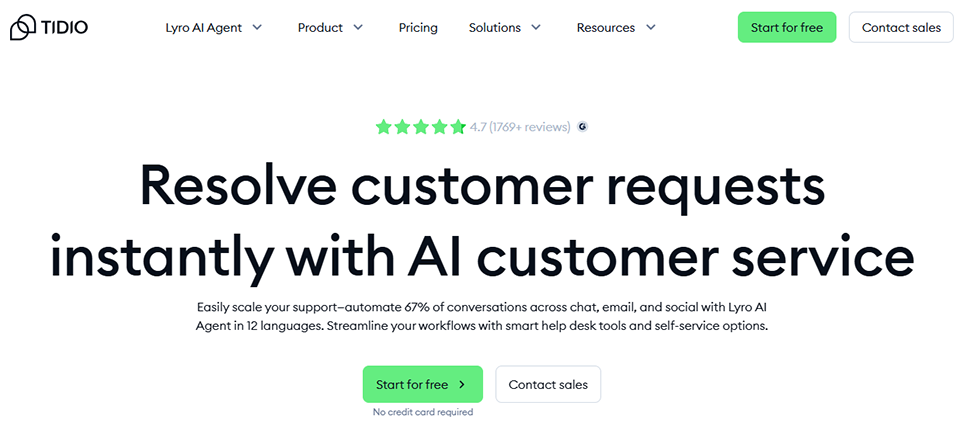

Founded in 2013 and based in Poland, Tidio has built a solid reputation in the e-commerce ecosystem, particularly thanks to its native integrations with Shopify and WooCommerce. The platform now boasts over 300,000 active users worldwide, a large proportion of whom are independent online stores.
What sets Tidio apart at first glance is its AI-driven approach. The platform has developed Lyro, its AI-powered chatbot, which can automatically answer frequently asked questions without human intervention. For small businesses that can’t provide live support, this is a practical solution.
Tidio's pricing plan is structured as follows (billed monthly):
💡 Prices may vary depending on the number of agents and the volume of AI conversations included. A discount available via Freelance Stack.
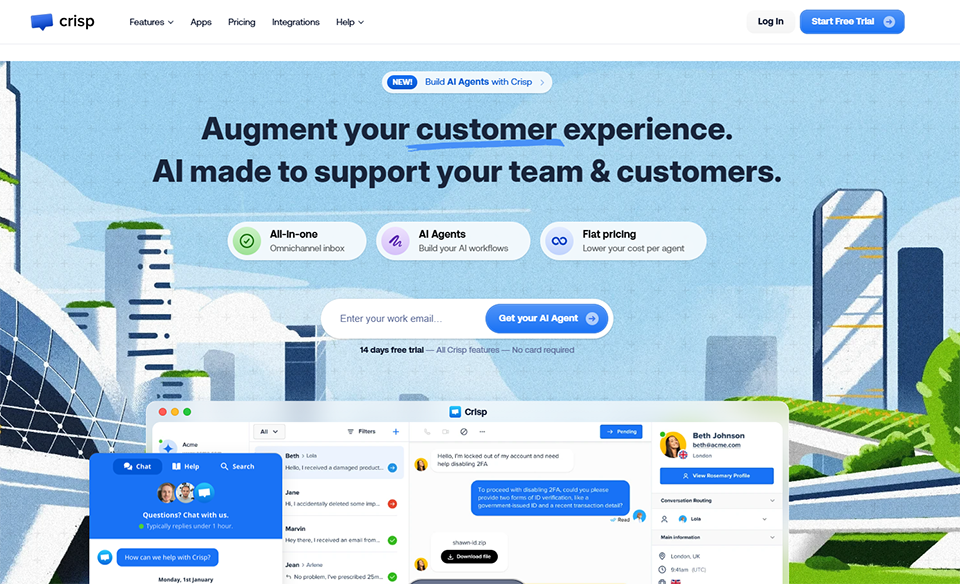
Crisp is a French company founded in Nantes in 2015. Its approach differs from Tidio’s: rather than specializing in AI chatbots or e-commerce, Crisp aims to centralize all customer communications in a single interface, whether it’s live chat, email, WhatsApp, Messenger, Instagram, or Telegram.
This is an appealing solution for a small team juggling multiple channels without a centralized tool. Crisp’s shared inbox allows multiple agents to view and handle conversations without stepping on each other’s toes, with a user interface designed for speed.
Crisp also includes a knowledge base module, a lightweight CRM, a status and tag system, and even a co-browsing feature (screen sharing with the visitor). For a tool at this price point, that’s quite generous.
💡 Crisp offers pricing based on the number of workspaces, which often makes it more cost-effective for small teams. A discount also available via Freelance Stack.

Lyro is the core feature of Tidio. Unlike rule-based chatbots (if question A → answer B), Lyro understands the context of a question and generates a natural response based on your knowledge base. In practice, if a customer asks "Do you deliver to Belgium?" in a slightly different way each time, Lyro knows how to respond without you having to define each variation manually.
For an e-commerce store that receives dozens of repetitive questions every week (delivery times, returns, product availability), this is a real time-saver.
Tidio integrates natively with Shopify, WooCommerce, Wix, BigCommerce, and PrestaShop. With Shopify, for example, Tidio can access a customer’s current orders directly from within the conversation, allowing the agent (human or AI) to provide accurate responses without having to switch tabs.
The Tidio widget is highly customizable: colors, avatar, welcome messages, behavior based on the pages visited... For e-commerce brands that take their visual identity seriously, this is a significant advantage.
Starting with the Growth plan, Tidio offers comprehensive dashboards: customer satisfaction, average response time, and chatbot resolution rate. This level of reporting helps you understand whether the bot is actually working or causing frustration.
This is Crisp’s key strength. All your conversations-regardless of the channel they come from (website chat, incoming email, WhatsApp, Instagram DMs, Telegram, Line, etc.)-appear in a single interface. For a team of 2 to 5 people handling support across multiple channels, this makes a huge difference in how they organize their work.
Every contact in Crisp has a profile that is automatically populated with information such as conversation history, visited pages, custom data, and segments. This lightweight CRM is sufficient for many organizations that don’t need a dedicated tool like HubSpot or Pipedrive for their day-to-day customer management.
Crisp offers a feature rarely found at this price point: co-browsing, which allows an agent to view the visitor’s screen (with their permission) to assist them in real time. This is particularly useful for service providers, agencies, or SaaS companies that handle customer onboarding.
Crisp's free plan is probably one of the most comprehensive on the market in this segment: 2 agents, unlimited chat, and access to a shared inbox. For a freelancer or solopreneur just starting out, it provides a solid foundation at no cost.
Crisp integrates with Slack, Zapier, Segment, HubSpot, Shopify, WordPress, and other popular tools. While it offers fewer integrations than some competitors, it covers most of the needs of small businesses.
Two popular customer chat tools, but with very different philosophies-here’s what really sets them apart.
| Criterion | Tidio | Crisp |
|---|---|---|
| 🆓 Free plan | 50 conversations per month | Unlimited chat, 2 agents |
| 💶 Admission fee | ~29 $/month | €25/month (4 agents) |
| 🤖 AI Chatbot | ✅ Lyro (generative AI) | ⚠️ Basics (rules) |
| 📬 Omnichannel | ⚠️ Limited | ✅ WhatsApp, email, Instagram... |
| 🛒 E-commerce integration | ✅ Native Shopify and WooCommerce support | ⚠️ Partial |
| 👥 Integrated CRM | ⚠️ Basic | ✅ Complete |
| 🔎 Co-navigation | ❌ | ✅ |
| 📊 Reporting | ✅ (advanced plans) | ⚠️ Limited |
| 🌐 Number of integrations | Large | Correct |
| 🎨 Widget Customization | ✅ Push | ⚠️ Standard |
⚠️ Prices are for reference only and are subject to change. Please check the official websites for current rates.
There’s no one-size-fits-all answer-it all depends on your business, your team, and your priorities.
Tidio is perfect for you. Its native integrations with leading e-commerce platforms, combined with Lyro to automatically handle product and customer service inquiries, will save you a significant amount of time. If you sell online and receive dozens of similar inquiries every week, the AI chatbot is well worth the investment.
Crisp (free plan) is probably your best place to start. With two agents, unlimited chat, and a clean interface, you can respond to your visitors without spending a dime. You can upgrade to the Pro plan as your needs grow.
Crisp Pro at €25/month for 4 agents is a hard deal to beat at this price. The shared inbox, labels, internal notes between agents, and multi-channel management make it a robust tool for a growing team.
Crisp Unlimited or Tidio Growth, depending on your priorities: if you need to automate your responses and qualify leads using AI, go with Tidio. If you want to centralize all your communication channels and have an integrated CRM, choose Crisp.
Both tools offer a free plan. Start with Crisp if you need unlimited chat right from the start, or with Tidio if you want to explore the capabilities of the AI chatbot before committing.
💡 To get discount these two tools, check out our Chatbot category on Freelance Stack.
These questions often come up when you’re first looking into chat tools for your website. Here’s what you need to know.
Live chat is a real-time conversation between a visitor and a human agent. A chatbot, on the other hand, responds automatically, either based on predefined rules (decision tree) or using artificial intelligence. The two tools discussed in this article combine both approaches: you can respond in real time or let the bot take over.
For simple, frequently asked questions (hours, prices, delivery times, product FAQs), yes, to a large extent. For complex, emotional, or highly specific situations, no. Most modern tools allow for automatic escalation to a human agent when the bot can’t provide an answer.
Both tools display their GDPR compliance. As a French company, Crisp pays particular attention to this issue. However, it is recommended that you review the terms of use and properly configure the cookie consent banner on your website.
Yes, both have an official WordPress plugin. Installation takes just a few minutes and doesn't require any special technical skills.
Both tools allow you to export your conversation data. Migrating is relatively straightforward if your needs change. There is no real lock-in effect in the short term with the entry-level plans.
The initial setup requires you to populate your knowledge base (FAQs, product information, policies, etc.). This is the most time-consuming step, but it can be completed in a few hours. After that, Lyro learns and improves gradually based on real conversations.
Yes, notably Intercom (more expensive but very comprehensive), Tawk.to (completely free but limited), and HubSpot Live Chat (integrated with the HubSpot CRM). Each solution has its own trade-offs, but Tidio and Crisp remain among the best options in terms of value for money in this segment.