





10 Good Reasons to Add a Chatbot to Your Website in 2026
In 2026, not having a chatbot on your website often means leaving money on the table and…
Read more


E-commerce has undergone a profound transformation in recent years. What was once a competitive advantage has become an absolute necessity: selling online is now the norm for the vast majority of creators, brands, and entrepreneurs. In 2024, global e-commerce sales exceeded $6 trillion, and projections for 2026 point to continued growth driven by the rise of mobile shopping, AI, and marketing automation.
However, simply having an online store is no longer enough. What really sets businesses apart is the quality of the customer experience, the ability to build customer loyalty, automate follow-ups, and optimize every step of the purchasing journey. The right tools make a tangible and measurable difference here.
This guide brings together the 12 must-have e-commerce tools must-have 2026, selected for how well they complement each other: platforms for building your store, solutions for managing logistics and customer support, and marketing tools to maximize your revenue. All of them offer a discount , accessible directly via the links below.


Shopify has established itself as the leading e-commerce platform worldwide, and for good reason. Launched in 2006, it now powers more than 4.6 million stores in over 175 countries. Its mission is clear: to enable anyone, with or without technical skills, to launch a professional store in just a few hours.
At the heart of the product is a turnkey store builder, featuring conversion-optimized themes and a particularly well-designed backend. Inventory, order, product variant, and tax management are all centralized. Shopify also has an App Store with over 8, 000 third-party apps, allowing businesses to expand functionality to meet their specific needs.
Since 2023, the platform has invested heavily in AI, introducing features such as Shopify Magic (product description generation, predictive analytics) and Sidekick, an AI assistant built directly into the merchant dashboard.
Shopify is ideal for physical brand creators, dropshippers, and small and medium-sized businesses looking for a robust, scalable solution without having to rely on a technical team. It’s also the go-to choice for those selling internationally, thanks to its built-in multi-currency and multi-language features.
WooCommerce is an open-source plugin that transforms a WordPress site into a fully-fledged e-commerce store. It currently powers approximately 29% of the world’s online stores, making it the most widely used e-commerce solution in terms of sheer volume, ahead of Shopify.
The plugin is free, but you’ll need web hosting, a domain name, and a WordPress installation to use it. Once set up, it offers comprehensive management of products (physical, digital, subscriptions, bookings), taxes, promo codes, transactional emails, and sales reports. The ecosystem of third-party extensions is vast.
WooCommerce is the ideal solution for those who already have a WordPress site or who want complete control over their store without relying on a proprietary platform. Developers, agencies, and tech-savvy merchants will find it offers unbeatable flexibility. It’s also a great fit for projects on a tight budget, since the basic version is free.


PrestaShop is an open-source platform founded in France in 2007, now used by more than 300,000 merchants worldwide, with a strong presence in Southern Europe. It stands out for its rich set of built-in features that are particularly well-suited to the needs of European merchants: highly customizable VAT management, simplified GDPR compliance, and support for multiple currencies.
PrestaShop offers a comprehensive back-end with features for managing product catalogs, promotions, loyalty programs, multi-store management, and advanced reporting. Its official marketplace offers more than 3,500 modules to expand functionality. The hosted version (PrestaShop Essentials) makes it easy to get started for those who don’t want to manage their own infrastructure.
PrestaShop is particularly well-suited for European and French merchants who want a robust solution with a well-developed ecosystem of local service providers. It is also a good choice for stores with large product catalogs that require detailed management of product attributes, variations, and promotional rules.


Wix has undergone a major transformation in recent years. What started out as a simple website builder has evolved into a credible e-commerce platform, particularly with Wix Stores. In 2024, Wix claims to have over 250 million users worldwide and an increasingly comprehensive e-commerce offering.
Wix offers a highly intuitive drag-and-drop interface, hundreds of templates optimized for various industries, and built-in e-commerce management: payments, inventory, coupons, subscriptions, digital product sales, and bookings. The platform also includes Wix Analytics and native SEO features.
Wix is designed for creators, entrepreneurs, artisans, self-employed individuals, and small businesses who want an all-in-one solution without having to worry about the technical aspects. It’s also a great way to quickly test a concept online before moving to a more scalable solution.


Webflow occupies a unique position in the e-commerce landscape. It is not primarily an e-commerce platform; rather, it is a professional web design tool that integrates e-commerce features. It is aimed at those for whom the visual experience and brand differentiation are top priorities.
Webflow lets you design interfaces that rival the work of a front-end developer, without writing any code. Animations, interactions, layouts, and typography are fully customizable. The e-commerce module supports both physical and digital products, orders, and payments (via Stripe). The CMS editor offers flexible content management for product pages.
Webflow is designed for designers, premium brand creators, agencies, and startups that don’t want to compromise on visual appeal for the sake of technical constraints. It’s also an excellent choice for curated catalogs (fewer than 5,000 items), where presentation quality takes precedence over volume.


Squarespace is often the platform of choice for photographers, artists, bloggers, and content creators who want to sell online while paying special attention to aesthetics. Its reputation for having some of the most beautiful templates on the market is well-established.
Squarespace offers built-in e-commerce features as part of its Business and Commerce plans: management of physical, digital, and service-based products; payments; promo codes; integration with marketing tools; and management of recurring subscriptions. It also includes native email marketing tools (Squarespace Email Campaigns) and integration with accounting solutions.
Squarespace is perfect for creatives, artisans, coaches, trainers, and anyone who sells products or services in small quantities and places a strong emphasis on presentation. It’s also a good choice for restaurants, salons, or studios that want a professional website with booking or ordering features.


In just a few years, Klaviyo has become the gold standard for e-commerce marketing automation. Its strength lies in its deep integration with e-commerce platforms (led by Shopify, but also including WooCommerce and BigCommerce), which allows businesses to leverage customer behavioral data for highly targeted communications.
Klaviyo brings email and SMS marketing together in a single interface, featuring highly effective pre-built automated workflows: abandoned cart, welcome series, post-purchase, reactivation of inactive customers, and many others. Its advanced segmentation allows you to create highly targeted audiences based on purchase history, order frequency, customer lifetime value (LTV), or browsing behavior.
Klaviyo is particularly well-suited for stores that already have an active customer base and want to maximize their revenue per customer. It’s a powerful tool for brands that sell recurring products, have a catalog large enough to generate personalized recommendations, and want to move beyond generic, low-performing email campaigns.

Omnisend positions itself as an omnichannel marketing automation tool specifically designed for e-commerce. It combines email, SMS, web push notifications, and a few other channels into a unified interface, with ready-to-use automations that are particularly valuable for growing online stores.
The platform offers automated workflows for standard e-commerce scenarios: abandoned cart recovery, order confirmation, post-purchase follow-ups, and welcome sequences. Its email editor is simple and effective, featuring dynamic product blocks that integrate seamlessly with platforms like Shopify and WooCommerce. Omnisend also stands out for its gamification features (wheels of fortune, dynamic sign-up pop-ups).
Omnisend is ideal for mid-sized e-commerce stores looking for a powerful tool without the complexity of Klaviyo. It’s also an excellent choice for those who want to integrate SMS right from the start without breaking the bank, and for merchants who want effective automations without spending hours setting them up.


SendCloud is a multi-carrier shipping platform that has become the go-to solution for European e-commerce businesses. How it works: it connects your store to dozens of carriers (Colissimo, Chronopost, DHL, UPS, DPD, etc.) and automates the entire shipping process from a single dashboard.
SendCloud handles automatic label generation, smart shipping rules (selecting the cheapest or fastest carrier based on defined criteria), real-time package tracking, and returns. The tool also allows you to customize tracking emails and return pages to ensure a brand-consistent experience. Native integrations are available with Shopify, WooCommerce, PrestaShop, Wix, and others.
SendCloud is a must-have once your store exceeds a few dozen shipments per month and you want to stop wasting time managing carriers manually. It is particularly well-suited for French and European stores that work with multiple logistics providers.
Tidio is a customer support and chatbot solution that has established a strong presence in the e-commerce sector. The core idea is to engage visitors at the right moment through proactive live chat and chatbots that automatically answer frequently asked questions, thereby increasing conversion rates and reducing the workload on the support team.
Tidio offers a live chat feature with behavioral triggers (such as sending a message if a visitor stays on the cart page for more than X seconds), a chatbot module with preconfigured scenarios for e-commerce, and, since 2023, Lyro, an AI agent based on natural language understanding that can autonomously respond to a wide range of inquiries. The tool integrates natively with Shopify, WooCommerce, and others.
Tidio is ideal for e-commerce stores of all sizes looking to improve their conversion rates through real-time visitor support. It is particularly useful for stores with limited staff resources for customer support, as they can automate a portion of their interactions.

Gorgias is a helpdesk tailored specifically for online stores, with particularly deep Shopify integration. Its goal is to enable support teams to handle customer inquiries directly from order data, without having to switch between multiple tools.
Gorgias centralizes all communication channels (email, live chat, social media, WhatsApp, SMS) into a unified interface. The tool automatically displays the customer’s order information next to each ticket, which significantly speeds up resolution. It also offers macros (configurable automatic responses), automation rules for tagging, assigning, or closing tickets based on predefined conditions, and business-oriented statistics (such as revenue generated by support).
Gorgias is the go-to tool for growing Shopify stores with a high volume of support tickets. It’s also ideal for support teams looking to measure the profitability of their customer service and align support with revenue. For a store that handles several hundred requests per month, the productivity gains are immediate.
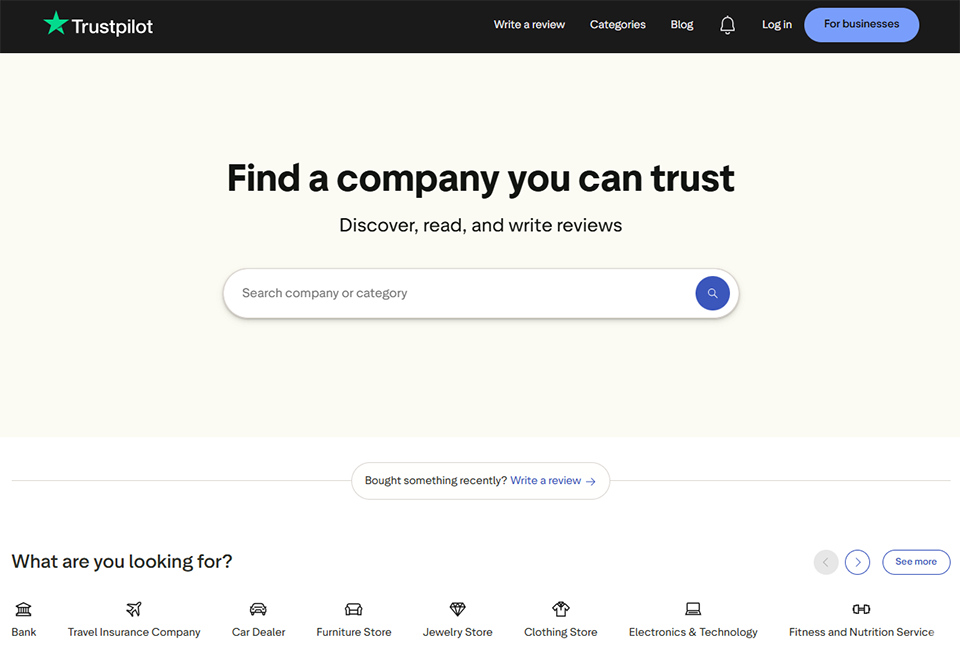
In a landscape where trust is the primary driver of conversions, customer reviews play a fundamental role. Trustpilot is the most well-known review platform in Europe, with over 350 million reviews published. For an e-commerce business, having a presence there and maintaining a good rating has become virtually must-have.
Trustpilot allows you to automatically collect verified reviews after each order via email invitations or direct integration with Shopify, WooCommerce, Magento, and other platforms. The reviews can then be displayed on your website using customizable widgets and in Google search results (star ratings in SEO and SEA ads). The platform also offers sentiment analysis tools to identify trends in customer feedback.
Trustpilot is ideal for stores that have reached a steady volume of orders and want to leverage their customer satisfaction to improve conversion rates. It’s also a useful tool for merchants who run Google Ads, as the star ratings in the ads significantly increase click-through rates.
Here is a summary table comparing the 12 tools based on their primary use cases, accessibility, and level of complexity.
| Tool | Category | Admission fee | Level of complexity | Ideal for |
|---|---|---|---|---|
| Shopify | E-commerce platform | $29/month | Low | One size fits all |
| WooCommerce | E-commerce platform | Free | Method | WordPress users |
| PrestaShop | E-commerce platform | Free / €24/month | Method | European retailers |
| Wix | Manufacturer + e-commerce | €29/month | Very low | Beginners, small volumes |
| Webflow | Manufacturer + e-commerce | $42/month | High | Designers, premium brands |
| Squarespace | Manufacturer + e-commerce | $28/month | Low | Creative, services, niche |
| Klaviyo | Email and SMS Marketing | Free / $20/month | Method | Stores with a customer base |
| Omnisend | Email and SMS Marketing | Free / $16/month | Low | Growing e-commerce businesses |
| SendCloud | Logistics / Shipping | Free / €45/month | Low | Stores that ship |
| Tidio | Live chat + chatbot | Free / $29/month | Low | All stores |
| Gorgias | E-commerce Help Desk | $10/month | Method | High-volume Shopify stores |
| Trustpilot | Customer reviews / reputation | Free / €259/month | Low | Mature shops |
The prices listed are for reference only and are subject to change. Please check the current terms and conditions directly on the publishers' websites.
Here are some answers to the questions most frequently asked by e-commerce merchants and entrepreneurs who are just starting out or looking to upgrade their tech stack.
Shopify remains the best choice for most beginners: it’s easy to get started with, has a robust ecosystem, and offers reliable performance. If you already have a WordPress site and are on a tight budget, WooCommerce is a solid alternative. Wix may be suitable for very small projects, but its scalability is limited.
Yes, and that’s often where the real difference lies. Platforms like Shopify or WooCommerce offer basic email marketing features, but a dedicated tool like Klaviyo or Omnisend provides segmentation and automation capabilities that are in a league of their own. The return on investment for a good e-commerce email marketing tool is generally one of the highest.
Not necessarily. Trustpilot is most effective when you have a steady stream of orders and satisfied customers to solicit reviews from. Launching too early can backfire if the initial reviews are negative. Focus first on the quality of your customer experience, then enable review collection once your process has stabilized.
With Tidio, right from the start: setup is quick, and even the free plan is useful for converting visitors into buyers via live chat. With Gorgias, wait until you have a sufficient volume of tickets (at least a few dozen per week) for the productivity gains to justify the investment.
The plugin itself is, yes. But you have to factor in the cost of hosting, the theme, premium extensions, and potentially development. Depending on the setup, the total annual cost can be close to that of a Shopify or PrestaShop hosted plan.
There is no one-size-fits-all answer, but a common and effective setup for a growing Shopify store looks something like this: Shopify (platform) + Klaviyo (marketing automation) + SendCloud (logistics) + Gorgias or Tidio (customer support) + Trustpilot (reputation management). This combination covers the key stages of the customer journey.
By taking discount on each tool. Most of the software mentioned in this article offers special deals available through Freelance Stack, whether you’re a freelancer, an entrepreneur, or a startup.