





Our selection of cybersecurity tools for small and medium-sized businesses.
This ranking reviews the best cybersecurity tools available to SMEs and entrepreneurs 2026…
Read more

Growth hacking isn't a magic formula or a set of secret "hacks." It's a way of thinking about growth: test quickly, measure accurately, and scale what works. And to do that, automation tools have become the key to success.
The reality on the ground is that most growth teams operate with limited resources. They don’t necessarily have an army of salespeople or an unlimited advertising budget. What sets them apart is their ability to build systems that run continuously: behavior-triggered email sequences, automated prospecting campaigns, and multichannel scenarios that trigger at the right time for the right person.
The market for marketing automation tools has exploded in recent years. According to the latest estimates, it exceeds $6 billion globally, and the trend is accelerating with the growing integration of artificial intelligence into these platforms. For a freelancer, a startup, or a small business, choosing the right tool can save a considerable amount of time and also result in significant cost savings by avoiding the need to subscribe to overly complex platforms.
Here’s an overview of the tools that appear most frequently in growth teams’ tech stacks, along with their key differences and the types of teams for which they make sense.
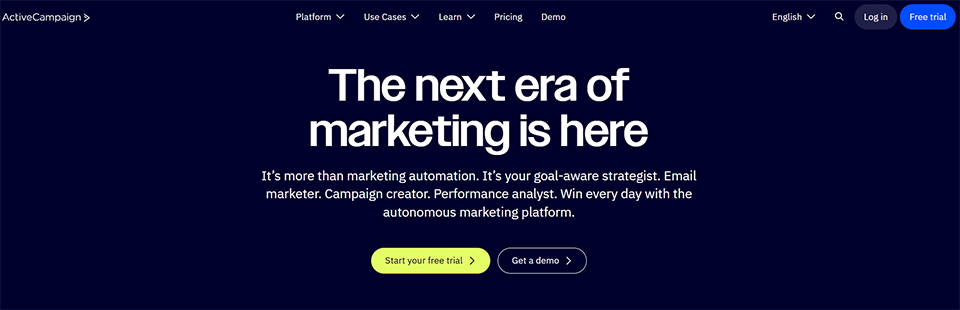
ActiveCampaign has established itself as one of the industry standards thanks to its ability to combine email marketing, a lightweight CRM, and behavioral automation within a relatively user-friendly interface. It’s the tool of choice for teams that want to go beyond simple newsletters and build true customer journeys.
ActiveCampaign's strength lies in its visual automation engine. You can build workflows using conditions, branches, time delays, and dynamic tags. Does a prospect visit your pricing page without converting? You can automatically trigger a specific sequence. Does the prospect open the email but not click? Another path is activated. This level of granularity is hard to find at this price point among direct competitors.
The built-in lead scoring feature allows you to assign points to each action (visit, click, form submission) and trigger a sales action precisely when a prospect reaches a certain level of readiness. For teams that combine marketing and sales, it serves as a true bridge between the two functions.
The integrated CRM is lightweight but sufficient for an SME or a startup in the scaling phase. It covers the pipeline, tasks, notes, and deals, without attempting to compete with dedicated tools like HubSpot or Salesforce.
For solopreneurs and freelancers:
The range of features may seem intimidating at first, but the basic plan covers the vast majority of needs: onboarding sequences, automated follow-ups, and sign-up forms. The time invested in setup pays off quickly if you have an active contact list.
For startup marketing teams:
It's often the first "serious" tool people turn to when they want to move away from Mailchimp. The combination of CRM and automation eliminates the need for multiple subscriptions and CSV exports between tools.
For agencies:
Multi-account management and agency features (available on certain plans) make it a solid choice for managing multiple clients from a single interface.
✅ Some of the most powerful automation features on the market at this price point.
✅ Lead scoring and highly granular behavioral segmentation.
✅ A fully functional native CRM for small businesses.
✅ Extensive library of automation templates.
✅ Numerous native integrations (Shopify, WordPress, Zapier, etc.).
⚠️ There is a real learning curve, especially for complex automations.
⚠️ The interface has been redesigned but is still cluttered.
⚠️ Costs rise quickly as the number of contacts increases.
⚠️ Some advanced features (reporting, A/B testing) are available only on higher-tier plans.

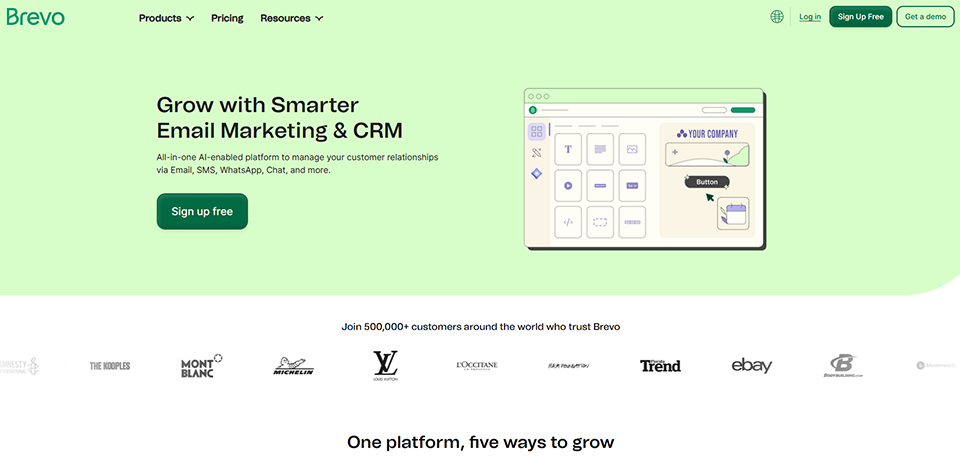

Brevo, formerly Sendinblue, has undergone a significant transformation in recent years. What was once an “affordable” email marketing tool has evolved into a comprehensive marketing platform that integrates SMS, WhatsApp, live chat, forms, and automations, while maintaining a competitive pricing strategy compared to U.S. competitors.
What sets Brevo apart is its pricing model, which is based on the volume of emails sent rather than the number of contacts. For large databases with infrequent mailings, the savings can be substantial. A list of 50,000 contacts with monthly mailings will cost significantly less than with competitors that charge based on list size.
Brevo's automation features cover standard use cases (welcome series, abandoned carts, follow-ups, birthdays) with a user-friendly visual editor. While less powerful than ActiveCampaign for highly complex scenarios, it nevertheless meets 80% of the actual needs of an SME.
GDPR compliance is inherently better than that of some U.S. competitors, a significant advantage for French companies that process European data. The servers are located in Europe, and the legal documentation is more accessible.
For small businesses and entrepreneurs
The free plan is generous and lets you get started with no commitment. It's ideal for testing the tool before upgrading to a paid plan.
For e-commerce businesses:
Native integration with WooCommerce, PrestaShop, and Shopify, combined with cart abandonment workflows, makes it a natural choice for this industry.
For teams concerned with the GDPR:
Companies that primarily process European data will appreciate the data localization and built-in compliance.
✅ Pricing based on the volume of mailings, which is cost-effective for large mailing lists with low response rates.
✅ Native multi-channel support (email, SMS, WhatsApp, chat).
✅ Strong GDPR compliance, European hosting.
✅ A free plan that's actually usable.
✅ User-friendly interface for non-experts.
⚠️ Automations are less advanced than those in ActiveCampaign or Customer.io.
⚠️ Reporting may lack depth at the basic levels.
⚠️ The email editor has been improved but still lags behind some competitors in terms of flexibility.
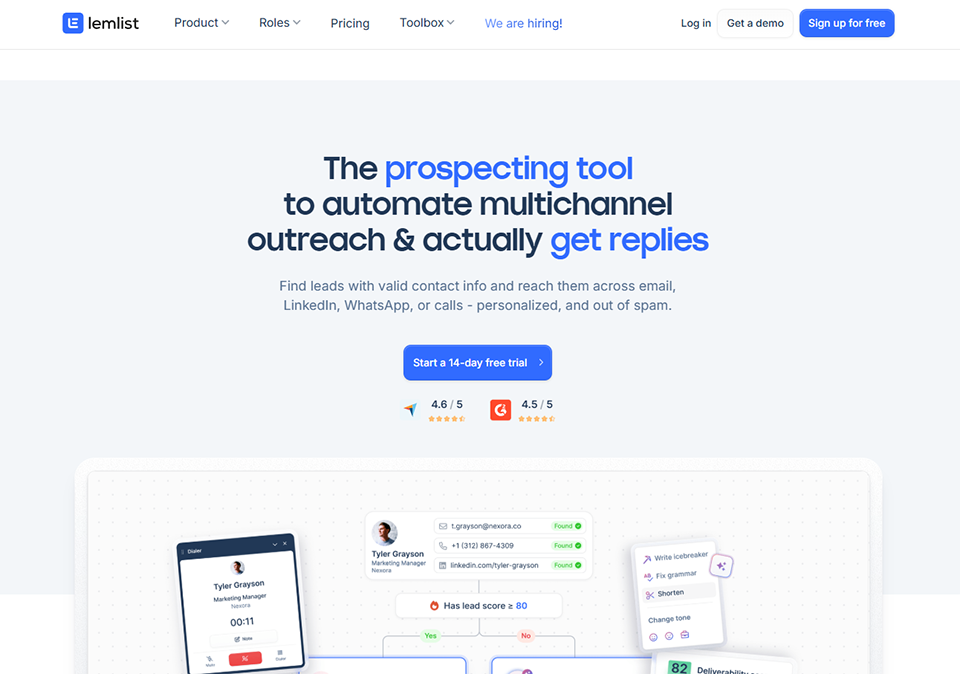

Lemlist occupies a very specific niche in the growth stack: outbound prospecting. It’s not a traditional email marketing tool. It’s a cold outreach platform designed to send personalized prospecting sequences to prospects who don’t know you yet, with the goal of maximizing deliverability and response rates.
Lemlist’s signature feature is dynamic image personalization. Each email can include an automatically generated image featuring the recipient’s name, their company’s logo, or a screenshot of their website. In a crowded inbox, this is a powerful visual differentiator that can significantly improve response rates.
Multi-step sequences allow you to combine emails, automated follow-ups, and LinkedIn actions into a single workflow. If the prospect responds, the sequence stops automatically. If the email domain bounces, Lemlist adjusts accordingly. This level of intelligent automation significantly reduces the manual work involved in follow-ups.
The built-in Lemwarm feature automatically "warms up" a new domain or email address by simulating real interactions, which improves deliverability over time. This is a tangible benefit for those launching a new email sending infrastructure.
For salespeople, business developers, and entrepreneurs
Lemlist is designed for people who are actively prospecting and want to automate their follow-ups without losing the personalized touch of a handwritten email.
For startups in the traction phase:
When you need to quickly acquire your first customers or partners without an advertising budget, a well-executed cold email remains one of the most effective channels, and Lemlist is the tool that maximizes your chances of getting a response.
For lead generation agencies:
Its multi-client management and advanced customization options make it an essential tool for agencies specializing in outbound marketing.
✅ Advanced email customization, including dynamic images.
✅ Built-in domain warm-up.
✅ Multi-channel sequences (email + LinkedIn).
✅ Detailed deliverability management.
✅ An active community and high-quality educational resources.
⚠️ Not suitable for traditional email marketing (newsletters, promotions).
⚠️ Requires a solid understanding of best practices for cold emailing to avoid damaging your reputation.
⚠️ The entry plan has a limit on the number of simultaneous connections.
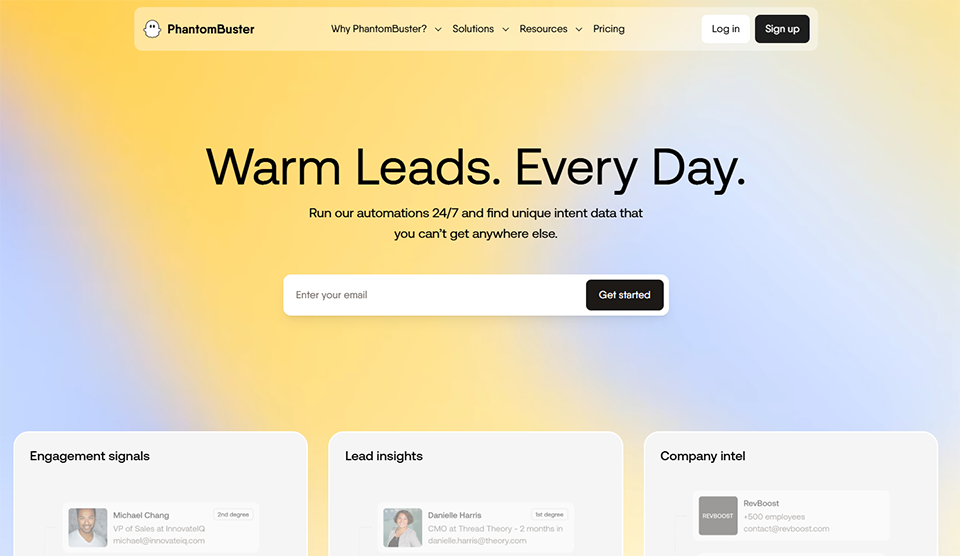
PhantomBuster is a web automation platform that allows you to extract data and automate actions on platforms such as LinkedIn, Sales Navigator, Twitter/X, Instagram, and Google Maps. It’s often one of the first tools you’ll find in an experienced growth hacker’s toolkit.
The concept is based on "Phantoms," which are preconfigured scripts that perform specific actions: extracting LinkedIn profiles that match specific criteria, retrieving members of a Facebook group, sending automated messages, liking posts, retrieving email addresses associated with profiles, and so on.
For LinkedIn prospecting, the typical workflow involves extracting a targeted list from Sales Navigator, enriching the data with email addresses using dedicated tools (such as Hunter or Apollo), and then importing that list into Lemlist or another outreach platform. PhantomBuster is often the first step in this process.
"Flows" allow you to connect multiple Phantoms together and automate entire sequences. It's like a workflow automation tool designed specifically for social media and data extraction.
For B2B sales and growth teams:
PhantomBuster ismust-have automating the creation of qualified LinkedIn prospect lists. It saves hours of manual work.
For growth hackers who are entrepreneurs
When combined with an outreach tool like Lemlist and an email verification tool like Emailable, PhantomBuster forms the backbone of a comprehensive lead generation infrastructure.
For marketers who work with social media:
Data extraction (such as a competitor's followers or group members) makes it possible to build targeted audiences that would otherwise be difficult to reach.
✅ A very extensive library of Phantoms covering many platforms.
✅ No technical skills are required to use the standard Phantoms.
✅ Automated workflows between multiple Phantoms.
✅ High-quality data extraction for B2B lead generation.
✅ Regular updates to adapt to changes in the platforms.
⚠️ Use on LinkedIn may be risky if volumes are too high (account suspension possible).
⚠️ Credit time can run out quickly on the basic plans.
⚠️ Some Phantoms may become unstable during updates to target platforms.

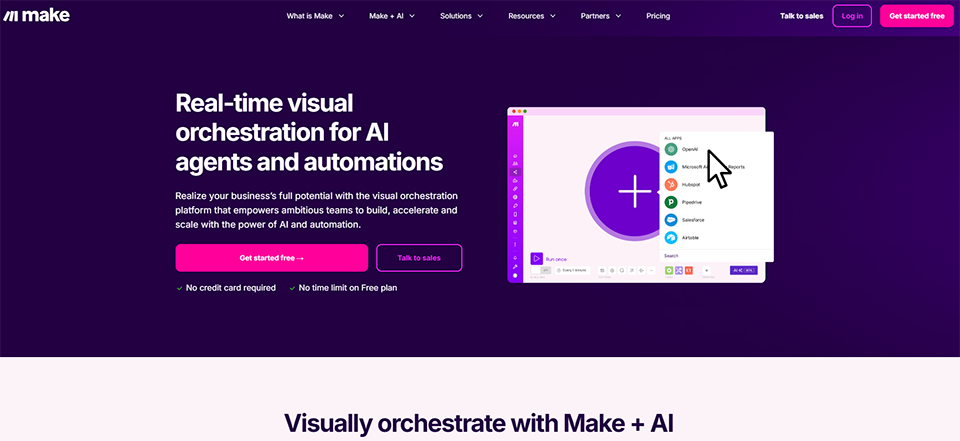

Make (formerly Integromat) is often described as “a more powerful Zapier” by those who use it. It’s a workflow automation tool that connects applications to one another and performs automated actions based on defined triggers. For growth hackers, it’s the glue that holds the rest of the stack together.
While Zapier offers a simple "if this, then that" logic, Make enables workflows with conditional branches, loops, complex data transformations, and fine-grained error handling. The visual canvas interface is more complex to learn but infinitely more flexible.
For example, a growth hacker can set up a workflow that: retrieves new sign-ups from Typeform, verifies email addresses with ZeroBounce, enriches the data using Hunter, adds them to ActiveCampaign with the correct tags, sends a Slack notification to the sales team if the lead score exceeds a certain threshold, and stores everything in an Airtable database. All of this without writing a single line of code.
Pricing based on operations (rather than the number of active workflows) allows you to run as many scenarios as you want on the lower-tier plans, which is a significant advantage over Zapier.
For growth hackers and technical marketers:
Make is clearly geared toward users who are comfortable with data logic. There is a definite learning curve, but the power it offers is incomparable to that of simpler solutions.
For startups that want to automate without a developer:
The main use case is connecting their CRM, email marketing tool, customer support system, and database without touching the code. Make makes this possible at a very reasonable cost.
For no-code agencies:
Make is often at the heart of the architectures built by specialized agencies. Its flexibility makes it a natural choice for custom projects.
✅ Visual workflows that are among the most powerful on the no-code market.
✅ Pay-per-use pricing, which is cost-effective for advanced users.
✅ More than 1,500 connected apps.
✅ Built-in error handling and monitoring.
✅ Very active community, with many templates available.
⚠️ Significant learning curve for beginners.
⚠️ The interface can be confusing in complex scenarios.
⚠️ Debugging can sometimes be difficult in scenarios with multiple branches.
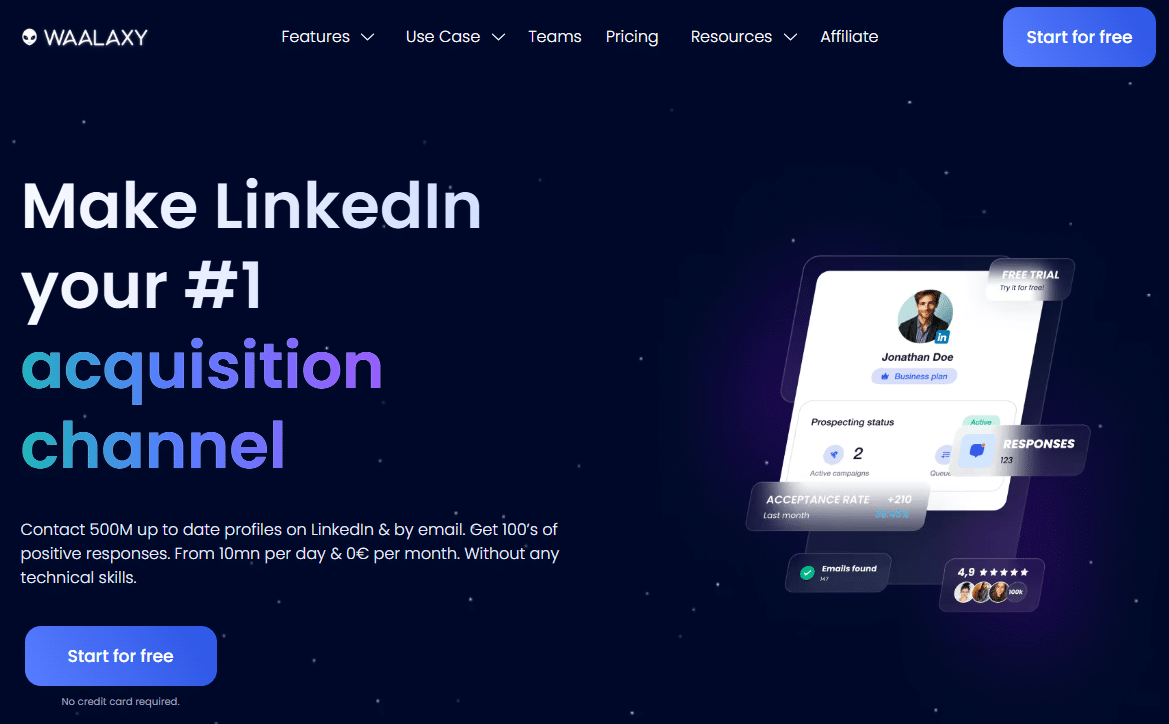
Waalaxy is a French Chrome extension that automates LinkedIn prospecting while integrating email sequences. It is one of the tools that has most helped popularize multi-channel cold outreach by making it accessible to users without technical experience.
The concept is simple: you import LinkedIn profiles (from searches, Sales Navigator, etc.), add them to a Waalaxy sequence, and the tool handles sending connection requests, follow-up messages, and emails at natural intervals to avoid triggering LinkedIn’s spam filters.
Waalaxy's main value lies in its pre-built sequences. Without having to set up anything complicated, you can launch an "invitation + follow-up message + email" campaign in just a few minutes. For someone new to automated lead generation, it's a very accessible way to get started.
The tool also includes an email finder that automatically retrieves the work email addresses associated with the targeted LinkedIn profiles, eliminating the need to use a third-party tool for this step.
For salespeople and freelancers who are new to automated lead generation:
Waalaxy is the most user-friendly tool on the market for launching your first LinkedIn campaign without any technical setup.
For recruiters:
Passive recruitment to attract qualified candidates via LinkedIn often relies on this type of tool, using tailored sequences.
For microbusinesses and small and medium-sized enterprises without a dedicated sales team:
Executives who handle sales outreach themselves will appreciate how easy it is to get started, even without a marketing background.
✅ Easy to get started with—perfect for beginners.
✅ Multi-channel LinkedIn and email campaigns in a single tool.
✅ Built-in email search (depending on the plan).
✅ French interface with responsive support.
✅ Safety limits to reduce the risk of being suspended from LinkedIn.
⚠️ Less flexibility than tools like Lemlist when it comes to customization.
⚠️ Limited to LinkedIn and email (no other channels).
⚠️ Quota limits may slow down high-volume campaigns.

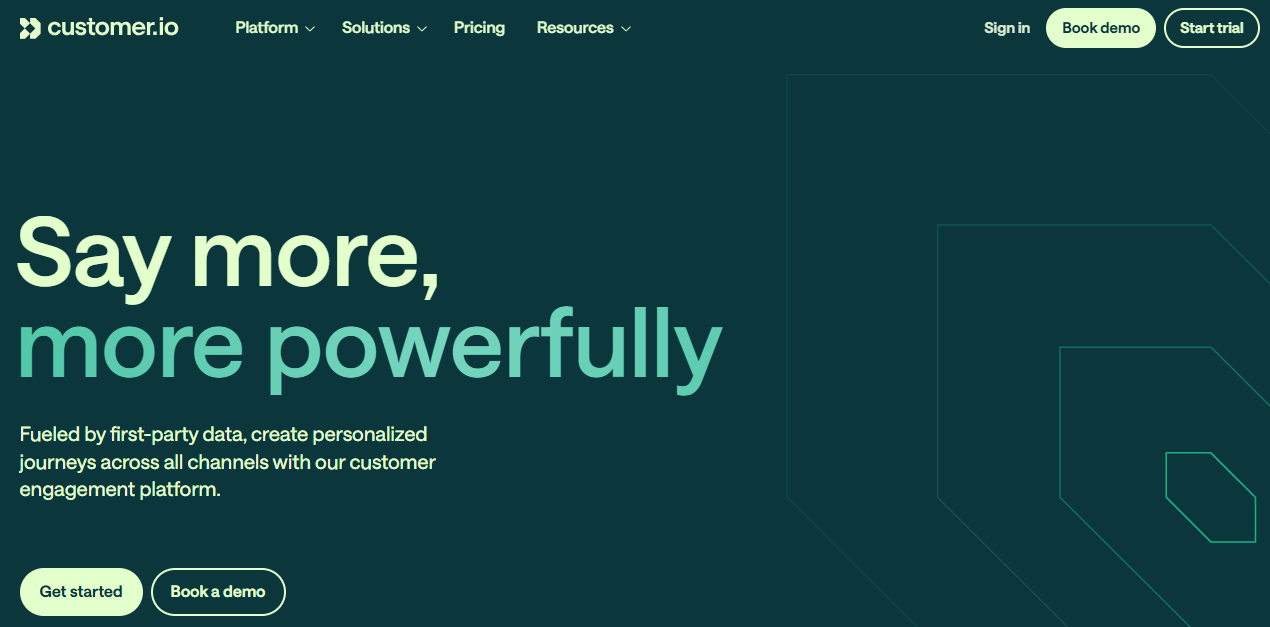
Customer.io falls into a slightly different category than the previous tools. It is a messaging automation platform focused on "product-led growth": it excels at triggering communications (emails, text messages, push notifications, in-app messages) in response to specific actions taken by users within an app.
While ActiveCampaign focuses primarily on marketing lists, Customer.io is natively designed to capture real-time events from an app or website and trigger messages accordingly. Has a user not completed their onboarding after 48 hours? A reminder email is sent automatically. Have they used a specific feature three times? A targeted upsell campaign is activated.
Technical integration is more challenging than with the other tools on this list: you need to send events via the Customer.io API (or use an analytics tool like Segment). On the other hand, the level of granularity of the triggers is unmatched for teams that have this infrastructure in place.
The visual workflow builder has been significantly improved in recent years and allows users to build highly complex multichannel workflows.
For SaaS startups and scale-ups:
Customer.io ismust-have you want to drive user activation, retention, and growth based on user behavior within the app.
For product teams that work with a growth team:
Collaboration between the two functions is facilitated by the ability to create journeys triggered by specific product events.
For teams with a mature data infrastructure:
If you're already using Segment or another CDP, Customer.io integrates seamlessly with it and leverages the full potential of your behavioral data.
✅ Automations triggered by real-time events.
✅ Advanced multi-channel support (email, SMS, push notifications, in-app, webhooks).
✅ High-quality reporting and analytics on campaign performance.
✅ Ideal for PLG (product-led growth) strategies.
✅ Recognized for its durability and reliability.
⚠️ Technical integration required (API or Segment).
⚠️ High pricing, which is difficult to justify for small organizations.
⚠️ Not suitable for cold outreach or newsletters alone.

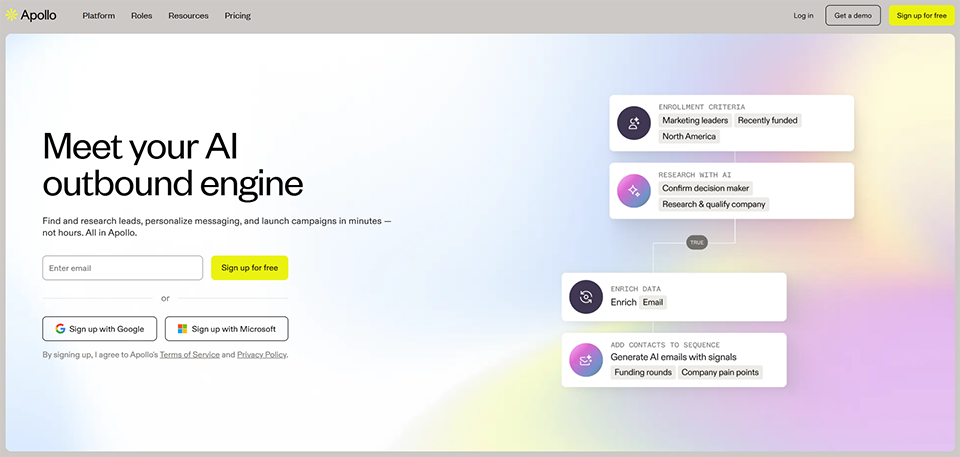

Apollo.io occupies a unique position in this ecosystem: it is both a B2B contact database (with over 270 million contacts) and a lead nurturing platform. For teams looking to combine lead generation and lead activation in a single tool, it is one of the most comprehensive options on the market.
Apollo's greatest strength is its contact search engine. You can filter by industry, company size, job title, location, technology used (via tech stack signals), recent funding rounds, and more. The quality and recency of the data have improved significantly in recent years.
Once prospects have been identified, you can add them directly to automated email sequences from the same interface, with options for personalization and A/B testing. The CRM integration (HubSpot, Salesforce, Pipedrive) is native and well-designed.
The lead scoring feature and purchase intent signals make it possible to prioritize the prospects most likely to be receptive at that specific moment, which improves conversion rates.
For B2B sales teams:
Apollo is particularly well-suited for companies that need to conduct large-scale lead generation in a specific market, using reliable and up-to-date data.
For growth hackers who do outbound marketing:
Combining the database and sequences into a single tool significantly simplifies the tech stack and reduces friction between lead generation and lead activation.
For startups with a high LCA:
When each customer is worth several thousand euros a year, investing in a tool like Apollo to optimize lead generation makes good business sense.
✅ One of the largest B2B databases on the market.
✅ Highly detailed contact search with numerous filters.
✅ Email sequences integrated into the same platform.
✅ High-quality native CRM integrations.
✅ Indicators of purchase intent (technology, hiring, fundraising).
⚠️ Data quality varies by geographic market (it is better in the U.S.).
⚠️ The free plan is very limited in practice.
⚠️ The interface may seem overwhelming to a new user.
The prices listed are for reference only and are subject to change. Please check the official pages for each tool for the most up-to-date information.
| Tool | Primary use case | Target profile | Admission price (approx.) | Easy to use |
|---|---|---|---|---|
| ActiveCampaign | Email Marketing + CRM + Automation | SMEs, startups | ~$15/month | Intermediate |
| Brevo | Email + SMS + Multi-Channel | Small Businesses, E-commerce | Free / €9/month | Easy |
| Lemlist | Personalized cold outreach | Sales, Growth | ~$39/month | Intermediate |
| PhantomBuster | LinkedIn Data Extraction + Automation | Growth Hackers | ~$56/month | Intermediate |
| Make | Workflow Automation | All profiles | Free / ~$10/month | Advanced |
| Waalaxy | Multi-Channel LinkedIn Prospecting | Beginners, freelancers | Free / ~€56/month | Easy |
| Customer.io | Product Behavioral Messaging | SaaS startups, scale-ups | ~$100/month | Advanced |
| Apollo.io | B2B Database + Sequences | B2B Sales, Growth | Free / ~$49/month | Intermediate |
Here are the questions that come up most often when discussing this topic, whether for teams just getting started or more experienced professionals looking to refine their tech stack.
No, and that’s exactly what has changed in recent years. Virtually all of the tools on this list offer affordable plans for organizations with fewer than 10 people—and some even offer fully functional free plans. Today, a startup or freelancer can implement a complete automation infrastructure for just a few dozen euros a month.
Traditional email marketing involves sending the same newsletter to an entire list on a set date. Marketing automation involves triggering personalized communications based on each individual’s behavior, profile, or stage in the customer journey. The difference in terms of the relevance perceived by the recipient is significant.
For most of the tools mentioned here, the answer is no. Brevo, Waalaxy, ActiveCampaign, and even Make can be used without technical skills. Customer.io is the exception: to integrate it fully, you need to send events via an API, which requires either development knowledge or access to a developer.
The main factor is the user experience and the level of personalization you’re looking for. Waalaxy is simpler and easier to get started with, making it ideal for beginners. Lemlist offers more customization options (including dynamic images), a better deliverability infrastructure, and is better suited for higher-volume campaigns or users who want to take personalization to the next level.
In B2B, email prospecting is permitted provided that the contacts are relevant to the targeted business activity and that each email includes an opt-out option. The CNIL has clarified this framework. In B2C, the rules are much stricter: prior consent is required.
An effective and cost-efficient starting point could be: Waalaxy or Lemlist for outbound lead generation, Brevo for email marketing and newsletters, and Make to connect these tools together. This combination covers the vast majority of needs for less than €150 per month.
Zapier is simpler and offers a broader ecosystem of integrations. Make is more powerful for complex workflows, and its per-action pricing often makes it more cost-effective for advanced users. For a beginner, Zapier is a better starting point. For someone who wants to build advanced automations, Make quickly takes the lead. Both offer a deal on the platform.