





ElevenLabs: The Ultimate Guide to Creating Ultra-Realistic AI Voices
In this article, you’ll learn everything you need to know about ElevenLabs: its features, pricing, use cases, and more…
Read more


We often hear that digital advertising is expensive and yields uncertain results. While this is sometimes true, it’s mostly a sign that the right strategies haven’t been implemented—or haven’t been implemented in the right order.
By 2026, the landscape has changed. Platforms are more sophisticated, audiences are more segmented, and the tools available to entrepreneurs, startups, and small businesses allow them to compete with budgets that are much more modest than they were five years ago. A freelancer who is proficient in Google Ads and has an optimized landing page can now generate as many leads as an agency with ten times the budget—provided they know what they’re doing.
This article reviews the 10 most effective advertising strategies for 2026, explaining for each one: what it’s used for, how to use it effectively, which audience it’s best suited for, and what tools can help you take action.
Online advertising now accounts for more than 58% of global advertising spending, with annual growth exceeding 10% according to the latest projections from Statista. It’s no longer an option for companies that want to scale—it’s a necessity. The real question isn’t “Should I advertise online?” but “Where do I start, and how can I avoid wasting my budget?”

Google Ads remains, by far, the most powerful advertising channel for businesses that sell products or services for which there is already demand. The concept is simple: your ads appear the very moment someone types in a search query related to what you offer. There’s no need to create demand—it’s already there.
The platform operates on a keyword bidding system. You define target keywords and a daily budget, and you pay only when a user clicks on your ad (CPC model). In 2026, Performance Max campaigns became even more important: they allow Google’s AI to automatically optimize your ads across all ad networks (Search, Display, YouTube, Gmail, Shopping).
The main advantage of Google Ads over other channels is the quality of user intent. A user who types in “invoicing software for freelancers” is infinitely closer to making a purchase than a user who sees a random banner ad on a website. The average conversion rate on Search is generally between 3% and 6%, compared to 0.5% to 1% for Display or social media.
Traditional Search campaigns remain the foundation, but advanced options make all the difference: remarketing (retargeting visitors to your site), lookalike audiences, ad extensions (call, reviews, additional links), and offline conversion tracking for businesses with a hybrid sales process.
🎯 Freelancers and consultants:
Google Ads is particularly effective if you’re in a market with active search demand (such as developers, accountants, or designers). A well-targeted geographic campaign can generate qualified leads quickly.
🏢 B2B Startups:
Great for generating leads if your offering addresses a problem that people are actively trying to solve.
🛒 E-commerce retailers:
Google Shopping is likely the most profitable channel for selling physical products online, with a ROAS (Return on Ad Spend) that often exceeds 3x for well-optimized campaigns.

If your target audience is professional, LinkedIn Ads is hard to ignore. The platform allows you to target audiences with surgical precision by industry, company size, job title, level of experience, and even stated skills. No other social media platform offers this level of granularity for a professional audience.
LinkedIn Campaign Manager offers several ad formats: Sponsored Content (sponsored posts in the feed), Message Ads (direct InMail), Dynamic Ads (personalized with the recipient’s profile photo), and Lead Gen Forms, which allow you to collect contact information directly on the platform without redirecting users to an external site.
Lead Gen Forms are a powerful tool for B2B lead generation. The forms are pre-filled with data from LinkedIn profiles, which significantly reduces friction. Conversion rates for these forms can exceed 10 to 15 percent, whereas a traditional landing page typically hovers around 3 to 5 percent.
🎯 Consultants and agencies:
Targeting marketing directors, CIOs, or HR directors at companies with 50 to 500 employees is one of the most common and profitable use cases.
🏢 B2B SaaS Startups:
Ideal for brand awareness and lead generation campaigns targeting decision-makers who are otherwise difficult to reach.
🚫 Less relevant for:
B2C, consumer-facing offerings, and budgets under €300–400 per month.

TikTok Ads has experienced explosive growth over the past three years and has established itself as a must-have channel for reaching 18- to 35-year-olds, as well as, increasingly, B2B audiences and more mature segments. Its CPM remains significantly lower than that of Meta or LinkedIn.
TikTok Ads Manager offers In-Feed campaigns (videos that appear in the “For You” feed), TopView campaigns (the first video users see when they open the app), and Spark Ads, which allow you to sponsor existing organic content. This last format is particularly appealing: it preserves the authenticity of the content while providing paid amplification.
TikTok’s algorithm is designed to introduce content to new audiences, even without followers. By promoting a video that’s already performing well organically, you can achieve very cost-effective results. A CPM between €3 and €8 is common, compared to €8 to €15 on Meta.
Behavioral targeting is robust (interests, purchasing behavior, lookalike audiences), but TikTok’s true differentiator remains its creative aspect: the vertical video format, the authenticity that the audience expects, and the sound trends that can propel content if used effectively.
🎯 E-commerce businesses and D2C companies:
TikTok Shop and product videos are generating impressive results, particularly in the beauty, fashion, home, and gadgets categories.
🎨 Creators and instructors:
Ideal for visibility and building an audience at a low cost.
🏢 Consumer-focused startups:
An excellent way to test a message or validate an offer before investing in more expensive channels.


Reddit brings together more than 100,000 active communities (subreddits) covering absolutely every sector and area of interest imaginable. Its advertising platform, which is still underutilized compared to Meta or Google, offers a real opportunity to reach highly targeted audiences at costs that are still affordable.
Reddit Ads allows you to target by subreddit (i.e., by topic-based community), by interests, by behavior, and by demographics. Available formats include Promoted Posts (which look like native posts in the feed) and standard Display ads. The advantage of Promoted Posts is that they can generate comments and upvotes, creating a form of organic social validation.
Reddit users are known for their skepticism toward advertising that’s too “commercial.” But when the message is authentic, informative, and provides value to the target community, engagement can be much higher than on other platforms. A sponsored post in r/entrepreneur or r/freelance can reach your exact target audience and command a high level of attention.
🎯 Tech and SaaS startups:
The r/startups, r/SaaS, and r/webdev communities represent a huge pool of early adopters.
🛠️ B2B Tools and Solutions:
If your tool solves a specific problem that people are discussing on Reddit, that’s the perfect place for it.
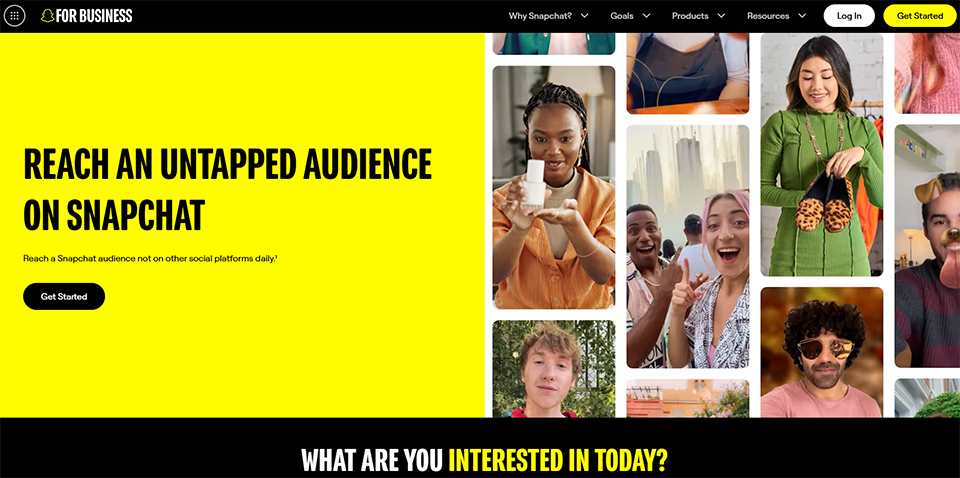
Snapchat claims to have more than 800 million active users worldwide in 2026, with a particularly strong presence among 13- to 34-year-olds. For B2C brands targeting this age group, it’s a channel they can’t afford to overlook, especially thanks to its highly immersive ad formats.
Snapchat Ads Manager offers Snap Ads (short vertical videos), Story Ads, Collection Ads (for e-commerce), and Dynamic Ads that automatically adapt to your product catalog. The platform also includes AR (augmented reality) features through Lens Ads, which allow you to create sponsored interactive filters.
🛒 Fashion, beauty, and lifestyle e-commerce retailers:
Snapchat users are extremely receptive to product ads if they are visually appealing.
🎮 Mobile apps and games:
One of the best channels for acquiring mobile users.
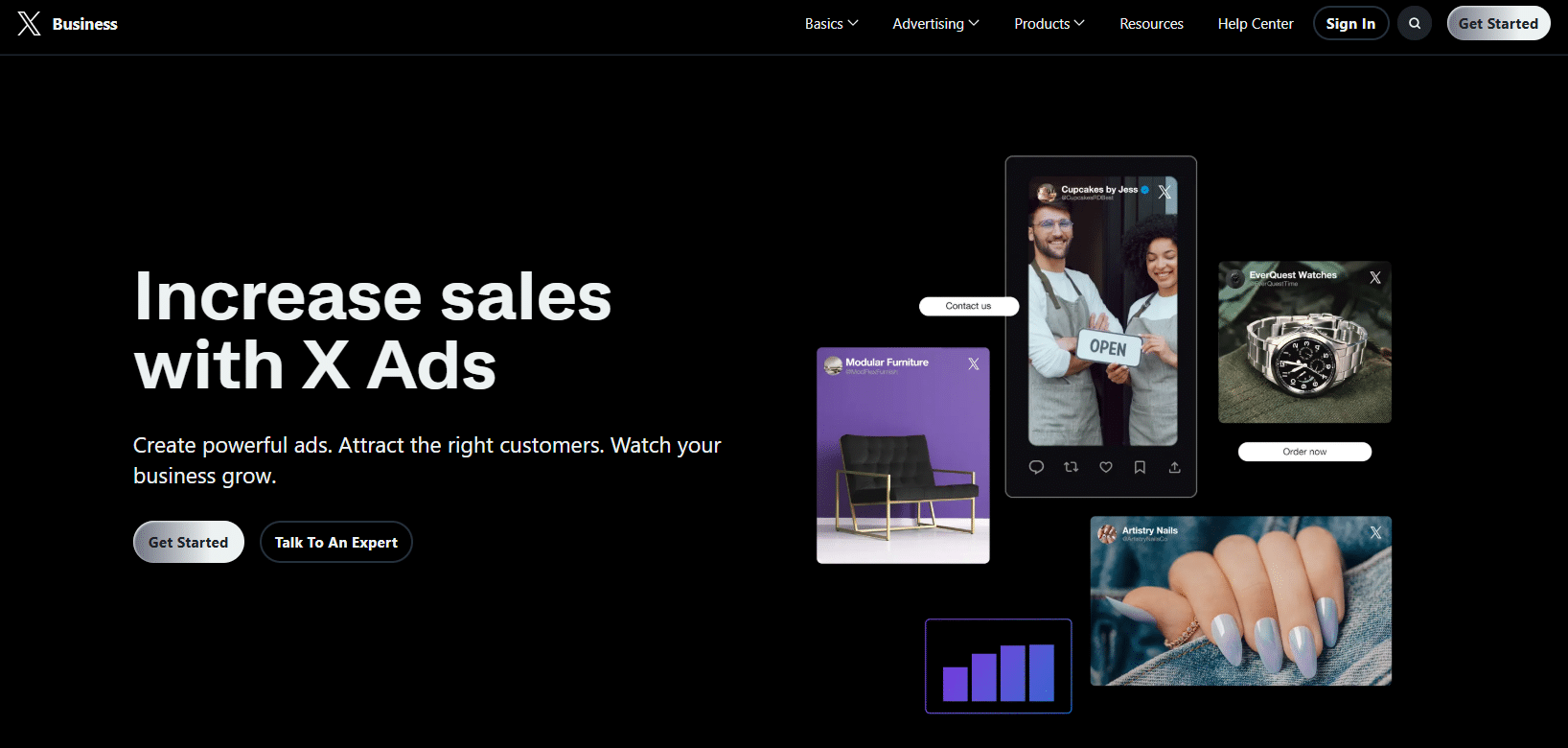
X (formerly Twitter) has evolved significantly since its acquisition by Elon Musk, but remains a relevant platform for certain very specific use cases: launching a product by capitalizing on buzz, engaging a tech or fintech community, or targeting early adopters who are attuned to current events.
X Ads allows you to target users based on keywords used in tweets, interests, lists of accounts they follow, and events. The Promoted Posts and Promoted Trends formats allow you to join ongoing conversations in a fairly natural way.
🚀 Tech startups:
X remains a prime venue for interaction among founders, investors, and early adopters. A well-executed product launch can generate significant organic coverage, amplified by advertising.
📊 Fintech and crypto:
X’s audience is particularly active on these topics.

Having well-targeted ad traffic isn’t much use if the landing page doesn’t convert. Yet that’s where many advertisers lose half their budget. A dedicated landing page builder changes the equation completely.
Unlike a traditional website, a landing page is designed with a single goal in mind: to convert a visitor into a lead or a customer. These tools allow you to create pages optimized for conversion without any coding, featuring built-in A/B testing, dedicated analytics, and native integrations with major advertising platforms.
Unbounce:
It is the long-standing market leader, featuring a very powerful drag-and-drop editor and a Smart Traffic feature that automatically redirects visitors to the page variant that converts best for their profile. Starting at $74/month.
Instapage:
It stands out for its advanced customization features and team collaboration tools, which are ideal for agencies that manage multiple accounts. Starting at $99/month.
LeadPages:
It’s the most affordable solution, without compromising on the essentials. It also offers pop-ups and alert bars to capture leads on your existing website. Starting at $37/month.
🎯 All advertisers:
Whenever you invest in paid advertising, a dedicated landing page is a must. Sending paid traffic to your generic homepage is the most common—and most costly—mistake.
🏢 Startups in the validation phase:
Create a landing page in just a few hours to test a message or an offer before developing anything.


Online advertising can’t be approached in a vacuum. Understanding which keywords your competitors are buying, which ads they’ve been running for months (a sign that they’re converting), and how their paid advertising strategy is structured can save you weeks of testing.
SEMRush is the most comprehensive all-in-one marketing suite on the market. Its Advertising Research module lets you analyze any competitor’s Google Ads campaigns: purchased keywords, estimated spend, active ad copy, and landing pages used. The Keyword Magic Tool module lists more than 25 billion keywords along with their search volume, difficulty, and estimated CPC.
Rather than starting from scratch and feeling your way for months, SEMRush lets you quickly identify the most profitable keywords in your market, avoid those that your competitors have already saturated, and find positioning opportunities that no one has tapped into yet.
Advertising Research, PLA Research (for Google Shopping), Keyword Magic Tool, Position Tracking, and the Ad Builder, which helps you write optimized ads.
📊 Intermediate and advanced advertisers:
The tool really comes into its own when you already have active campaigns and are looking to optimize them using solid data.
🏢 Marketing agencies and consultants:
Managing multiple client accounts becomes much more efficient with SEMRush’s auditing and reporting tools.

Generating traffic through paid campaigns is great. But that traffic doesn’t always convert on the first visit, and following up with continuous advertising is expensive. An automated email sequence is the best tool for recouping the cost of acquisition and turning lukewarm leads into customers.
Klaviyo:
is the go-to solution for e-commerce businesses. Its native integrations with Shopify, WooCommerce, and leading e-commerce platforms make it the top choice for online stores looking to automate their welcome, abandoned cart, post-purchase, and re-engagement sequences. Starting at $30/month, depending on list size.
Brevo:
(formerly Sendinblue) is the most well-rounded solution for French startups and small and medium-sized businesses. It combines email marketing, SMS, live chat, and CRM into a cohesive interface, with very competitive pricing. What sets it apart is that it charges based on the volume of emails sent rather than the size of the mailing list, which benefits organizations with a large number of contacts but moderate sending frequencies. Free for up to 300 emails per day, then starting at $19/month.
ActiveCampaign:
is the choice of B2B marketers who need advanced automation workflows, lead scoring, and native CRM integration. Its visual automation builder is one of the most powerful on the market. Starting at $29/month.
These three tools integrate directly with advertising platforms (Meta, Google, TikTok) to create custom audiences from your email lists and lookalike audiences based on your best customers. This is known as the “push-pull” strategy: advertising drives traffic, while email drives conversions.
🛒 E-commerce retailers:
Klaviyo is built for this. The cart abandonment sequence alone can recover 10 to 15% of abandoned carts.
🏢 B2B SaaS:
ActiveCampaign for complex workflows with lead scoring and CRM integration.
🚀 Startups and SMEs:
Brevo offers unbeatable value for money with all the essential features.

Investing in advertising without analyzing user behavior on your site is like sailing without a dashboard. These behavioral analytics tools are the final piece of an effective advertising strategy: they tell you why your traffic isn’t converting and where your user journey is stalling.
Hotjar:
is the go-to tool for understanding visitor behavior through heatmaps (which show where people click, scroll, and pause), session recordings, and on-site surveys. If your Google Ads campaigns are driving traffic but your bounce rate is high, Hotjar will tell you exactly where the problem lies. Free for up to 35 sessions per day, then starting at €32 per month.
Mixpanel:
is more focused on product analytics and event tracking. It allows you to track specific events in the user journey (clicking a button, completing a form, an onboarding step) and analyze conversion funnels in detail. Ideal for SaaS companies that want to understand where users drop off in their funnel. Free for up to 20 million events per month; pricing available upon request.
By combining data from your advertising platforms with behavioral analytics, you can pinpoint exactly which audience converts best on which page, which ad message aligns with which user intent, and where to increase or cut your investment. That’s the difference between optimizing blindly and optimizing with data.
🎯 All advertisers who have a recurring advertising budget:
The investment in these tools pays for itself in a matter of weeks if you use the insights to optimize your campaigns.
Price ranges and figures are for illustrative purposes only and are subject to change. Check current rates directly on the platforms’ websites before making any budget decisions.
| Lever | Channel Type | Average CPM | Recommended minimum budget | Ideal Profile | Level of complexity |
|---|---|---|---|---|---|
| Google Ads | Search / Display / Shopping | Variable (CPC €1–15) | €300–500/month | All (existing demand) | ⭐⭐⭐ |
| LinkedIn Ads | Professional social network | €30–80 | 500 €/month | B2B, decision-makers | ⭐⭐⭐ |
| TikTok for Business | Social Video | €3–8 | €200–300/month | B2C, ages 18–35 | ⭐⭐ |
| Reddit Ads | Communities | €2–7 | €150–300/month | Tech, SaaS, niche | ⭐⭐ |
| Snapchat Ads | Social network | €3–10 | 200 €/month | B2C, ages 13–34 | ⭐⭐ |
| X Ads | Social network | €4–12 | 200 €/month | Tech, fintech, launch | ⭐⭐ |
| Unbounce / Instapage / LeadPages | Conversion | N/A | $37–$99/month (tool) | All | ⭐⭐ |
| SEMRush | Competitive Intelligence | N/A | $139/month (tool) | Intermediate advertisers / agencies | ⭐⭐⭐ |
| Klaviyo / Brevo / ActiveCampaign | Email Automation | N/A | Starting at $19–$30/month | E-commerce, SaaS, SMEs | ⭐⭐ |
| Hotjar / Mixpanel | Behavioral Analysis | N/A | Free + Paid | All | ⭐⭐ |
The list of strategies above may seem long. Here is a simple guide to help you prioritize based on your situation:
Start with Google Ads, targeting local geographic areas or search queries that are highly specific to your area of expertise. Create a simple landing page with LeadPages. Install Hotjar to see how your visitors behave. These are the three essential elements for a system that works.
LinkedIn Ads for generating qualified leads, paired with ActiveCampaign for lead nurturing. SEMRush for analyzing the competition and identifying opportunities. Instapage or Unbounce for your landing pages. And Mixpanel for detailed tracking of your funnel.
Google Shopping is the top priority, followed by TikTok Ads for brand awareness and reaching new audiences. Klaviyo for email automation and abandoned cart recovery. Hotjar for optimizing product pages and the purchase funnel.
Diversification across 3 to 4 channels simultaneously, SEMRush for competitive intelligence, and a multi-touch attribution tool to understand the actual contribution of each channel.
Between the rise of AI and new privacy regulations, digital marketing is changing rapidly. Want to invest wisely and boost your profitability?
There’s no one-size-fits-all figure, but if you’re spending less than €150 to €200 per month, it’s hard to collect enough data to optimize anything. On Google Ads, a budget of €300 to €500 per month is really the minimum needed to seriously target a non-competitive niche.
It depends mainly on your offering. Google Ads performs better when there is active demand (people are actively searching for what you offer). Meta (Facebook/Instagram) works better for creating demand, reaching a cold audience, or selling visual products with a strong emotional impact. Ideally, you should use both in a complementary way.
Technically, yes, but that’s a mistake. Sending paid traffic to your general homepage causes conversion rates to drop dramatically. A dedicated landing page with a message that aligns with the ad can increase conversions by 2 to 4 times among the same audience.
The key metric is ROAS (Return on Ad Spend) for e-commerce, and CPL (Cost Per Lead) or CAC (Customer Acquisition Cost) for B2B. Define your break-even point before you launch, not after. A tool like SEMRush or a properly configured Google Analytics 4 setup with conversion tracking is essential for obtaining reliable data.
Not as much as for B2C, but not zero either. Certain B2B categories work well on TikTok, particularly productivity tools, visual SaaS solutions, or anything that can be demonstrated in a short video. The targeting isn’t as precise as on LinkedIn, but the cost is unbeatable. It’s a channel worth testing with a small budget before making a final decision.
Both have their place. With a monthly advertising budget of less than €2,000, an agency will often charge too high a management fee for it to be cost-effective. Above that amount—and especially if you’re managing multiple channels at the same time—the expertise of a specialist or an agency can quickly pay for itself.
Three essential best practices: (1) Never launch a campaign without properly configured conversion tracking, (2) Always test a dedicated landing page rather than the homepage, (3) Analyze the data at least once a week and cut off underperforming campaigns without hesitation. Money wasted on advertising almost always stems from a lack of rigor in tracking, not from a problem with the platform.