Storage and the Cloud: A Comparison of Cloud Giants for Startups and SMEs
This article offers a comprehensive overview of the landscape—from cloud infrastructure platforms to collaborative storage solutions—with a focus on the practical needs of a team of 1 to 100 people looking to move quickly without breaking the bank.
Why Is Choosing the Cloud (Truly) Strategic for Your Business?
The cloud is often the first major infrastructure decision a startup or SME has to make, and yet it’s rarely the one they’re best prepared for. People choose a solution because a colleague recommended it, because it’s what they’ve always used, or simply because the homepage looked good. The problem is that a bad choice here can be costly—literally.
According to Gartner, global spending on public cloud services exceeded $675 billion in 2024, with annual growth showing no signs of slowing down. For French and European startups and SMEs, the market has also become deeply structured: on one side are the American hyperscalers (AWS, Google Cloud, Azure), on the other are European players rapidly gaining ground (OVH, Scaleway, Infomaniak), and finally file storage solutions designed for teams that don’t need a full-fledged server architecture (Google Drive, Proton Drive, Box, Mega).
So the question is no longer “Should we move to the cloud?” but “Which one, for what purpose, and at what cost?”
This article offers a comprehensive overview of the landscape—from cloud infrastructure platforms to collaborative storage solutions—with a focus on the practical needs of a team of 1 to 100 people looking to move quickly without breaking the bank.
Cloud infrastructure platforms: when you need power.
These solutions are designed for teams that develop digital products, manage databases, deploy applications, or need a scalable infrastructure. This isn't just file storage—it's on-demand computing.
#1 - Amazon AWS Activate: The de facto standard. Widely acclaimed, complex, must-have.
For more than fifteen years, Amazon Web Services has been the gold standard in cloud computing. With more than 230 services available (computing, storage, databases, machine learning, IoT, CDN, etc.), AWS is literally the most comprehensive cloud platform on the market. Startups such as Airbnb, Spotify, and Doctolib have built part of their infrastructure on it.
What sets AWS apart from its competitors is, first and foremost, the maturity of its ecosystem: comprehensive documentation, a massive community, recognized certifications, and a presence in 33 geographic regions worldwide. In terms of reliability, AWS offers SLAs (service level agreements) with a 99.99% availability guarantee for its core services.
Key features:
Amazon EC2: on-demand virtual servers that can be scaled in minutes.
Amazon S3: the go-to object storage solution for all types of files (backups, media, static data).
AWS Lambda: a serverless architecture where you only pay for what you use.
Amazon CloudFront: A global CDN to speed up the delivery of your content.
Amazon SageMaker: A machine learning platform for data teams.
Pricing:
EC2 server (t3.micro): starting at approximately $0.0116/hour (pay-as-you-go).
S3 Storage: approximately $0.023/GB/month (for the first 50 TB).
Advanced Infrastructure: several hundred euros per month, depending on the scope and the services used.
AWS Activate Program: Up to $100,000 in credits (depending on the startup's stage; includes support and training).
✅ The benefits:
The most comprehensive ecosystem on the market (230+ services).
Global presence across 33 regions.
Generous credits for startups through AWS Activate.
Virtually universal compatibility with third-party tools.
An exceptional community and training resources.
👎 The downsides:
Significant learning curve for beginners.
Complex pricing structures can lead to unexpected charges on your bill.
Subject to the U.S. Cloud Act.
Basic support is limited; premium support is expensive.
Benefit from a on Amazon AWS Activate.
$5,000 in free credits
Find our best discount right now with Amazon AWS Activate and save on your software subscriptions. We offer over 850 promo codes and discounts on the best software and SaaS on the market.
#2 - Google Cloud: The data-driven alternative, with a real strength in AI and machine learning.
Google Cloud Platform (GCP) is often described as the third-largest player in the market behind AWS and Azure, but this ranking is misleading. In certain verticals—such as data, artificial intelligence, and machine learning—GCP is simply ahead of the competition.
Google Cloud's infrastructure is built on the same private network as Google Search, Gmail, and YouTube. This results in exceptional network performance and low latency worldwide. Teams that work with large volumes of data or are looking to integrate AI capabilities into their products will find GCP to be a particularly fertile ground.
Key features:
Compute Engine: Virtual machines with pricing that is often competitive with AWS.
Google Kubernetes Engine (GKE): container orchestration, recognized as one of the best on the market.
BigQuery: a serverless data warehouse that is extremely powerful for analyzing large volumes of data.
Vertex AI: a unified platform for AI/ML, with access to Gemini models.
Cloud Run: Deploying containerized applications without managing servers.
Firebase: an all-in-one mobile/web backend that's very popular with early-stage product teams.
Pricing:
Virtual machines (e2-micro): free (within the monthly usage limit).
Cloud Storage: approximately $0.020 per GB per month.
Automatic discounts: Sustained Use Discounts (discounts applied automatically based on usage, with no commitment).
Startup Program: Up to $200,000 in credits over two years (for eligible startups).
The undisputed leader in data and machine learning.
BigQuery is the industry standard in its category.
Automatic discounts based on usage, with no commitment required.
Access to Gemini models via Vertex AI.
👎 The downsides:
A long-standing reputation for discontinuing products (Google Cemetery).
The interface is sometimes less intuitive than AWS in certain areas.
Subject to the U.S. Cloud Act.
Responsive support is harder to obtain on smaller plans.
Benefit from a on Google Cloud.
Specific discounts at scale
Find our best discount right now with Google Cloud and save on your software subscriptions. We offer over 850 promo codes and discounts on the best software and SaaS on the market.
#3 - Microsoft Azure: The cloud for businesses that operate within the Microsoft ecosystem.
Azure is Microsoft's cloud platform, and while that may seem like an oversimplification, it's still the key to understanding its market positioning. If your organization already uses Microsoft 365, Teams, Active Directory, or Windows Server licenses, Azure integrates natively with this entire ecosystem. This is often the primary decision factor for French SMEs that already use Microsoft products.
With more than 60 regions worldwide, Azure has the broadest geographic coverage of the three hyperscalers. In Europe, this is a significant advantage when it comes to data sovereignty and GDPR compliance.
Key features:
Azure Virtual Machines: On-demand computing with dozens of configurations.
Azure Blob Storage: object storage comparable to S3, with different temperature tiers (hot, cold, archive).
Azure OpenAI Service: Access to GPT-4, DALL-E, and other models in a secure environment.
Pricing:
Virtual machine (B1s): approximately $0.011/hour (1 vCPU, 1 GB RAM).
Blob Storage: starting at $0.018/GB/month (hot tier).
Cost-saving options: up to 72% off (with 1- or 3-year instance reservations).
Billing model: Pay-as-you-go.
✅ The benefits:
Native integration with Microsoft 365 and Active Directory.
Maximum geographic coverage (60+ regions).
Certified compliance for regulated industries.
Azure OpenAI Service: Access to GPT models in a secure environment.
Attractive discounts on long-term reservations.
👎 The downsides:
The interface can be complex at times and is less developer-friendly.
Pricing is difficult to predict for hybrid projects.
Subject to the U.S. Cloud Act.
You'll need to build up your skills if you're coming from another cloud platform.
Benefit from a on Microsoft Azure.
Up to $5,000 in Azure credits
Find our best discount right now with Microsoft Azure and save on your software subscriptions. We offer over 850 promo codes and discounts on the best software and SaaS on the market.
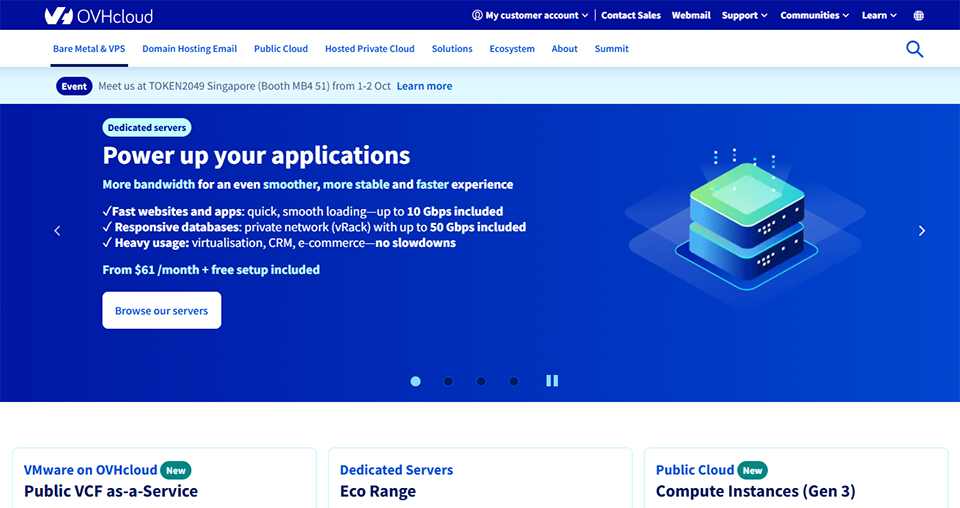
#4 - OVH Cloud / OVH Public Cloud: The European sovereign cloud, designed for businesses that don't want to depend on GAFAM.
OVHcloud is Europe’s leading hosting provider and one of the world’s major cloud players, with 43 data centers spread across four continents. For French and European companies, it is often the natural solution to digital sovereignty concerns: data remains in Europe, under French and European jurisdiction, without being subject to the U.S. Cloud Act.
OVHcloud offers an exceptionally wide range of services, from dedicated servers to the public cloud and managed solutions. OVH's Public Cloud is based on OpenStack, which provides significantly greater portability than that of U.S. hyperscalers.
Key features:
Public Cloud Instances: Virtual machines available in seconds at competitive rates.
S3 Object Storage: Compatible with the Amazon S3 API, which simplifies migrations.
Managed Kubernetes: Container orchestration without the complexity of management.
Managed Databases: Managed PostgreSQL, MySQL, MongoDB, and Redis.
Cold Archive: Very low-cost long-term storage for regulatory archives.
AI Deploy: Deployment of AI models on GPU infrastructure.
Pricing:
Instance B2-7: approximately €0.044 per hour (2 vCPUs, 7 GB RAM).
Object Storage: starting at €0.0079/GB/month.
Startup Program: Dedicated cloud credits available (subject to eligibility).
Positioning: some of the most competitive rates on the market.
✅ The benefits:
European sovereignty, free from the Cloud Act.
Competitive pricing, especially for dedicated servers.
Hosting in France and Europe.
S3 API-compatible, which makes migrations from AWS easier.
Startup program with dedicated funding.
👎 The downsides:
The interface is sometimes less polished than that of the hyperscalers.
A narrower range of managed services than AWS or Azure.
A support system that is sometimes singled out during major incidents (the 2021 Strasbourg incident).
A less developed partner ecosystem.
Benefit from a on OVH Cloud.
Up to €100,000 in Cloud and AI credits
Find our best discount right now with OVH Cloud and save on your software subscriptions. We offer over 850 promo codes and discounts on the best software and SaaS on the market.
#5 - Scaleway: A tech-friendly cloud service, made in France, with a clear pricing structure.
Scaleway is the cloud subsidiary of Iliad (the Free Group) and has built a solid reputation among European developers and tech startups. Its value proposition: well-designed products, a polished developer experience, transparent pricing, and a strong European presence.
Another factor that sets Scaleway apart is its commitment to sustainability: its Paris data centers are cooled using water from the Seine and boast a PUE (Power Usage Effectiveness) rating that ranks among the best in the industry.
Key features:
Instances: a wide range of VMs, including GPUs for AI workloads.
Object Storage: S3-compatible, with a clear pay-as-you-go pricing model.
Serverless Functions and Containers: for modern event-driven architectures.
Managed Databases: Managed PostgreSQL and MySQL.
Generative APIs: Access to language models via API at competitive rates.
Kosmos (Managed Kubernetes): container orchestration with native integration into the Scaleway ecosystem.
Pricing:
DEV1-S instance: starting at €0.02/hour (2 vCPUs, 2 GB RAM).
Object Storage: €0.06/GB/month (outbound bandwidth included in some plans).
Positioning: pricing that is among the most transparent on the market.
✅ The benefits:
A European cloud with a strong presence in France and a strong commitment to environmental sustainability.
Transparent pricing—no surprises.
An excellent developer experience.
Competitive generative APIs for accessing LLMs.
No charges for incoming bandwidth.
👎 The downsides:
Fewer managed services than the major hyperscalers.
More limited geographic coverage (Paris, Amsterdam, Warsaw).
Fewer community resources and third-party materials.
There is no startup program as structured as AWS or GCP.
Benefit from a on Scaleway.
€500 in credits
Find our best discount with Scaleway and save on your software subscriptions. We offer over 850 promo codes and discounts on the best software and SaaS on the market.
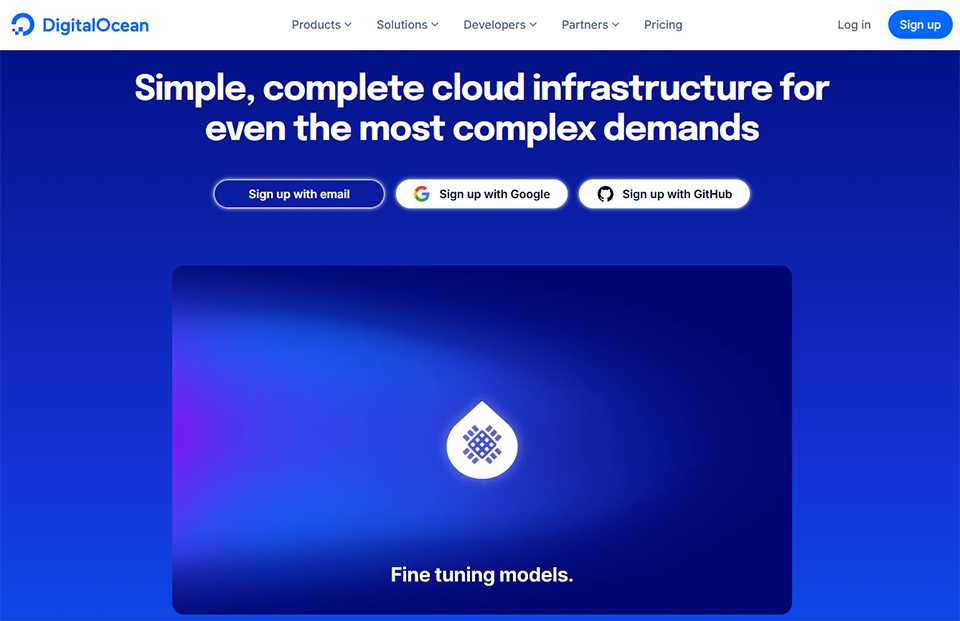
#6 - DigitalOcean: The cloud platform designed for developers and small teams who want to get things done quickly.
Benefit from our free deal on DigitalOcean.
$200 in credits
Find over 300 free deals as well as over 850 Premium deals right now with DigitalOcean and save on your software subscriptions. Whether you're an entrepreneur, a startup or a solo freelancer, save hundreds of euros thanks to our discounts and promo codes.
DigitalOcean occupies a well-defined niche: a simple, accessible, and thoroughly documented cloud platform designed for independent developers and teams without a dedicated IT department. While AWS can seem intimidating when you first log in, DigitalOcean does the exact opposite with a streamlined interface and exceptionally well-crafted getting-started guides.
Key features:
Droplets: virtual machines (VMs) that can be deployed in 55 seconds.
Spaces: S3-compatible object storage.
App Platform: Deploy applications without managing infrastructure.
Storage Spaces: $5/month (includes 250 GB of storage and 1 TB of data transfer).
Key advantage: excellent price transparency (no hidden fees or surprises on the bill).
✅ The benefits:
One of the best developer experiences on the market.
Simple and predictable pricing.
Excellent documentation and tutorials.
App Platform for deployment without managing the infrastructure.
Very accessible for non-specialists.
👎 The downsides:
More limited geographic coverage.
Less suitable for highly complex or high-performance architectures.
Subject to the Cloud Act (U.S. company).
Fewer native integrations with enterprise tools.
Benefit from a on DigitalOcean.
$5,000 in credits
Find our best discount right now with DigitalOcean and save on your software subscriptions. We offer over 850 promo codes and discounts on the best software and SaaS on the market.
Collaborative storage solutions: for your files, documents, and team sharing.
These tools are not infrastructure platforms. They address a different question: How can you store, share, and collaborate on your files on a daily basis? They’re ideal for teams that don’t need to deploy applications but want a reliable and secure digital workspace.
#7 - Google Drive: The most widely used—and for good reason.
Google Drive is now the most widely used online storage service in business environments, and that’s rarely by chance. Its integration with Google Workspace (Docs, Sheets, Slides, Meet, Gmail) makes it a natural hub for teams already working within the Google ecosystem.
The 15 GB of free storage remains an exception in the industry. And the real-time document collaboration experience is, to date, hard to match.
Key features:
Cloud storage with desktop/mobile synchronization.
Real-time collaboration on Docs, Sheets, and Slides.
Full-text search across all your documents (including scanned PDFs).
Granular sharing (viewer, commenter, editor) with or without a Google account.
Integration with hundreds of apps via the Google Workspace Marketplace.
Drive for Desktop: Selective synchronization to keep your local drive from getting full.
Pricing:
Personal Plan: Free (includes 15 GB).
Business Starter Plan: €6 per user per month (30 GB per user).
Standard Business Plan: €12 per user per month (2 TB per user).
✅ The benefits:
15 GB free, no credit card required.
The gold standard in real-time collaboration.
Seamless integration with the Google Workspace ecosystem.
Powerful search across all file types.
Seamlessly accessible on all devices.
👎 The downsides:
Data hosted by Google and subject to U.S. laws.
No end-to-end encryption.
Limited privacy; Google analyzes metadata.
The free offer is not unlimited.
Benefit from a on Google Drive.
15% off on any plan
Find our best discount with Google Drive and save on your software subscriptions. We offer over 850 promo codes and discounts on the best software and SaaS on the market.
#8 - Proton Drive: End-to-end encrypted cloud storage for teams that take privacy seriously.
Benefit from our free deal on Proton Drive.
20% off on annual plan
Find over 300 free deals as well as over 850 Premium deals right now with Proton Drive and save on your software subscriptions. Whether you're an entrepreneur, a startup or a solo freelancer, save hundreds of euros thanks to our discounts and promo codes.
Proton Drive is the storage solution from the Proton suite, the Swiss company known for Proton Mail. Its key selling point is simple and non-negotiable: end-to-end encryption for all your files. Not even Proton can read what you store.
For teams that handle sensitive data (law firms, healthcare professionals, accountants, agencies that process customer data), this is a game-changer.
Secure sharing with a password-protected link and an expiration date.
Integration with Proton Mail, Proton Calendar, and Proton VPN.
180-day version history (paid plans).
Hosted in Switzerland, under Swiss law.
Pricing:
Free Plan: free (includes 1 GB).
Drive Plus Plan: €3.99/month (200 GB).
Proton Business Plan: starting at €6.99 per user per month (includes Proton Mail and Drive).
Ecosystem: Access to Proton Docs, Proton Sheets, and Proton Pass for a comprehensive, privacy-focused suite.
✅ The benefits:
End-to-end encryption: Not even Proton can read your files.
Hosting in Switzerland, outside the scope of the U.S. GDPR.
Complete Suite: Mail, Drive, VPN, and Calendar—all in one subscription.
Trust and a solid reputation within the privacy community.
👎 The downsides:
Fewer collaboration features than Google Drive.
Desktop applications that are still in the development phase.
Limited free storage (1 GB).
Fewer integrations with third-party tools.
Benefit from a on Proton Drive.
An additional 25% off on annual plan
Find our best discount right now with Proton Drive and save on your software subscriptions. We offer over 850 promo codes and discounts on the best software and SaaS on the market.
#9 - Box: The cloud-based document management solution for businesses with advanced requirements.
Box is often less well known to the general public than Google Drive or Dropbox, but in corporate environments and regulated sectors (healthcare, finance, legal), it is a leader. Its offering goes beyond simple storage: Box is a Content Cloud platform—that is, a centralized system for managing, sharing, signing, and automating document workflows.
Key features:
Storage and sharing with highly granular access controls.
Box Sign: Integrated electronic signature.
Box Relay: automation of document workflows.
Box AI: AI-powered information extraction and document summarization.
Integrations with Microsoft 365, Salesforce, Slack, Zoom, and 1,500+ others.
Certified compliance: FedRAMP, HIPAA, FINRA, ISO 27001.
Pricing:
Business Plan: Starting at $15 per user per month (minimum of 3 users, unlimited storage).
Business Plus Plan: $25 per user per month (includes advanced features such as Box Relay).
✅ The benefits:
Major compliance certifications (HIPAA, FedRAMP, FINRA, ISO 27001).
Highly granular access controls.
Box Sign and Box Relay for document workflows.
Over 1,500 integrations with business tools.
Unlimited storage on Business plans.
👎 The downsides:
Higher price than the competition.
Not very relevant for very small organizations.
The interface may seem outdated compared to some competitors.
Learning curve for advanced features.
#10 - Mega: 20 GB free, end-to-end encryption, and prices that make you think.
Mega is the New Zealand-based platform founded by Kim Dotcom after Megaupload was shut down. Today, with a completely revamped management team and business model, Mega has repositioned itself as a credible alternative to the major players, with a compelling selling point: 20 GB of free storage with end-to-end encryption included by default.
Key features:
20 GB free (no credit card required).
Client-side encryption for all files and folders.
Desktop (Windows, macOS, Linux) and mobile apps.
Sharing with encrypted links that can be password-protected.
Integrated secure chat (MEGA Chat).
Mega Backup for automated backups.
Pricing:
Pro I Plan: €4.99/month (400 GB included).
Pro II Plan: €9.99/month (2 TB included).
Pro III Plan: €19.99/month (8 TB included).
Business Plans: starting at €4.50 per user per month (with 1 TB of shared storage).
✅ The benefits:
20 GB free with end-to-end encryption.
Very competitive prices on paid plans.
Client-side encryption by default.
Integrated secure chat.
👎 The downsides:
A brand image that some people still associate with Megaupload.
More limited collaboration features.
Hosting in New Zealand (check the applicable jurisdiction based on your requirements).
The interface is less polished than Google Drive or Proton Drive.
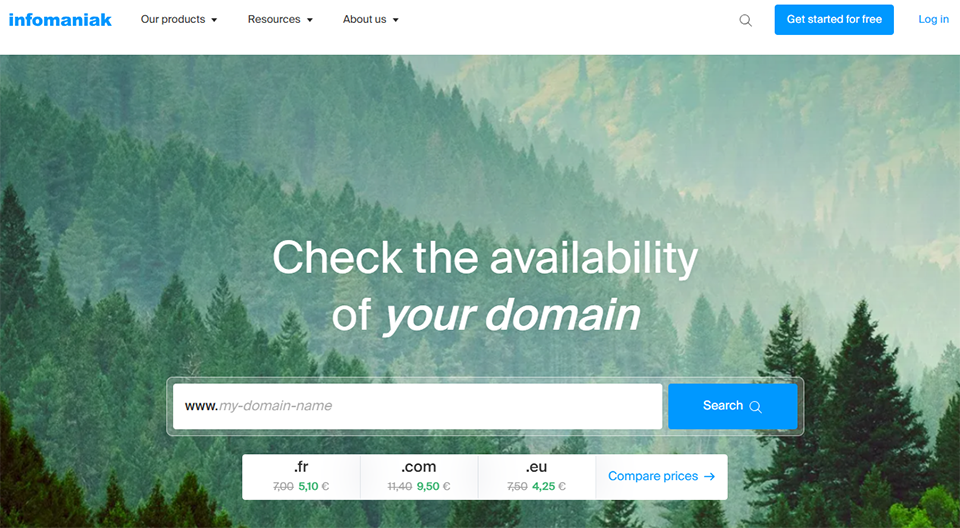
#11 - Infomaniak: The Swiss hosting provider that does everything well, with full data sovereignty.
Infomaniak is a Geneva-based hosting provider that offers a comprehensive range of services: web hosting, domain names, email, cloud services, video conferencing, and kDrive, its online storage service. What sets it apart: a sovereign positioning (Switzerland, outside the GAFAM ecosystem), a robust privacy policy, and a genuine commitment to environmental sustainability (100% renewable energy).
Key features (kDrive):
Cloud storage with cross-device synchronization.
Real-time collaboration on documents (with OnlyOffice integrated).
Share via link or invitation, with customizable permissions.
A clear interface that is easy to use without a steep learning curve.
iOS and Android apps.
Automatic backup of local folders.
Pricing:
Free Plan: Free (includes 15 GB).
Solo Plan (2 TB): €4.44/month (billed annually).
Team Plan: starting at €5.67 per user per month (with 1 TB shared per user).
Less well known outside of Switzerland and France.
Fewer third-party integrations than Google or Microsoft.
AI features are still under development.
Not suited for complex cloud infrastructure needs.
Which tool is best for which profile?
Choosing a cloud provider is no longer just a matter of price, but of philosophy: Do you prefer the ultra-comprehensive ecosystem of the American giants, or the sovereignty and privacy offered by European providers?
🧑💻 Solo developer or freelance tech professional:
Your priorities: quick deployment, avoiding overpayment, and clear documentation.
DigitalOcean is probably your best starting point for the world of cloud infrastructure. The developer experience is top-notch, Droplets start at $4/month, and the documentation is often cited as the best in the industry. If you need GPUs or prefer a European cloud provider, Scaleway is a strong alternative with a similar philosophy.
When it comes to file storage, Google Drive is still unbeatable if you're part of the Google Workspace ecosystem. If you're looking for maximum privacy, Proton Drive is definitely worth considering.
🚀 Startup in the growth phase:
Your priorities: scalability, access to cloud credits, and integrations with AI and data tools.
AWS Activate and Google Cloud are the two options that make the most sense at this stage. The first is a good choice because of the maturity of its ecosystem and its compatibility with virtually everything out there. The second is a good choice if your roadmap includes machine learning, big data, or advanced AI services. Both offer startup programs with substantial credits that can allow you to operate for 12 to 18 months without spending a penny.
When it comes to document collaboration, Box can be a strategic solution once your team exceeds 10–15 people and you have complex document workflows (contracts, approvals, signatures).
🏢 SMEs with 10 to 100 employees:
Your priorities: GDPR compliance, cost control, and integration with existing systems.
Microsoft Azure is the natural choice if you're already using Microsoft 365. Integration is native, identity management via Active Directory saves a lot of time, and compliance with European regulations is well documented.
For those who want to stay outside the U.S. ecosystem, OVH Cloud and Infomaniak are two solid options. OVH for its power and range of services, and Infomaniak for the simplicity and consistency of its suite (email + cloud + all-in-one hosting).
When it comes to collaborative storage, Infomaniak kDrive can be a great alternative to Google Drive for teams that want to break free from the GAFAM ecosystem without sacrificing ease of use.
🔒 Regulated professions or sensitive data:
Your priorities: encryption, compliance, and data localization.
Proton Drive and Box are your two main options. Proton offers end-to-end encryption and is based in Switzerland. Box provides compliance certifications (HIPAA, FedRAMP, FINRA) and integrations with business tools. Mega may also be a good fit for less complex use cases, with its client-side encryption and affordable pricing.
🌱 Solo entrepreneur or very small business:
Your priorities: free or nearly free, simplicity, and no technical management.
Google Drive (15 GB free) and Mega (20 GB free with encryption) are the most affordable options. For infrastructure, DigitalOcean or Scaleway let you get started for just a few euros a month with no long-term commitment.
Comprehensive comparison table.
Here is a summary of the main solutions presented in this article. Prices are approximate and may vary depending on current offers. We recommend checking them directly on the official websites before making any decisions.
Solution
Type
Entrance Map
Free Storage
Sovereignty
E2EE Encryption
Ideal for
AWS Activate
Cloud Infrastructure
Pay-as-you-go (~$0.01/h)
No (limited free tier)
🇺🇸 USA
No
Tech startups, scale-ups
Google Cloud
Cloud Infrastructure
Pay-as-you-go
Yes (free tier)
🇺🇸 USA
No
Data/AI, ambitious startups
Microsoft Azure
Cloud Infrastructure
Pay-as-you-go (~$0.01/h)
Yes (free tier)
🇺🇸 USA
No
SMEs in the Microsoft ecosystem
OVH Cloud
Cloud Infrastructure
~€0.04/h
No
🇫🇷 France/EU
No
Sovereignty-focused businesses
Scaleway
Cloud Infrastructure
~€0.02/h
No
🇫🇷 France/EU
No
Developers, European startups
DigitalOcean
Cloud Infrastructure
4 $/month
No
🇺🇸 USA
No
Developers, small teams
Google Drive
File Storage
Free (15 GB)
✅ 15 GB
🇺🇸 USA
No
Daily Collaboration
Proton Drive
File Storage
Free (1 GB)
✅ 1 GB
🇨🇭 Switzerland
✅ Yes
Sensitive data, privacy
Box
Storage/DMS
$15 per user per month
No
🇺🇸 USA
No
SMEs, regulated sectors
Mega
File Storage
Free (20 GB)
✅ 20 GB
🇳🇿 NZ
✅ Yes
Tight budget, confidentiality
Infomaniak kDrive
File Storage
Free (15 GB)
✅ 15 GB
🇨🇭 Switzerland
No
Sovereignty-focused SMEs, all-in-one
See all the software of this category: Données
Check out all the other software and discount we offer in this category. Explore other tools and choose the perfect solution to grow your business.
FAQ: Everything You Want to Know About the Cloud for Your Business.
The cloud landscape in 2026 is characterized by an increasingly clear distinction between “convenience” services and “sovereign” services. Here are the keys to navigating this new ecosystem.
1️⃣ What is the difference between cloud infrastructure and an online storage service?
An infrastructure-as-a-service provider (AWS, Google Cloud, Azure, OVH, Scaleway, DigitalOcean) rents you computing power, memory, databases, and network resources to run your applications. An online storage service (Google Drive, Proton Drive, Mega, Box) simply provides you with space to store, organize, and share files, with an interface that requires no special technical skills. The two do not serve the same purposes, and it is very common to use both in tandem.
2️⃣ Does the GDPR really prohibit the use of AWS, Google Cloud, or Azure?
No. The GDPR does not prohibit the use of U.S. services. However, it does require you to ensure that the processing of your customers’ and employees’ personal data meets an adequate level of protection. Major U.S. providers all offer GDPR-compliant Data Processing Agreements (DPAs), and some have data centers in Europe. The issue of the Cloud Act—which allows U.S. authorities to access data held by U.S. companies, even if it is hosted in Europe—remains a subject of legal debate that has not yet been fully resolved.
3️⃣ Is it easy to switch cloud providers if you chose the wrong one?
This is the issue of “vendor lock-in,” and the honest answer is: it depends. Some services, such as Amazon S3, have become de facto standards and are compatible with many other providers (OVH and Scaleway offer S3-compatible APIs). Other services, however, are proprietary and make migration complex and costly. In general, the more proprietary managed services you use, the more difficult migration becomes. Containerizing your applications (Docker, Kubernetes) from the start is a best practice for limiting dependency.
4️⃣ Which cloud service is the cheapest to get started with?
For infrastructure, DigitalOcean ($4/month) and Scaleway (starting at a few euros per month) are the most affordable options with transparent billing. For file storage, Mega (20 GB free) and Google Drive (15 GB free) are the most generous options to start with.
5️⃣ How do you choose between OVH Cloud and a U.S. hyperscaler?
The answer depends on several factors: the location of your customers and their concerns about data sovereignty, the compliance certifications you need, the range of services you’ll require in the medium term, and your own regulatory constraints. OVH Cloud offers European data sovereignty and competitive pricing, but a narrower range of services and a smaller community. AWS and GCP offer a level of comprehensiveness that’s hard to match, but at the cost of dependence on companies subject to U.S. law.
6️⃣ Can Proton Drive replace Google Drive for a professional team?
For secure file storage and sharing, yes. For intensive document collaboration (simultaneous editing of complex documents, integration with dozens of third-party tools), the Proton suite still falls short of Google Workspace. The good news: Proton is actively developing Proton Docs and Proton Sheets, which are gradually rounding out the offering.
7️⃣ My team doesn't have a developer. Can we still use cloud infrastructure?
Yes, as long as you choose the right tools. DigitalOcean App Platform or Scaleway’s managed offerings let you deploy applications without having to manage servers manually. Cloudways (also available on Freelance Stack) offers an additional management layer on cloud platforms like DigitalOcean or AWS, which is ideal for hosting WordPress sites or web applications without requiring DevOps expertise.
8️⃣ How much storage space should you plan for a team of 10 people?
It varies greatly depending on usage. A team that works primarily with text documents uses very little storage (a few GB per person). A team that works with videos, high-resolution photos, or design files can quickly reach several TB. A best practice is to start with a medium-sized plan (200 GB to 1 TB of shared storage) and adjust it based on actual usage after a few months, rather than over-provisioning from the start.
Tags
StorageCloudDataAmazon AWS ActivateGoogle CloudMicrosoft AzureOVH CloudOVH Public CloudScalewayDigitalOceanGoogle DriveProton DriveBoxMegaInfomaniak