






Our selection of tools to improve the candidate experience in 2026
In this article, we’ve selected tools available on Freelance Stack cover the entire process: from…
Read more


Payroll management is often seen as something that requires hiring an accounting firm or an outsourced payroll provider. And it’s easy to see why: between collective bargaining agreements, employer contributions, paid time off, mandatory health insurance, and constant regulatory changes, the subject can be daunting.
However, a new generation of HRIS (Human Resources Information System) software has fundamentally changed the landscape. Tools designed for teams of 2 to 200 people now make it possible to generate compliant pay stubs, manage social security filings, and track the entire HR cycle without outsourcing to a third party. This saves time, provides greater control, and often saves money.
This comparison is intended for microbusinesses, small and medium-sized businesses, startups, founders, and HR managers who want to take back control of their payroll—or at least better understand what the tools on the market can do for them. We selected only solutions available on Freelance Stack with favorable terms, and we reviewed them as objectively as possible.
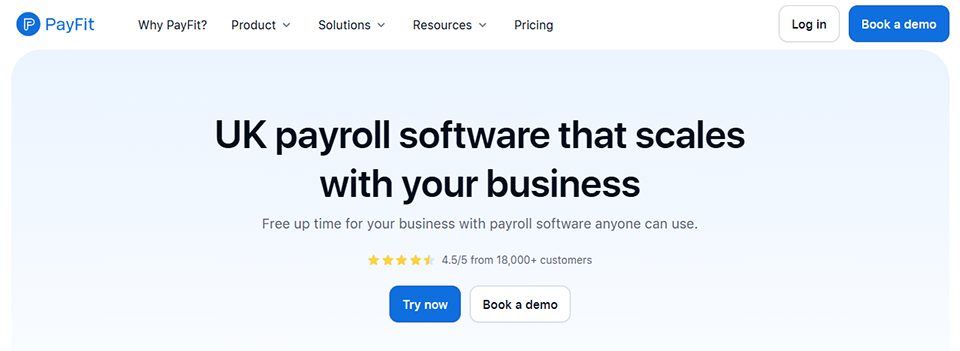
PayFit is likely the best-known payroll software in France in the category of SaaS solutions geared toward small and medium-sized businesses. Launched in 2015 in Paris, it has established itself as a credible alternative to cumbersome solutions like Sage or Cegid, with an interface designed for users who are not payroll experts.
The core feature of the product is the automation of pay stubs. Once employee information has been configured (contract, collective bargaining agreement, working hours), PayFit automatically calculates contributions, applies the applicable legal rules, and generates pay stubs each month. The DSN (Nominative Social Declaration) is submitted directly from the platform.
Beyond payroll alone, PayFit includes HR features: leave and absence management, time tracking, onboarding of new employees, and an employee portal where everyone can access their pay stubs and request time off. It’s a true HRIS suite, not just a payroll generator.
PayFit is compatible with the main French collective bargaining agreements and handles the specific requirements associated with different employment statuses (executive, non-executive, part-time, etc.). The team updates the calculation engine whenever there is a legal change, which saves employers the trouble of keeping track of every URSSAF or AGIRC-ARRCO change themselves.
🏢 Startups in the growth phase:
They appreciate PayFit for how easy it is to onboard new employees and for its automatic compliance features. When you're hiring quickly, you don't have time to train someone on payroll.
👩💼 Solo HR managers:
(or managers who handle these tasks themselves) find that PayFit is a tool that automates repetitive tasks without requiring extensive training. The interface is clear, and the alerts for anomalies are helpful.
🧑💻 Tech companies:
With distributed teams, they appreciate the digital space and the complete digitization of HR documents.
PayFit may not be the best fit if your business involves very specific collective bargaining agreements or atypical payroll rules (such as temporary work or complex seasonal arrangements); in these cases, the system's limitations may become apparent.
✅ Full automation of the DSN and social security filings.
✅ An interface that is truly accessible to non-experts.
✅ Real-time legal updates.
✅ Integrated HR module (vacation, absences, onboarding).
✅ Responsive customer support available in French.
⚠️ Pricing can rise quickly depending on the number of employees.
⚠️ Less flexibility for highly unusual payroll situations.
⚠️ Some advanced modules require an additional fee.
Prices vary depending on the number of employees and the modules activated. For reference:
Exact pricing is customized based on your size and industry. A free trial is usually available so you can test the platform.

Lucca operates in a slightly different league. While PayFit offers a relatively integrated suite, Lucca operates on a modular model: you choose the building blocks you need and put them together. Payroll, time off, expense reports, performance reviews, recruitment... each module works independently or in combination with the others.
The Pagga module (formerly Paye) manages pay stubs with a high degree of customization. Lucca partners with payroll software providers to ensure legal compliance and offers integration with accounting software such as Sage or Cegid if you already have an infrastructure in place.
Other flagship modules include: Timmi Absences for leave management, Cleemy for expense reports, Poplee for managing annual reviews and workforce planning, and Lucca Onboarding for onboarding new employees.
One of the things that sets Lucca apart is the quality of the employee experience. The interfaces are well-designed, the mobile app is feature-rich, and employees interact directly with the system for their day-to-day tasks.
🏗️ Companies that already have a payroll system:
And they want to add a modular HR layer without replacing everything. Lucca integrates well into an existing ecosystem.
📈 Growing organizations:
Who want to build out their HR system gradually, module by module, without paying for features they don't yet need.
🤝 Larger HR teams:
Who need advanced tools for performance reviews, workforce planning, or performance management. Lucca goes a step further than PayFit in these areas.
The complexity of the modular model can be a barrier for small organizations without dedicated HR resources. Lucca requires a longer implementation time.
✅ Modularity: You only pay for what you need.
✅ Excellent user experience (web and mobile).
✅ Seamless integration with existing accounting tools.
✅ Suitable for organizations with more mature HR processes.
⚠️ Takes longer to implement and requires support.
⚠️ The total cost can be high if you combine multiple modules.
⚠️ Less "plug-and-play" than alternatives like PayFit.
Lucca operates on a per-module, per-user pricing model:
Specific pricing is available upon request for a demo.

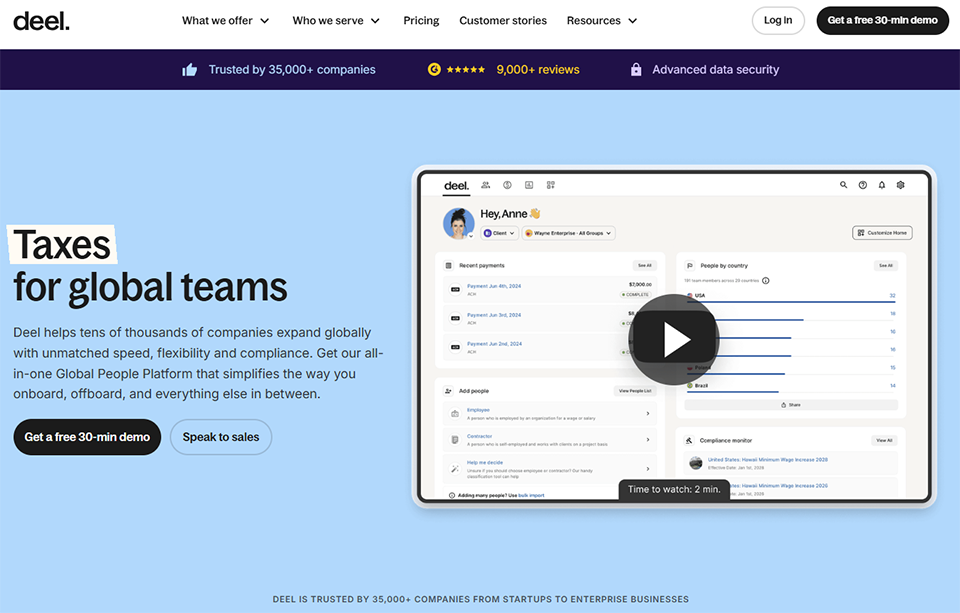
Deel has emerged as one of the most transformative tools of the decade for distributed companies. Its value proposition is clear: to enable any company to hire and pay employees or freelancers in more than 150 countries without having to set up a local subsidiary.
The core of Deel's offering is based on two models: the Employer of Record (EOR), where Deel legally acts as the local employer on your behalf, and global payroll management for companies that already have entities in multiple countries.
For freelance or international service contracts, Deel radically simplifies cross-border payments, contracts that comply with local laws, and document management (KYC, country-specific tax forms). Employees receive their pay stubs and can choose their payment method from among several currencies.
Deel also offers a comprehensive HRIS module (team management, time off, performance) integrated into the payroll platform.
🌍 Startups and scale-ups on the global stage:
Companies that hire in multiple countries but don't want to deal with the legal complexities of each country. This is Deel's primary use case.
🧑💻 Tech founders:
With fully remote teams spread across multiple jurisdictions, Deel makes this legally sound and operationally simple.
📦 French SMEs that outsource:
They outsource some of their work to international freelancers and want to ensure that contracts and payments are secure.
Deel is less relevant if your team is based exclusively in France and you have no international operations in the short or medium term.
✅ Coverage in more than 150 countries.
✅ Employer of Record: Hire without setting up a subsidiary.
✅ Manage freelancers and employees in a single interface.
✅ Automated local legal compliance.
✅ Multi-currency payments.
⚠️ Higher unit cost than traditional French solutions.
⚠️ Oversized for 100% French teams.
⚠️ EOR means that Deel is the legal employer, which can be confusing.
Rates vary by country and volume.
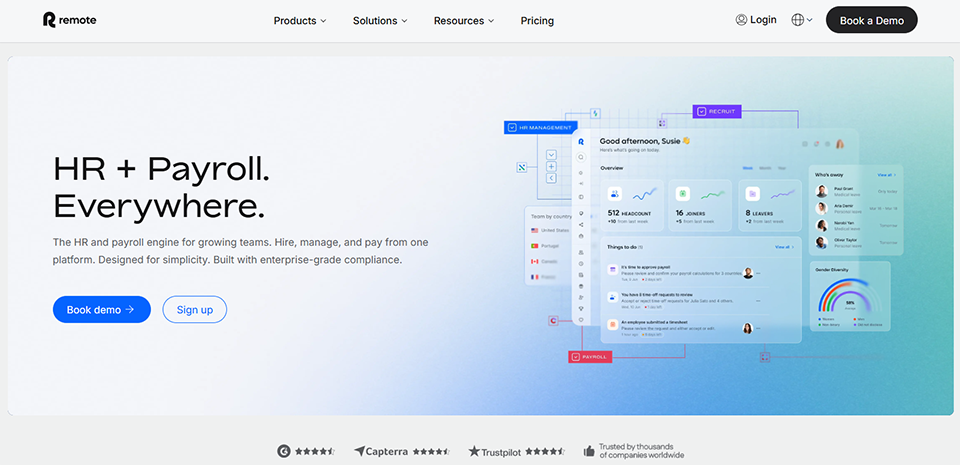
Remote is often cited alongside Deel as a leader in the Employer of Record and international payroll market. What sets it apart is its more transparent pricing and a clear intellectual property policy for employers.
Remote offers the same key features as Deel: international hiring via EOR, global payroll for existing entities, freelance management, and legal compliance in dozens of countries. The platform is user-friendly, contracts are automatically generated based on the country, and pay stubs are produced within local legal deadlines.
One key difference: Remote clearly publishes its rates and includes all fees (no surprises regarding local costs such as employer taxes). Its own infrastructure in each country (without third-party intermediaries) is highlighted as a guarantee of reliability and compliance.
🚀 Early-stage startups:
Who want to tap into international talent without getting bogged down in paperwork. Remote For Startups also offers special terms for startups.
🔒 Teams concerned with intellectual property:
They will appreciate the clarity of the contracts on this point, particularly for tech companies.
💰 Organizations that want to stay in control of their budget:
No billing surprises along the way.
✅ Transparent, all-inclusive pricing.
✅ In-house infrastructure (no local subcontractors).
✅ Good international coverage (more than 80 countries).
✅ Special offer for startups.
⚠️ Country coverage is slightly less extensive than Deel's.
⚠️ HRIS features are less comprehensive than those of full-stack solutions.
⚠️ Less suitable if your business operates entirely locally.



Oyster HR operates in the same market segment as Deel and Remote, with a particular focus on pay equity and total compensation. The platform offers tools to benchmark salaries by country and ensure that compensation remains consistent on an international scale.
The core features are similar to those of other EORs: hiring in more than 180 countries, management of compliant local contracts, automated payroll and pay stubs, and benefits administration. Oyster stands out for its salary insights tools, which allow companies to compare compensation levels across different markets before hiring, and for its commitment to distributed work as a philosophy.
The interface is particularly well-designed for People & Culture teams that manage a diverse range of international profiles.
🌐 Remote-first companies:
who have made distributed work a strategic choice rather than a necessity, and who want a tool that aligns with their values.
📊 HR managers:
who need reliable compensation data to negotiate consistent compensation packages internationally.
🌱 Organizations that recruit in emerging markets:
where local legal nuances are more difficult to grasp.
✅ Coverage in more than 180 countries.
✅ Built-in salary benchmarking tools.
✅ Strong focus on employee experience and well-being.
✅ Suitable for teams with a strong remote culture.
⚠️ Prices are similar to those of competitors, so they are high for small businesses.
⚠️ The benchmarking features require a learning curve.
⚠️ Less well-known in France; support in French is sometimes less seamless.

Gusto is a leading provider of payroll software for small and medium-sized businesses in the United States. It is primarily aimed at companies based in the U.S. or with employees in the United States, but its reputation and features make it worth considering.
Gusto automates the entire U.S. payroll process: federal and state tax calculations, direct deposit, W-2s and 1099s, and benefits management (health insurance, 401(k) retirement plans). Its interface is recognized as one of the most user-friendly on the U.S. market, featuring a sleek design and a quick onboarding process.
Beyond payroll, Gusto offers HR features such as document management, job postings, digital onboarding, and team management tools. It’s a comprehensive platform for small U.S. businesses looking to centralize their HR management.
🇺🇸 French companies with a subsidiary in the United States:
Or that employ U.S. workers. Gusto is the most seamless solution for managing U.S. payroll.
🌎 The French-American founders:
Who lead teams on both sides of the Atlantic and are looking for a dedicated tool for the U.S. operations.
💼 Freelancers and entrepreneurs:
Who have U.S. clients and want to understand the contractual and tax environment of that market.
Gusto isn't designed for French payroll. If your team is based entirely in France, you'll want to use PayFit or Lucca.
✅ The gold standard for U.S. payroll.
✅ Very user-friendly interface, quick onboarding.
✅ Integrated management of U.S. employee benefits (health insurance, 401(k)).
✅ High-quality customer support.
⚠️ Applies only to payroll in the United States.
⚠️ Does not support French or European payroll processing.
⚠️ Some HRIS features are less advanced than those of newer U.S. competitors.
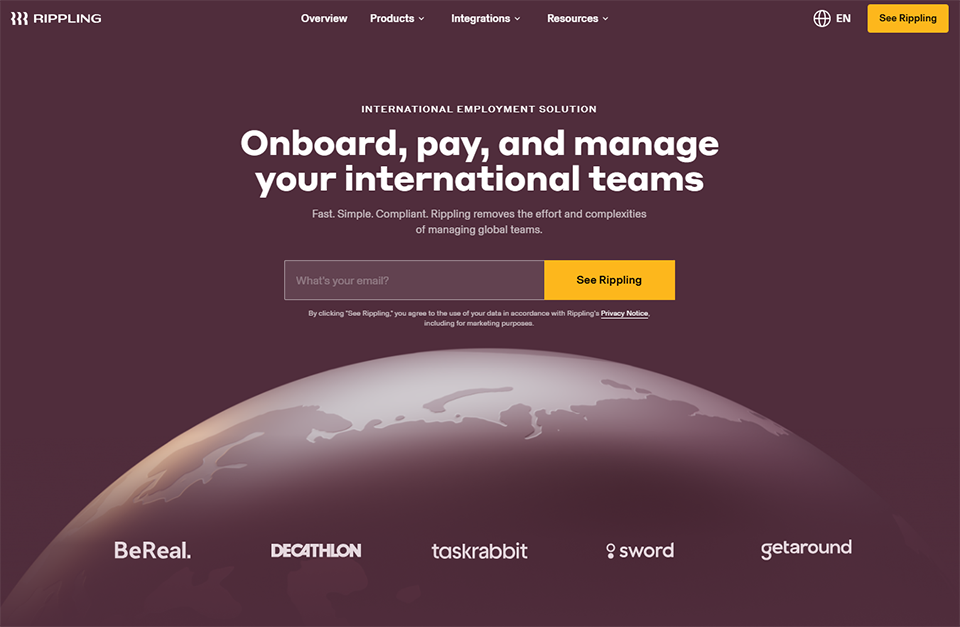
Rippling stands out in this comparison. It’s not just payroll software—it’s a platform that aims to centralize all of a company’s HR, IT, and financial operations in one place. Employee management, payroll, access to the team’s SaaS applications, IT device management, accounting… everything is interconnected.
On the payroll side, Rippling automates pay stubs (native support for the U.S., international support via add-ons), manages tax filings, benefits, and deductions. The product’s strength lies in its cross-functional automation engine: when you hire an employee, Rippling can simultaneously create their Google Workspace account, grant them access to Slack and Notion, order a computer for them, and initiate their HR onboarding—all with a single action.
This integration between HR and IT is unique in the market and saves a significant amount of time for operations teams or founders who wear multiple hats.
⚙️ Companies with a well-structured IT department:
who want to integrate digital identity management with HR management. The operational benefit is tangible once application access is managed.
📐 Organizations seeking to maximize automation:
of their internal processes. Rippling excels at automated cross-departmental workflows.
🧩 Teams that already use a lot of SaaS:
and want to centralize access and license management across the entire company.
Rippling requires careful implementation and a certain appetite for complexity. It is not the easiest solution to set up.
✅ A truly unified HR + IT + Finance platform.
✅ Very powerful automations between modules.
✅ Significant time savings during onboarding and offboarding.
✅ Suitable for tech companies with a strong Ops culture.
⚠️ Higher implementation complexity than the competition.
⚠️ The total cost may be high, depending on the modules you activate.
⚠️ Some advanced features are available only in the United States.
⚠️ Longer learning curve.
Rippling operates on a modular, à la carte model:
The final price depends heavily on the activated features.

Here is a summary to help you quickly compare the solutions presented in this article. The rates listed are initial estimates and may vary depending on your situation.
| Tool | Payroll FR | U.S. Payroll | International (EOR) | HR Module | Ideal for | Starting at |
|---|---|---|---|---|---|---|
| PayFit | ✅ | ❌ | ❌ | ✅ | French micro-businesses & SMEs | ~49s €/month |
| Lucca | ✅ | ❌ | ❌ | ✅✅ | Structured SMEs | Upon request |
| Deel | ❌ | ✅ | ✅ | ✅ | International Teams | 49$/month |
| Remote | ❌ | ✅ | ✅ | ⚡ | Remote-first startups | 29$/month |
| Oyster RH | ❌ | ✅ | ✅ | ✅ | Remote Work & Pay Equity | 29$/month |
| Gusto | ❌ | ✅✅ | ❌ | ✅ | U.S. Entities | 40$/month |
| Rippling | ❌ | ✅ | ✅ | ✅✅ | Ops-driven, integrated IT | $8/month + |
Prices are provided for informational purposes only. We recommend that you check current prices directly with each publisher, as they are subject to change.
Before choosing a payroll tool, it’s often helpful to clarify a few fundamental points on the subject. Here are the questions that come up most often.
Yes, absolutely. In France, there is no law requiring a company to use an accounting firm or an external payroll provider to generate its pay stubs. The employer is responsible for ensuring the compliance of its pay stubs but can rely on certified payroll software to do so. Solutions like PayFit or Lucca are designed specifically for this purpose: to automate legal compliance without requiring prior technical expertise.
Payroll software focuses on generating pay stubs, filing social security reports, and ensuring tax compliance. An HRIS (Human Resources Information System) is more comprehensive: it includes payroll, as well as leave management, performance reviews, recruitment, training, expense reports, and more. Most of the tools featured in this article are HRIS systems with an integrated payroll module.
The Employer of Record is a service provider that legally becomes an employee’s employer on your behalf in a foreign country. You retain operational control over the employee (their assignments, day-to-day management), but the EOR signs the contract, pays local payroll taxes and manages legal compliance. This is what Deel, Remote and Oyster HR do. It’s particularly useful for hiring quickly in a country where you don’t have a legal entity.
This question comes up regularly. PayFit is generally faster to set up and better suited for teams without dedicated HR resources, thanks to its guided interface. Lucca is more flexible and offers a more comprehensive set of advanced HR features, but requires a greater investment in implementation. If you’re starting from scratch and want to be up and running in a few weeks, PayFit is often the more practical choice. If you already have a payroll system in place and are looking to further streamline your HR processes, Lucca is worth considering.
French solutions such as PayFit and Lucca continuously update their calculation engines to incorporate legal changes (adjustments to the minimum wage, changes in contributions, new collective bargaining agreements). While this does not relieve the employer of ultimate legal responsibility, it significantly reduces the risk of error. For international solutions (Deel, Remote, etc.), compliance is managed on a country-by-country basis by their local teams.
Yes, in the vast majority of cases. PayFit integrates with Pennylane, Sage, Cegid, and QuickBooks. Lucca also offers accounting connectors. These integrations allow you to automatically sync payroll entries with your accounting system without having to re-enter data manually.
Even with just one employee, payroll software can be useful for avoiding errors and saving time. In practice, solutions like PayFit become particularly cost-effective (in terms of both time and money) once you have 3 to 5 employees. With fewer than that, depending on your situation, a certified public accountant may sometimes remain the simplest option... but it’s less scalable.
No, payroll software is designed for employers who have employees. A self-employed individual does not pay a salary in the legal sense of the term and therefore does not need to issue pay stubs. If you’re looking for financial management tools for self-employed individuals, solutions like Indy or Pennylane will be better suited to your situation.