





Multichannel prospecting: solutions that combine LinkedIn, email, and SMS
What exactly is multichannel prospecting? during , sales prospecting relied on a single channel: the telephone,…
Read more

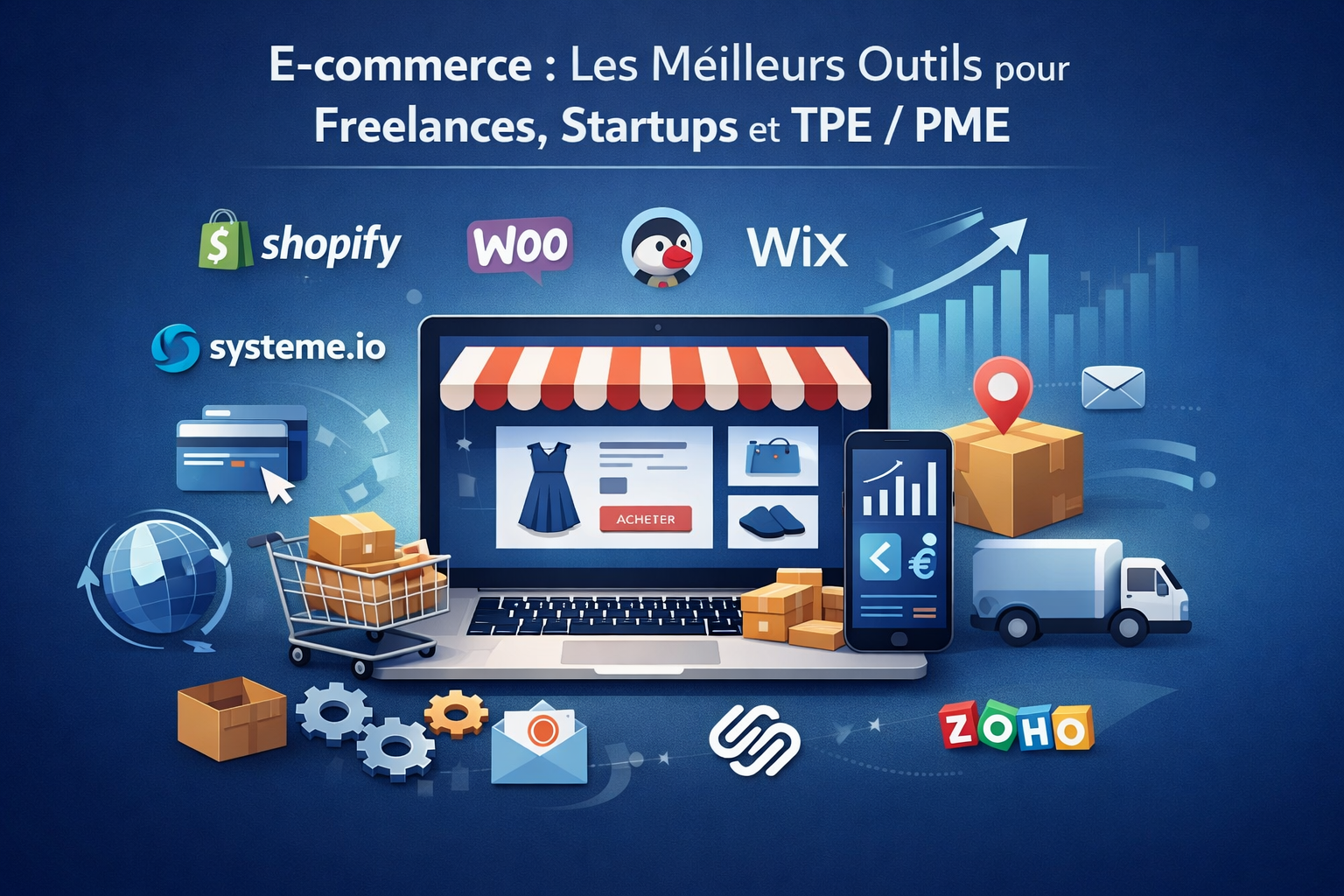
E-commerce is no longer the exclusive domain of large retailers. Today, a freelancer selling training courses, a startup launching its first products, or a small business looking to digitize its operations can all access robust e-commerce tools, often for just a few dozen euros a month. The global e-commerce market is now worth several trillion dollars in annual transactions, and this trend shows no signs of slowing down.
What has changed is the sheer volume of software options available. In just a few years, the market has fragmented into turnkey platforms designed for speed, open-source solutions that offer complete control over the code, and hybrid tools that combine websites, sales funnels, and marketing automation all in one place. As a result, choosing the right platform has become a true strategic decision, not just a technical one.
This article reviews the most suitable solutions for small businesses, taking into account practical criteria such as ease of use, actual cost (including transaction fees), built-in features, and scalability. The tools presented here are all available at discount specifically for entrepreneurs small teams.
Seven e-commerce platforms were selected for this comparison: Shopify, WooCommerce, PrestaShop, Wix, Squarespace, Systeme.io, and Zoho Commerce. This selection covers a wide range, from solutions that are most accessible to non-technical users to platforms that require more configuration.
A few additional tools are also mentioned in this context: Stripe and Mollie for payments, SendCloud for logistics, Omnisend and Klaviyo for e-commerce email marketing, and Gorgias for customer service.

Shopify has established itself as the world's most widely used e-commerce platform, with over 4 million active stores. Its mission is clear: to enable anyone to launch a fully functional online store in just a few hours, without writing a single line of code.
The admin interface is designed to be intuitive from day one. Product management, inventory, orders, discounts, and shipment tracking: everything is centralized in a single, cohesive dashboard. Shopify also includes a visual editor to customize your store’s layout, a native payment system (Shopify Payments), and an App Store featuring thousands of extensions to address more specific needs (subscriptions, upselling, loyalty programs, etc.).
The platform natively supports multiple currencies, multiple languages, and sales across multiple channels: online store, Instagram, TikTok Shop, Amazon, and physical retail locations via the POS terminal. For a business that wants to sell everywhere without having to use multiple tools, this is a significant advantage.
🧑💻 Freelancer / solopreneur:
Shopify is often the top choice for freelancers who want to sell physical products, print-on-demand items, or merchandise without any hassle. The learning curve is short, and the Basic plan is all you need to get started on a budget.
🚀 Startup:
For a startup that needs a quickly testable e-commerce MVP, Shopify offers a fast path to market. Integration with marketing tools, CRMs, and analytics platforms is easy via the App Store.
🏢 Small and medium-sized businesses:
The intermediate plans are suitable for teams that process several hundred orders per month. Multi-staff management, performance reports, and logistics integrations (including with SendCloud) make it a scalable platform.
WooCommerce is the leading e-commerce plugin for WordPress. Free and open-source, it is used by approximately 27% of online stores worldwide, making it technically the most widely used e-commerce solution. Its main strength lies in its complete flexibility in terms of code, design, and integrations.
In practical terms, WooCommerce transforms any WordPress site into an e-commerce store. It offers management of simple, variable, and downloadable products as well as subscriptions; multiple payment gateways; tax management; configurable shipping; and the ability to extend functionality through hundreds of official and third-party plugins: its range of features is very broad.
The plugin itself is free, but the actual cost includes hosting, a premium theme, paid extensions, and possibly a developer for the initial setup. This is an important factor to consider when estimating the total budget.
🧑💻 Freelancer / solopreneur:
WooCommerce is a good fit for a freelancer who already has a WordPress site and wants to add a store to it. The technical barrier is real but not insurmountable, especially with themes like Astra or Flatsome, which include ready-to-use WooCommerce demos.
🚀 Startup:
Ideal for tech-focused startups that want to retain full control over their code and avoid dependence on a proprietary platform. The open-source nature makes it easy to develop custom solutions.
🏢 Small and medium-sized businesses:
For an SME that already has a WordPress site and technical resources (in-house or outsourced), WooCommerce offers robust scalability at a lower licensing cost. It comes with built-in compatibility with Stripe and Mollie.


PrestaShop is a French open-source platform founded in 2007 and specifically designed for online commerce. Unlike WooCommerce, which is a WordPress plugin, PrestaShop is a CMS dedicated to e-commerce: its entire architecture is designed from the ground up for online sales.
The platform natively offers advanced features: granular product attribute management, complex pricing and promotion rules, multi-store management, robust multilingual and multi-currency support, and detailed sales reports. Its add-on marketplace offers thousands of modules to expand the store’s capabilities.
PrestaShop is particularly popular in Europe, especially in France, Spain, and Italy. Its native compliance with European tax and VAT regulations is a tangible advantage for merchants selling B2C on the European market.
🧑💻 Freelancer / solopreneur:
Less suitable for a beginner freelancer without technical resources. PrestaShop requires a significant investment in setup, which is more justified for a project with a substantial product catalog.
🚀 Startup:
Ideal for a pure-play e-commerce startup that wants a structured solution from the start, without relying on a general-purpose CMS, and with the ability to scale on a robust architecture.
🏢 Small and medium-sized businesses:
PrestaShop has historically been the solution of choice for French e-commerce SMEs. Its advanced features for managing promotions, inventory, and reports make it a robust tool for businesses with a steady volume of orders.


Wix is known as one of the most user-friendly website builders on the market. In recent years, the platform has significantly enhanced its e-commerce features to offer a credible alternative to dedicated solutions like Shopify.
With Wix eCommerce, you can manage your product catalog, orders, payments, subscriptions, quotes, and loyalty programs all from a single interface. The drag-and-drop visual builder remains one of the most intuitive on the market. Wix also includes built-in marketing tools: email marketing, abandoned cart recovery, and social media integration.
The platform is particularly well-suited for businesses that combine a website with an online store without wanting to manage two separate systems. It is less suitable for projects with very large product catalogs or complex logistical requirements.
🧑💻 Freelancer / solopreneur:
Wix is probably the quickest option for a freelancer or creator who wants a professional website with a built-in online store, without any technical expertise. You can have your site up and running in just one day.
🚀 Startup:
Ideal for a startup in the product validation phase that wants to quickly test online sales without overinvesting in the tech stack.
🏢 Small and medium-sized businesses:
Suitable for small businesses with a modest product catalog and standard requirements. Multi-warehouse management and EDI integration are not supported.


Squarespace caters to a very specific niche: entrepreneurs and creatives for whom the site’s aesthetics are just as important as its e-commerce features. The platform is known for the visual quality of its templates, which are frequently used by photographers, designers, artisans, and lifestyle brands.
on plan , Squarespace covers the essentials of e-commerce: management of physical and digital products, subscriptions, promo codes, abandoned cart recovery, and integration with major social media platforms for sales. The built-in analytics features are adequate but not comprehensive.
What Squarespace doesn't do: manage catalogs with thousands of items, handle complex logistics workflows, or integrate easily with ERP systems. Its focus remains clearly on small businesses and creative projects.
🧑💻 Freelancer / solopreneur:
Squarespace is the go-to platform for creative freelancers, consultants, and service providers who want to sell digital products, services, or run a small online store with a premium visual design.
🚀 Startup:
Suitable for startups in the creative, lifestyle, wellness, or content sectors. Less suitable for B2B startups or those with high transaction volumes.
🏢 Small and medium-sized businesses:
Limited to organizations with complex operational needs. Well-suited for small businesses or artisanal brands that prioritize brand image above all else.

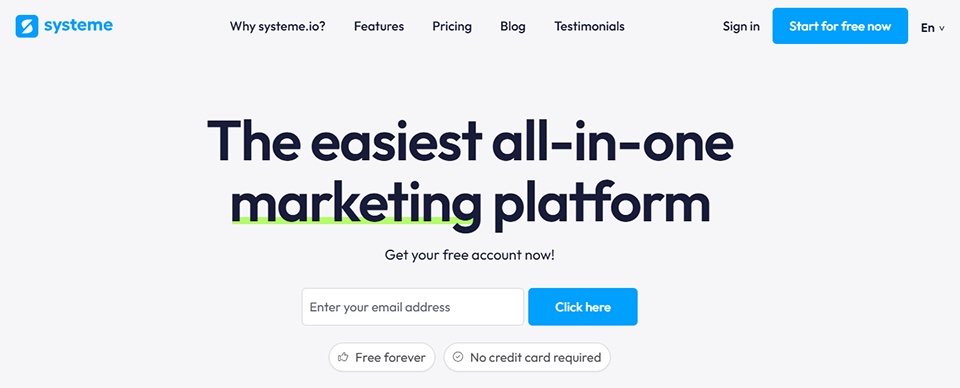
Systeme.io is a French platform that has quickly established itself among infopreneurs, online instructors, and content creators. Its approach differs from the other tools in this comparison: the goal is not to create a store for physical products, but to monetize courses, e-books, subscriptions, or online programs through optimized sales funnels.
The platform combines the following features into a single tool: sales page creation, conversion funnels, course hosting (with a built-in LMS), email marketing, affiliate programs, and subscription management. For anyone selling digital products, it’s a solid alternative to piecing together multiple separate tools.
Systeme.io's free plan is particularly generous: up to 2,000 contacts, 3 sales funnels, and unlimited sales with no commission—a rarity in the market.
🧑💻 Freelancer / solopreneur:
This is probably the best choice for a freelancer or digital entrepreneur who sells courses, coaching, or digital products. The value for money is hard to beat, and the platform is designed to be used on its own.
🚀 Startup:
Ideal for an EdTech startup or a company in the paid content sector. The tool natively supports affiliate marketing, which can be a valuable acquisition strategy right from the start.
🏢 Small and medium-sized businesses:
Less suitable for a small or medium-sized business that sells physical products in large quantities. However, any organization that sells intangible products can benefit from it without incurring prohibitive costs.
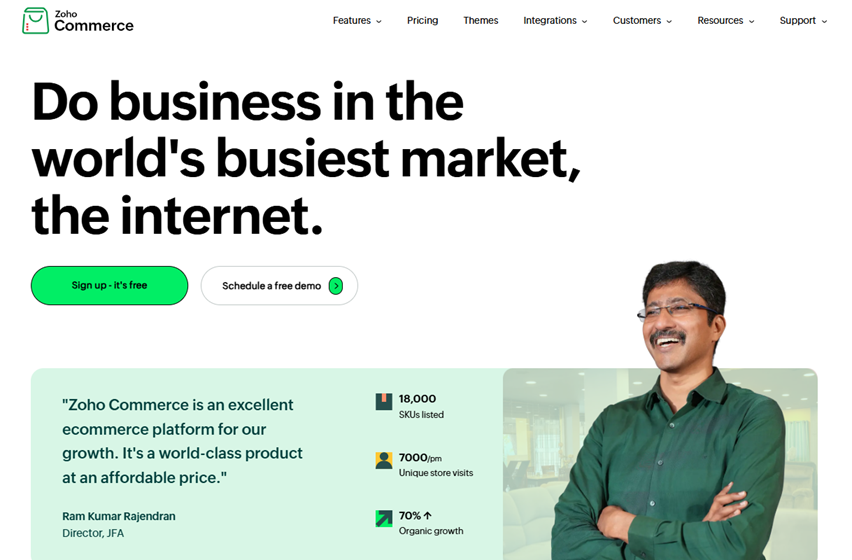
Zoho Commerce is the e-commerce solution from Zoho, the Indian software company that offers a comprehensive suite of business tools (CRM, accounting, marketing, HR). It is a hosted SaaS platform that allows you to create an online store with product management, payment processing, shipping, and reporting features.
Its main advantage is clear to anyone who already uses other Zoho products: native integration with Zoho CRM, Zoho Books, Zoho Inventory, and Zoho Campaigns prevents data duplication and makes it easier to automate workflows between the store and internal tools. This is a strong selling point for an SME looking to centralize its tech stack.
For organizations that aren't yet part of the Zoho ecosystem, the e-commerce platform itself is decent but lacks features that truly set it apart from Shopify or Wix.
🧑💻 Freelancer / solopreneur:
Not particularly relevant for a freelance entrepreneur the Zoho ecosystem. The benefit is only real if you’re already using Zoho CRM or Zoho Books.
🚀 Startup:
This is ideal for a startup that has built its tech stack around Zoho from the start and wants to add an online store within that same environment.
🏢 Small and medium-sized businesses:
This is where Zoho Commerce really comes into its own. An SMB using Zoho CRM and Zoho Inventory can connect its online store to its internal systems without any special development, which saves a significant amount of operational time.

For selling digital products, courses, or online services, Systeme.io offers the best value for money. For those who place a high priority on aesthetics, Squarespace remains a safe bet. If the project involves physical products, Wix is the most accessible option.
Shopify is the go-to choice for quickly launching a product store. WooCommerce is better suited for technical teams that want to maintain control over their infrastructure. Systeme.io is unbeatable for validating a content- or training-based business model.
PrestaShop remains a solid choice for French merchants with large product catalogs and advanced customization needs. Zoho Commerce is the natural choice for businesses already using the Zoho suite. Shopify remains a good option for small and medium-sized businesses looking for a reliable platform that doesn’t require infrastructure management.
Prices are for informational purposes only and are based on the standard monthly plan; they may vary depending on current offers.
| Software | Type | Starting price | Transaction fees | Ease of use | Ideal for |
|---|---|---|---|---|---|
| Shopify | SaaS | ~€32/month | 0–2% | ⭐⭐⭐⭐⭐ | Freelancers, startups, small and medium-sized businesses |
| WooCommerce | Open source | Free + accommodation | No | ⭐⭐⭐ | Tech startups, WordPress SMEs |
| PrestaShop | Open source | Free + accommodation | No | ⭐⭐⭐ | Advanced e-commerce for small and medium-sized businesses |
| Wix | SaaS | ~$17/month | No | ⭐⭐⭐⭐⭐ | Freelancers, small projects |
| Squarespace | SaaS | ~€27/month | No | ⭐⭐⭐⭐ | Creative professionals, lifestyle brands |
| Systeme.io | SaaS | Free | No | ⭐⭐⭐⭐ | Infopreneurs, training courses |
| Zoho Commerce | SaaS | ~$22/month | No | ⭐⭐⭐ | SMEs in the Zoho ecosystem |
Here are some common questions entrepreneurs ask themselves when choosing an e-commerce solution.
A SaaS platform like Shopify, Wix, or Systeme.io is hosted by the provider: you pay a monthly subscription fee and don’t have to manage servers, security updates, or technical optimizations. It’s a turnkey solution. An open-source solution like WooCommerce or PrestaShop gives you access to the full source code, with complete freedom to customize, but requires you to manage (or have someone manage) hosting, maintenance, and security yourself.
Shopify is designed to be used by businesses of all sizes. The Basic plan, which costs around €32 per month, is sufficient for the vast majority of freelancers who sell products online. The platform becomes more expensive if you need premium apps or if you don’t use Shopify Payments (in which case transaction fees apply), but it remains affordable for getting started.
Yes, and that’s one of its key features. The free plan on Systeme.io includes up to 2,000 contacts, 3 sales funnels, and commission-free sales. It’s fully functional for a beginner in the info-business industry. Limitations arise when your contact volume grows or you need advanced features like webinars.
The WooCommerce plugin is free, but the total cost of a WooCommerce store includes hosting (expect to pay between €10 and €60 per month, depending on your needs), a premium theme (if desired; €50 to €200), and potentially paid extensions for specific features. For some projects, the total cost may exceed that of a Shopify plan, while requiring more technical investment.
Systeme.io is designed for exactly that. It includes a Learning Management System (LMS) that lets you host your course modules, manage student access and progress, all integrated with sales funnels and email marketing. For a course sold via a simple sales page with a PDF download, even Shopify or Gumroad might work, but Systeme.io remains the most comprehensive solution for a truly structured program.
You can connect third-party payment providers like Stripe or Mollie to Shopify, but additional transaction fees apply (0.5% to 2%, depending on your plan). Shopify Payments eliminates these fees, but it’s not available in all countries. In France, it is available. On WooCommerce, PrestaShop, or Systeme.io, you can connect your payment processor without any additional fees.
Most e-commerce platforms offer native integrations with carriers or aggregators. SendCloud is particularly well-suited to the European market: the platform connects to Shopify, WooCommerce, and PrestaShop, and centralizes shipments from multiple carriers (Colissimo, DHL, Chronopost, etc.) within a single interface. This saves a significant amount of time once order volume becomes consistent.
Omnisend and Klaviyo are the two market leaders in e-commerce-focused email marketing. They allow you to create workflows based on purchasing behavior (abandoned cart, post-purchase, reactivation), with advanced segmentation based on order data. Both integrate with Shopify and WooCommerce.
Gorgias is a helpdesk solution designed specifically for e-commerce. It centralizes tickets from email, social media, and chat, and integrates deeply with Shopify to display order information directly within each conversation. For a support team managing multiple channels, it’s a real productivity booster.