The Best Software for Managing Legal Affairs in a Company in 2026.
In this article, we review the best LegalTech tools for contracts, electronic signatures, and GDPR compliance in 2026 to meet your day-to-day legal needs-without a full-time lawyer and regardless of your background.
There was a time when “handling legal matters” meant stacking contracts in a binder, calling your lawyer twice a year, and hoping you’d never run into a CNIL audit. Those days are long gone.
Today, a company with ten employees may need to manage international freelance contracts, ensure compliance with GDPR, keep its terms and conditions up to date, use legally valid electronic signatures, and monitor its compliance obligations-all while handling its other day-to-day operations, without a dedicated legal department.
This is precisely where specialized software makes a real difference. Not to replace a lawyer when the situation calls for it, but to handle the bulk of day-to-day legal work without taking up hours you don't have.
The LegalTech market has grown significantly in recent years. According to a study by Altman Weil, more than 70% of companies with fewer than 250 employees report that they lack the resources to properly manage their day-to-day legal obligations. The tools presented in this article are designed specifically to address this issue.
Whether you’re a freelancer looking to secure client contracts, a growing startup needing to formalize your contractual practices, or an SME subject to GDPR and compliance requirements, there are solutions available today to suit every situation and budget.
Here is a comprehensive overview of the best tools to meet your legal needs in 2026.
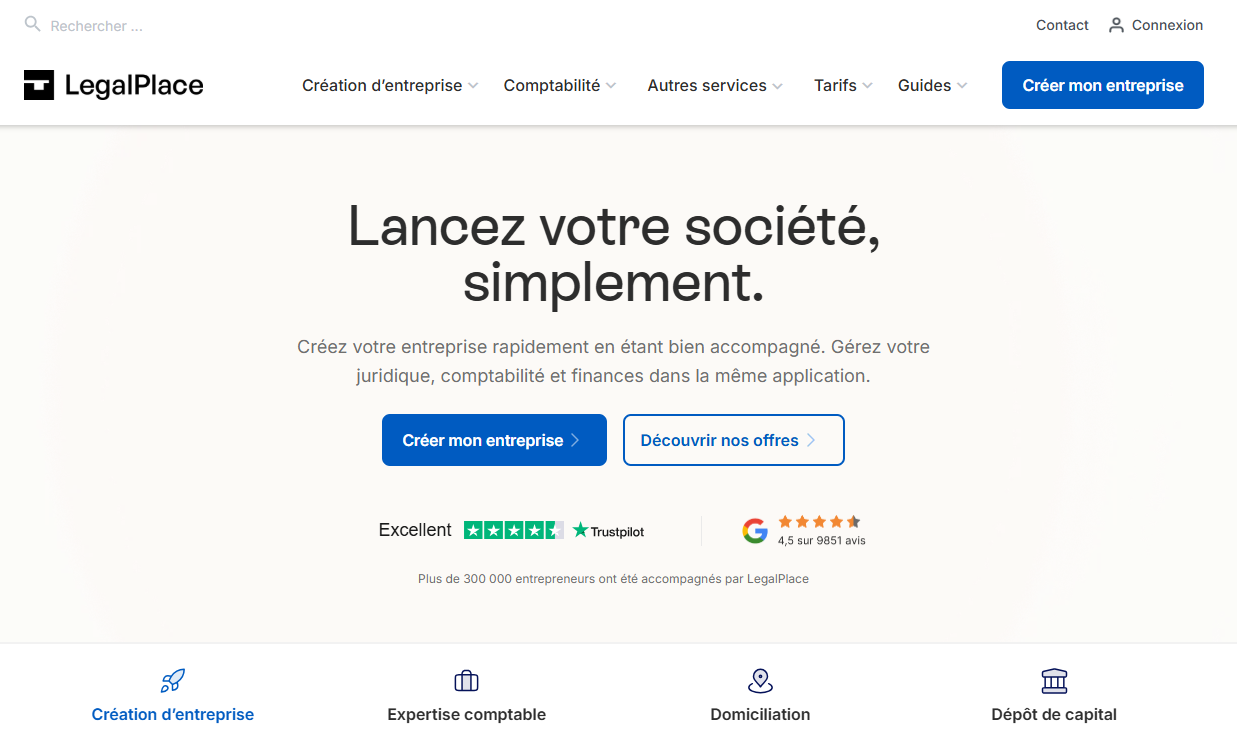
#1 - LegalPlace: Legal formalities made accessible to everyone.
LegalPlace has established itself as one of France’s leading platforms for starting a business and handling legal formalities online. The platform clearly positions itself halfway between do-it-yourself legal services and hiring a lawyer: it automates the most common procedures while ensuring that the documents produced comply with French law.
What LegalPlace Actually Does:
The platform covers a fairly broad range of services: company formation (SAS, SARL, EURL, SCI, micro-enterprise), amendments to articles of incorporation, dissolution, trademark registration, drafting of standardized contracts (employment contracts, commercial leases, NDAs, terms and conditions), and handling of related administrative formalities. The interface guides the user step by step through an intelligent form that adapts the clauses based on the answers provided.
A service that connects you with legal professionals is also available for cases that are out of the ordinary.
Key features:
The library of legal templates is one of LegalPlace’s key strengths: it covers most common situations faced by entrepreneurs microbusinesses and small and medium-sized enterprises (SMEs). Each document can be reviewed, downloaded, and customized. The platform also handles filings with the court clerk’s office and legal notices, saving a considerable amount of time during the process of forming or modifying a business.
Pricing:
Forming an SAS: starting at ~€129 (excluding registry fees).
Individual documents: starting at ~49 to 99€ (Terms and Conditions, employment contract, etc.).
Complete Packages: Available for all stages of starting a business.
For whom?
LegalPlace is particularly well-suited for entrepreneurs in the startup phase, freelancers looking to formalize their terms of service and client contracts, and owners of very small businesses facing one-time changes to their legal status. It is not a tool for ongoing contract management, but rather a resource designed to streamline key moments in a company’s legal lifecycle.
✅ The benefits:
A highly intuitive interface that requires no legal training to use.
Rates that are significantly lower than those charged by a medical practice for routine procedures.
A library of templates that is regularly updated to reflect changes in French law.
Responsive customer service with the option of personalized assistance.
👎 The downsides:
Not well suited for complex or unusual situations that require a thorough legal analysis.
Document customization is limited to predefined cases.
Less relevant for companies that have already passed the startup phase.
Benefit from a on LegalPlace .
15% off on any plan
Find our best discount right now with LegalPlace and save on your software subscriptions. We offer over 850 promo codes and discounts on the best software and SaaS on the market.
#2 - Legalstart: The reliable alternative for business registration.
Legalstart is very similar to LegalPlace, with a few key differences in the user experience and service philosophy. The platform was co-founded by legal professionals and makes it a point of honor to maintain human oversight of the documents it produces, which is reflected in the perceived quality of the output.
Concept and Approach:
While some companies rely entirely on automation, Legalstart incorporates a human touch into its document production process. Every business formation package, for example, is reviewed by a lawyer before being sent out. This commitment to double-checking is a significant differentiator for entrepreneurs who want to ensure nothing is overlooked.
Key features:
The platform covers the same major categories of needs as LegalPlace: company formation and modification, contract drafting, handling of legal formalities, legal notices, and INPI trademark registration. It also offers a business registered address service in several French cities, which can be useful during the startup phase.
The contract library is comprehensive: NDAs, service agreements, commercial leases, employment contracts, articles of incorporation for real estate investment companies (SCIs), share transfer agreements, and more. The templates are clear and relatively well-drafted for standard use.
Pricing:
Business formation: starting at ~€99 (excluding official fees, depending on the legal structure).
Individual documents: starting at ~€39.
Annual Package: starting at ~300 to 500€/year (ongoing legal support).
For whom?
First-time entrepreneurs will get the most out of Legalstart, especially those who appreciate having a human safety net to review their documents. Freelancers who need to set up their business legally, or SME executives who need to manage one-time transactions such as a capital increase or a sale of shares, will also find it beneficial.
✅ The benefits:
Systematic human review of design files.
A clear interface and a well-defined process.
Integrated billing service.
Comprehensive coverage of common procedures.
👎 The downsides:
Processing times may be slightly longer than on 100% automated platforms.
Less suitable for day-to-day contract management.
Some complex customizations are still outside the scope.
Benefit from a on Legalstart .
20% off on any plan
Find our best discount right now with Legalstart and save on your software subscriptions. We offer over 850 promo codes and discounts on the best software and SaaS on the market.
#3 - Yousign: The French-made electronic signature.
Electronic signatures have become the norm. What was seen as a convenience during COVID-19 during has evolved into a long-term business practice: client contracts, quotes, amendments, confidentiality agreements-all of these documents now go through digital signature workflows. Yousign is the European leader in this category, with one key distinction: the company is French, which is significant when it comes to eIDAS compliance and data sovereignty.
What sets Yousign apart:
Yousign was co-founded in France and operates on an infrastructure hosted in Europe that complies with the eIDAS Regulation. Simple, advanced, and qualified electronic signatures are all available depending on the required level of security. The interface is intentionally streamlined: you send a document, designate the signers, define the fields to be filled out, and you’re done in just a few clicks.
Key features:
The core of the product is built on three pillars: sending documents for signature, real-time tracking of signatures, and secure archiving of signed contracts. The solution also offers automation features via API, allowing electronic signatures to be integrated directly into a CRM, a lead generation tool, or an e-commerce platform.
Document templates can be set up to avoid having to prepare the same contracts manually each time. Signature workflows involving multiple parties (co-signature, sequential approval) are supported natively.
Pricing:
Trial Plan: Free (trial period available).
Starter Plan: starting at ~€25/month (forentrepreneurs small teams, limited number of signers).
Enterprise Plan: Pricing based on a quote (SSO, custom integrations, unlimited volumes).
For whom?
Yousign is useful for virtually any business that needs to sign contracts on a regular basis. Freelancers who send quotes and contracts to clients every week, startups in the process of hiring or raising funds, and small and medium-sized businesses that need to digitize their internal contracting processes will find it immediately valuable.
✅ The benefits:
European hosting, with guaranteed eIDAS compliance.
Simple interface, very easy to learn.
Robust API for advanced integrations.
Signature levels that can be adapted to meet legal requirements.
Support in French.
👎 The downsides:
Volume limits on entry-level plans.
Fewer contract management features than tools like PandaDoc.
A qualified signature (the highest level required by law) involves an additional identity verification step that may slow down the process.
Benefit from a on DocuSign .
Additional 20% off on any plan
Find our best discount right now with DocuSign and save on your software subscriptions. We offer over 850 promo codes and discounts on the best software and SaaS on the market.
#4 - DocuSign: The global standard for electronic signatures.
Benefit from our free deal on Yousign.
Find over 300 free deals as well as over 850 Premium deals right now with Yousign and save on your software subscriptions. Whether you're an entrepreneur, a startup or a solo freelancer, save hundreds of euros thanks to our discounts and promo codes.
DocuSign is the tool that your U.S. client, your German partner, or your London-based investor is already familiar with. The platform is the undisputed global leader in electronic signatures, with over one billion users worldwide. Its main strength: universal recognition and compatibility with virtually all existing work environments.
Overview:
Launched in 2003, DocuSign has shaped the standards for electronic signatures in the business world. The platform handles everything from simple signatures to complex signature workflows involving multiple parties, conditions, and validation steps. Its ecosystem of integrations is unmatched: Salesforce, Microsoft 365, Google Workspace, Slack, HubSpot, and hundreds of other tools integrate natively.
Key features:
Beyond just signing, DocuSign has expanded its offerings in recent years to cover end-to-end contract management: creating contracts from templates, internal approval workflows, AI-powered contract analysis (in advanced plans), centralized archiving, and search capabilities for signed documents. The "CLM" (Contract Lifecycle Management) module is particularly useful for teams that have a large volume of contracts to manage.
Pricing:
Individual Plan: starting at ~€10/month (basic personal use).
Professional Plan: starting at ~25 to 40€/month/user (teams).
Enterprise Plan: Pricing available upon request (CLM and AI features).
For whom?
DocuSign is particularly well-suited for companies that work with international partners or customers, for whom brand recognition is a key factor in building trust. Sales teams that handle large volumes of contracts, as well as organizations already using Salesforce CRM or a Microsoft environment, will get the most out of it.
✅ The benefits:
International recognition and immediate trust from the signatories.
An exceptional integration ecosystem.
Advanced CLM features on the upper levels.
Legal compliance in more than 180 countries.
👎 The downsides:
Higher rates than European alternatives for similar needs.
The interface is sometimes perceived as less intuitive than Yousign.
Data is hosted in the United States by default (to be verified based on your GDPR requirements).
Benefit from a on Yousign .
20% off on annual "PLUS" plan
Find our best discount right now with Yousign and save on your software subscriptions. We offer over 850 promo codes and discounts on the best software and SaaS on the market.
#5 - PandaDoc: Much more than just a signature tool-it’s a comprehensive document management solution.
Benefit from our free deal on PandaDoc.
Up to 46% off on annual plan
Find over 300 free deals as well as over 850 Premium deals right now with PandaDoc and save on your software subscriptions. Whether you're an entrepreneur, a startup or a solo freelancer, save hundreds of euros thanks to our discounts and promo codes.
PandaDoc clearly stands out from other e-signature solutions by offering a unified document platform. The basic idea is this: why use one tool to create a contract, another to negotiate it, and a third to sign it? PandaDoc brings it all together in a single interface, with a real-time collaboration layer that truly transforms the experience.
What PandaDoc Offers in Addition:
Document creation is natively integrated: you can draft sales proposals, contracts, quotes, or agreements directly within the PandaDoc editor, with a polished visual presentation. There are numerous customizable templates, real-time collaboration among team members is possible (comments, edits, versions), and approval and signature workflows can be configured with precision.
Key features:
The document editor is one of PandaDoc’s strengths: drag-and-drop, reusable content blocks, dynamic variables, interactive pricing tables, and embeddable videos. For sales teams, the ability to include a product catalog with dynamic pricing directly in an electronically signed proposal is particularly powerful. CRM integrations (HubSpot, Salesforce, Pipedrive, etc.) allow you to automate document generation based on customer data.
Pricing:
Free Plan: free (5 documents per month, limited features).
Essentials Plan: starting at ~$19/month/user (essential features).
Business Plan: starting at ~$49/month/user (CRM, automated workflows, reports).
Enterprise Plan: Pricing available upon request.
For whom?
PandaDoc is designed for sales teams and organizations that regularly produce a large volume of proposals and customer contracts. Agencies, consultants, and B2B startups in the business growth phase will find it to be a tool that truly accelerates the sales cycle, from proposal to signature.
✅ The benefits:
A high-quality native document editor.
Real-time collaboration on documents.
Comprehensive CRM integrations.
Price tables and interactive content in proposals.
A free, functional plan for small spaces.
👎 The downsides:
With so many features, it may take some time to get the hang of it.
U.S. hosting: Consider this depending on the level of GDPR compliance required.
Less suitable for organizations looking solely for a lightweight signing solution.
Benefit from a on PandaDoc .
Additional 25% off on any plan
Find our best discount with PandaDoc and save on your software subscriptions. We offer over 850 promo codes and discounts on the best software and SaaS on the market.
#6 - Contractbook: Contract management designed for modern teams.
Contractbook is a Nordic (Danish) solution built on a strong conviction: a contract should not become a dead document once it is signed. The platform treats the contract as a living entity, linked to data, alerts, renewals, and workflows. It is a CLM (Contract Lifecycle Management) approach made accessible to mid-sized teams.
Concept and Vision:
Where most tools stop at the signing stage, Contractbook really gets to work afterward. The platform organizes your contracts into a structured database: each contract is tagged, categorized, and linked to due dates and stakeholders. Automatic reminders prevent unwanted tacit renewals or missed termination deadlines. A calendar view lets you see all active contracts and their due dates at a glance.
Key features:
The built-in contract editor lets you create documents from templates or from scratch, using dynamic variables for quick customization. Electronic signatures are built-in and eIDAS-compliant. Full-text search across the entire contract library is particularly useful as the volume of documents grows. Integrations with tools such as HubSpot, Salesforce, Slack, and Google Drive make it easy to sync with your existing workflow.
Pricing:
Trial Plan: Free (trial period available).
Starter Plan: starting at ~$179/month (up to 3 users).
Advanced Plan: starting at ~$390/month (additional users, advanced features).
For whom?
Contractbook is designed for organizations that need to continuously manage a significant volume of contracts: small and medium-sized businesses with multiple suppliers and recurring customers, scale-ups that need to manage their contractual obligations, or in-house legal teams looking to modernize their document management systems.
✅ The benefits:
A comprehensive CLM perspective, viewing the contract as a data object.
Very well-designed alerts and deadline tracking.
A structured, searchable contract database.
Integrated eIDAS signature.
Good user experience.
👎 The downsides:
Higher prices than simple signature solutions.
It may be too large for very small organizations.
The interface is primarily in English.
Benefit from a on Contractbook .
50% off on annual plan
Find our best discount right now with Contractbook and save on your software subscriptions. We offer over 850 promo codes and discounts on the best software and SaaS on the market.
#7 - Axeptio: GDPR compliance made (almost) enjoyable.
Axeptio is a French consent management solution (CMP-Consent Management Platform) that has stood out since its launch for its aesthetic and editorial approach. While most cookie banners generate mistrust or irritation, Axeptio has opted for a quirky tone, polished visuals, and a user experience designed not to damage the brand image. It’s a choice that has clearly paid off.
What Axeptio Covers:
The GDPR requires websites to obtain users’ informed consent before setting non-essential cookies (analytics, advertising, social media, etc.). Axeptio manages this legal requirement in compliance with the law, featuring an accessible configuration interface and a visually customizable consent widget.
Key features:
Setup is done through a no-code interface: you connect your website, configure the Categories , customize the widget’s appearance (colors, text, whether to display a mascot or not), and publish. Axeptio automatically generates scripts tailored to your technical stack (WordPress, Webflow, Shopify, custom solutions, etc.). The dashboard centralizes consent statistics and proof of compliance, which are essential in the event of a CNIL audit.
The solution also covers legal notices and the privacy policy through add-ons.
Pricing:
Free Plan: free (up to 10,000 visitors per month).
Starter Plan: starting at ~€9/month (depending on traffic volume and number of domains).
Agency Plan: Available for service providers who manage multiple clients.
For whom?
Any company with a website in France or targeting European users needs a CMP. Axeptio is particularly well-suited for startups and SMEs that want to remain GDPR-compliant without compromising their website’s user experience or visual identity. Web agencies managing multiple client projects also appreciate the dedicated solution.
✅ The benefits:
A distinctive design approach that preserves the user experience.
No-code configuration accessible to non-technical users.
French solution, support in French.
Compliance dashboard with exportable evidence.
A free, functional plan for low-traffic websites.
👎 The downsides:
Fewer advanced features than enterprise-grade CMPs in certain specific cases (server-side consent, complex DMP integrations).
The free plan quickly becomes limited on websites with moderate traffic.
Benefit from a on Axeptio .
3 months free
Find our best discount with Axeptio and save on your software subscriptions. We offer over 850 promo codes and discounts on the best software and SaaS on the market.
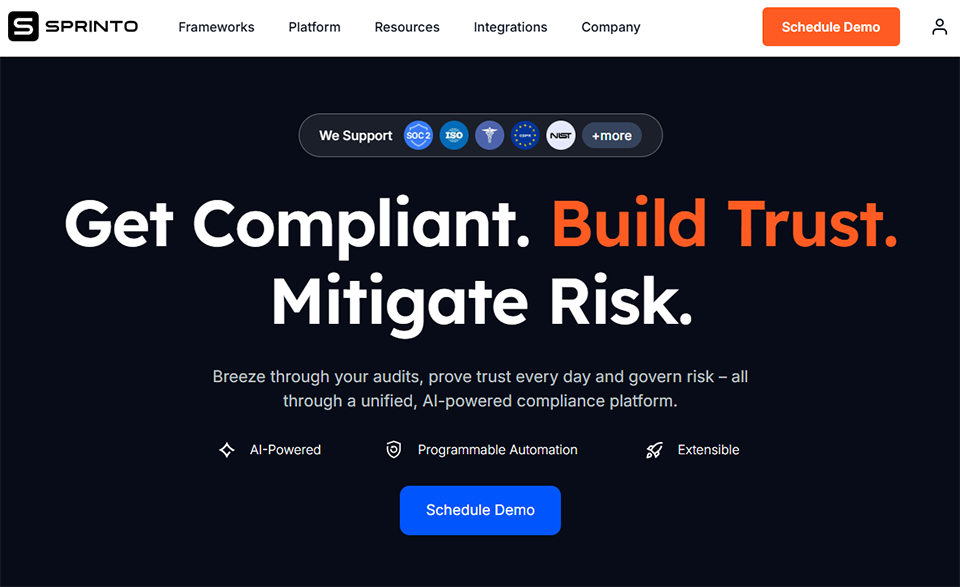
#8 - Sprinto: Automated Regulatory Compliance for Tech Startups.
Sprinto addresses a specific yet pressing need for tech startups in the growth phase: obtaining and maintaining security and compliance certifications (SOC 2, ISO 27001, GDPR, HIPAA, PCI-DSS, etc.) that enterprise customers and investors are increasingly demanding. The platform automates much of the work involved in preparing for these audits, which can otherwise take hundreds of hours of manual labor.
Why this is a legal issue:
Regulatory compliance is no longer limited to large companies. As soon as a startup processes users’ personal data (which is almost always the case), handles health data, or works with large corporate clients, it is subject to specific legal obligations. A SOC 2 audit may be required before signing a contract with a U.S. partner. ISO 27001 certification reassures European customers about the security of their data. Sprinto makes this compliance journey easier.
Key features:
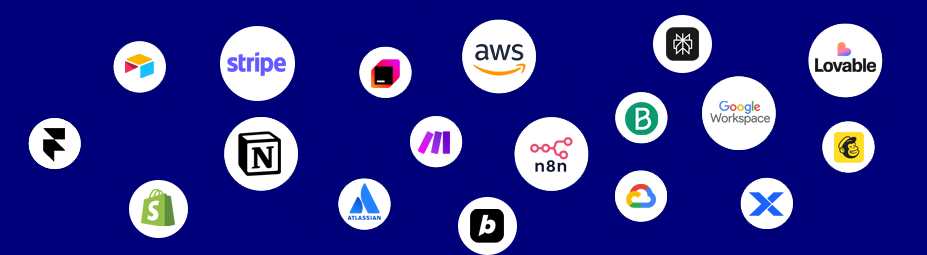
The platform connects the company's tools (AWS, GCP, GitHub, Google Workspace, Jira, Slack, etc.) to automatically collect the required compliance evidence. It generates action plans, tracks the progress of controls, alerts users to non-compliance issues, and prepares audit files. A network of partner auditors also makes it possible to find a certified auditor directly from the platform.
Pricing:
Trial Plan: Available to evaluate the platform.
Startup Plan: starting at ~$600 to $800/month (small organization, first SOC 2 certification).
Advanced Plan: Pricing based on a quote (depending on the compliance framework and team size).
For whom?
Sprinto is a tool for SaaS startups and tech scale-ups that need to obtain security certification in order to secure their first major contracts or raise funds. Security teams or CTOs who manage compliance on their own will find it a significant time-saver. It is not a tool for very small businesses or organizations outside the tech sector.
✅ The benefits:
Significant automation of evidence collection.
Support for multiple frameworks (SOC 2, ISO 27001, GDPR, HIPAA, etc.).
Integrated listener network.
Significant time savings on compliance audits.
👎 The downsides:
High rates for very small businesses.
Requires a certain level of technical expertise to be deployed correctly.
Primarily focused on security compliance, not contract management.
Benefit from a on Sprinto .
60% off on annual plan
Find our best discount right now with Sprinto and save on your software subscriptions. We offer over 850 promo codes and discounts on the best software and SaaS on the market.
Legal, compliance, electronic signatures-your needs vary depending on your organization and stage of development. Here's how to navigate them.
👤 Freelancer or entrepreneur consultant entrepreneur
Your priority is to secure your contractual relationship with your clients and project a professional image. Yousign is often the first sensible investment: simple, affordable, and legally recognized. If you don’t yet have terms and conditions or a standard contract, LegalPlace or Legalstart allow you to create these documents without needing a lawyer for standard cases. For the sales proposals you send out regularly, PandaDoc can turn your quotes into powerful tools for winning over clients.
🚀 Startup in the growth phase:
Several challenges arise at this stage: recurring contracts (with clients, service providers, and employees), initial compliance requirements from enterprise clients, and the need to structure processes without slowing down development velocity. Contractbook allows you to centralize and manage contracts as their volume increases. If clients ask you for SOC 2 or ISO 27001 certification, Sprinto can save you months of work. And Axeptio remains essential for ensuring your website or application’s GDPR compliance.
🏢 Well-structured SME:
At this level, the challenges become more varied. DocuSign is the go-to choice if some of your partners or clients are international: the brand’s recognition makes it easier for signers to adopt the solution. The combination of PandaDoc and DocuSign (or PandaDoc alone with its built-in signature feature) covers the creation and signing of commercial contracts. For GDPR and compliance requirements, Axeptio manages consent on the website side, and Drata or Vanta (also available on Freelance Stack) can complement Sprinto depending on your target frameworks.
👨💻 Web agency or studio:
Your dual role as both a service provider and a guarantor of your clients’ compliance directly affects you. Use Yousign or PandaDoc for your service agreements. Use Axeptio in agency mode to implement cookie compliance for your client projects. And use LegalPlace or Legalstart to quickly generate terms of service or legal notices when a client requests them.
Comparison Chart of the Best Legal Software. 📊
For organizations that are particularly concerned about data sovereignty, French and European solutions such as Yousign and Axeptio offer a tangible advantage over U.S. platforms.
Tool
Main category
Starting at
Ideal for
European Compliance
LegalPlace
Formalities & Documents
~€49 per document
Entrepreneurs, freelancers
✅ French law
Legalstart
Formalities & Documents
~39 € per document
Designers, Small and Medium-Sized Businesses
✅ French law
Yousign
Electronic signature
~€25/month
All profiles
✅ eIDAS, EU hosting
DocuSign
Electronic signature
~€10/month
International Teams
⚠️ Global compliance, US hosting by default
PandaDoc
Signature + documents
Free / $19/month
Sales Teams
⚠️ U.S. Hosting
Contractbook
Contract Management (CLM)
~$179/month
SMEs, scale-ups
✅ eIDAS
Axeptio
GDPR Consent
Free / €9/month
All have a website
✅ GDPR, Certified CMP
Sprinto
Compliance & Certifications
~$600/month
Tech startups
✅ SOC 2, ISO 27001, GDPR
The prices listed are for informational purposes only and are subject to change. We recommend that you check prices directly with the publishers before making any decisions.
See all the software of this category: Juridique
Check out all the other software and discount we offer in this category. Explore other tools and choose the perfect solution to grow your business.
FAQ: Your Questions About Legal Software for Businesses. ❓
The tools presented above cover a wide range of needs. Here are the questions that come up most often when making a choice.
1️⃣ Does an electronically signed contract have the same legal validity as a paper contract?
In France and the European Union, yes. The eIDAS Regulation (Electronic Identification, Authentication, and Trust Services) has established the legal framework for electronic signatures since 2016. An advanced or qualified electronic signature (such as those produced by Yousign or DocuSign) has the same legal validity as a handwritten signature. A simple signature is sufficient for the vast majority of standard contracts; a qualified signature is reserved for documents requiring a higher level of proof.
2️⃣ Do I need a lawyer if I use these tools?
These tools cover standard cases. For complex contracts, disputes, mergers and acquisitions, or any transaction involving significant financial or legal stakes, consulting a lawyer remains indispensable. These platforms are not a substitute for legal advice: they automate routine tasks and reduce costs for common legal matters.
3️⃣ Does my website have to have a cookie banner?
Yes, if your website uses cookies that are not strictly necessary for its operation (analytics, advertising, social media cookies, etc.). The French data protection authority (CNIL), like its European counterparts, requires that prior and explicit consent be obtained. Failure to comply can result in significant fines. Solutions such as Axeptio or Cookiebot allow you to quickly achieve compliance.
4️⃣ What is the difference between contract management (CLM) and electronic signatures?
Electronic signatures focus on the act of signing a document in a secure and legally valid manner. Contract lifecycle management (CLM) encompasses the entire contract lifecycle: drafting, negotiation, internal approval, signing, archiving, renewal tracking, and expiration alerts. Tools like Contractbook and PandaDoc offer both. Yousign and DocuSign focus primarily on signing.
5️⃣ How do you choose between Yousign and DocuSign?
If you work primarily with French or European partners and clients, Yousign is the natural choice: European hosting, support in French, and competitive pricing. If you have U.S. or international contacts who are already familiar with DocuSign and to whom you want to provide a familiar signing experience, DocuSign has the edge. For organizations subject to strict GDPR requirements, Yousign’s European hosting is an important factor.
6️⃣ Are SOC 2 or ISO 27001 certifications really necessary for a startup?
Not always. But as soon as you’re targeting large corporate clients, partnerships with U.S. companies, or regulated sectors (healthcare, finance, HR), these certifications often become a contractual requirement. They demonstrate your organization’s security maturity and speed up the buyer’s validation process. Platforms like Sprinto let you prepare for these certifications much faster than doing it manually.
7️⃣ Can I use these tools as a freelancer with micro-entrepreneur status?
Absolutely. Most of these solutions offer plans tailored to entrepreneurs. Yousign, PandaDoc (free plan), and LegalPlace are particularly accessible for micro-entrepreneurs who want to streamline their contract management without a significant investment. For GDPR compliance, if you have a website with forms or analytics, Axeptio’s free plan covers your basic needs.
8️⃣ How can I make sure my Terms and Conditions are up to date and compliant?
Terms and Conditions should be reviewed regularly to reflect changes in the law and your business practices. Platforms such as LegalPlace or Legalstart offer up-to-date templates. For specific situations or complex Terms and Conditions (international e-commerce, SaaS with users outside the EU, etc.), a specialized attorney remains the best option for the initial draft, which you can then adapt using these tools.