






The best AI tools to modernize your recruitment process from A to Z
This article reviews the most relevant tools on the market, organized by process stage, with a focus…
Read more


Payroll management is one of those topics that many companies treat with a casual attitude that can end up costing them dearly. This isn’t due to negligence, but often stems from a lack of appropriate tools, an overreliance on Excel spreadsheets, or a lack of understanding of constantly evolving legal requirements.
In France, the Labor Code and collective bargaining agreements result in pay stubs that are among the most complex in Europe. A miscalculation of overtime, an incorrectly allocated contribution, or a failure to make an annual adjustment: the consequences can range from a simple dispute with an employee to a URSSAF tax assessment, or even labor court proceedings.
According to a study conducted by the ADP Research Institute, nearly 54% of employees report having encountered at least one error on their pay stub at some point in their careers. On the employer side, small and medium-sized businesses (SMEs) are the most vulnerable: they lack both the structure of a large corporation to outsource payroll and the resources to hire a dedicated payroll manager.
It is precisely in this context that payroll management software has brought about a true revolution. This guide offers a comprehensive overview of the most common mistakes, along with practical tools to help you avoid them for the long term.
Before we talk about tools, we need to understand where the problems come from. Here are the types of errors that are commonly found in French small and medium-sized businesses.
Each sector has its own specific requirements: minimum wage scales, mandatory bonuses, and rules for overtime pay. An SME that applies the SYNTEC collective bargaining agreement to its developers without verifying the pay coefficients or classification levels risks having to make retroactive adjustments.
Incorrectly calculated paid time off, RTT days not calculated according to the legal formula, and sick leave not properly factored into continued pay: this area is a breeding ground for disputes. Calculating continued pay— during ing a sick leave period, for example—often involves cross-referencing several factors (length of service, collective bargaining agreement, and benefits coverage) that few managers can fully master without a dedicated tool.
The DSN (Nominative Social Declaration) is submitted monthly and is subject to strict regulations. An incorrectly configured file, an outdated contribution rate, or incorrect allocation of the mandatory health insurance plan—these are all discrepancies that can trigger automatic penalties or block an employee’s entitlement to benefits.
Retroactive pay raises, unplanned special bonuses, changes in status from managerial to non-managerial: these events often require manual adjustments that basic tools either cannot handle or handle poorly.
When a contract is terminated, the final settlement statement reflects all past errors: incorrectly recorded paid time off, and severance pay that was not calculated according to the most favorable legal or contractual provisions. This is often where disputes arise.
For small and medium-sized businesses that hire employees from abroad or freelancers in other countries, the issue of local compliance becomes an additional headache. Each country has its own social security contributions, reporting requirements, and tax thresholds.
The payroll software market has evolved significantly in recent years. Gone are the days of monolithic solutions reserved for large enterprises: today, SaaS-based platforms enable small and medium-sized businesses with 10 to 200 employees to manage their payroll independently, in compliance with regulations, and automatically.
Here are the solutions available on Freelance Stack that are worth considering based on your profile.
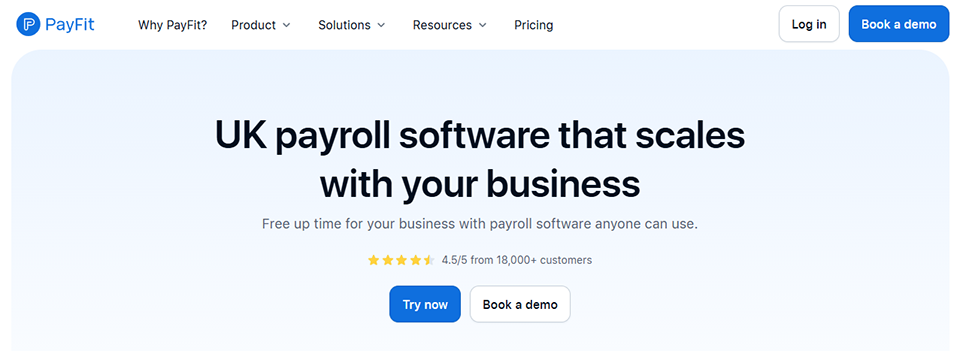
PayFit is a French payroll and HR management solution, founded in 2015, that set out to make payroll accessible to non-specialists. The original idea is simple: to automate the entire payroll calculation process by directly integrating French legal and collective bargaining rules, which are updated in real time by PayFit’s in-house legal teams.
The platform is designed for companies with 1 to approximately 200 employees, and is easy to use for HR managers or office managers who do not necessarily have accounting training.
PayFit covers the entire payroll cycle: data entry for variables (overtime, bonuses, absences), automated pay stub generation, DSN generation and submission, tracking of vacation and RTT days, employee access via a dedicated portal, and management of employee onboarding and offboarding (including final pay settlements).
What really sets it apart is the integration of collective bargaining agreements directly into the calculation engine. PayFit currently covers more than 100 collective bargaining agreements and keeps all legal parameters (contribution rates, minimum wage, Social Security ceiling, etc.) up to date without requiring any action on your part.
The DSN is generated and can be submitted directly from the interface, with alerts for any anomalies detected before submission.
SMEs with 10 to 80 employees that handle payroll in-house:
PayFit is probably the best-suited solution for this profile. It's quick to get started with, the interface is clear, and the calculation engine handles the usual complexities for you.
The office manager or HR director working alone:
Even if you're not a payroll expert, you can manage compliant pay stubs, track time off, and generate the DSN without having to rely on an accounting firm every month.
The Growing Startup:
PayFit adapts to growing teams and offers additional HR modules to help structure processes as the company grows.

Lucca is a French HR solution based on a modular model: you choose the modules you need (payroll, time off, expense reports, work hours, interviews, etc.) and assemble them to fit your organization. This flexibility makes it an attractive option for growing small and medium-sized businesses that want to gradually build their HR stack without investing in a comprehensive suite.
When it comes to payroll, Lucca offers Pagga, its dedicated module that allows you to manage pay stubs and payroll variables, and to connect the data feed to a partner payroll software solution (such as Silae) or directly to an accounting firm via structured exports.
At the heart of Lucca is the management of HR data and workflows: tracking absences and time off (Timmi Absences), time management (Timmi Temps), expense reports (Cleemy), performance reviews (Poplee), and, of course, payroll management via Pagga.
This model offers a tangible benefit for payroll: absences entered in Timmi are automatically synced to Pagga, reducing the risk of omissions or manual data entry errors. This is one of the common sources of errors that Lucca directly addresses.
The platform also offers an employee portal that allows employees to view their pay stubs, request time off, and submit expense reports on their own.
SMEs with 50 to 200 employees and a structured HR department:
Lucca is particularly well-suited when there are multiple HR processes to manage simultaneously. The modular approach helps you avoid paying for features you don't use.
Companies that already outsource their payroll:
But they want to improve the quality of the data sent to the firm (fewer back-and-forth exchanges, fewer errors in the variables).
Organizations that promote their employer brand:
The employee experience on Lucca is well-designed, with modern interfaces and seamless workflows that contribute to the company's image.

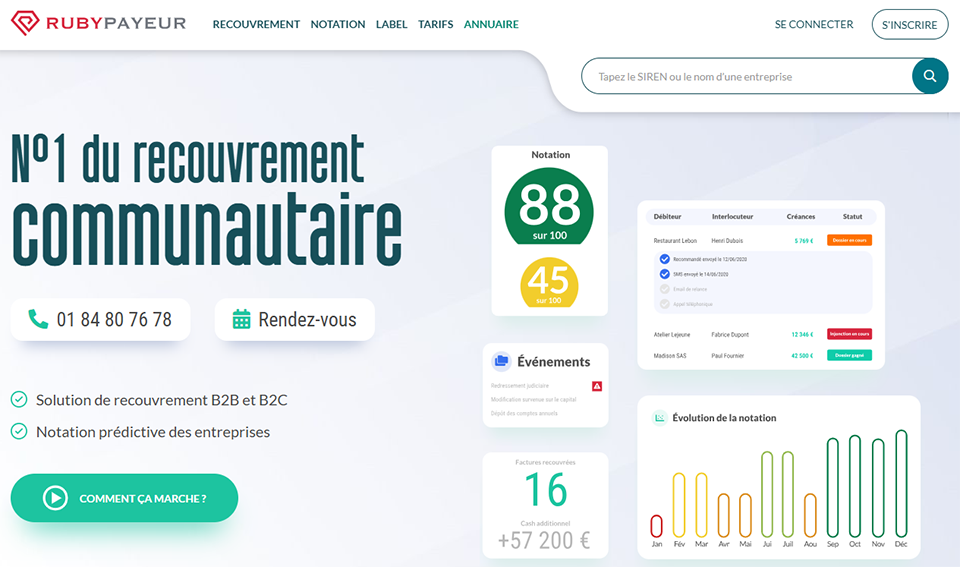
RubyPayeur is a French payroll management solution designed for very small businesses, independent contractors, nonprofit organizations, and occasional employers. If you have one or a few employees and the thought of payroll terrifies you every month, RubyPayeur was designed specifically for you.
The platform handles payroll calculations and social security filings (DSN), and guides users step by step, even if they have no prior payroll experience.
RubyPayeur’s strength lies in its ease of use. The interface is self-guided, calculations are automated, and the DSN is generated without the user having to understand the details of the accounting entries. For a private employer, an association with two employees, or a small craft business, this is often more than enough.
RubyPayeur also manages employee onboarding and offboarding, final pay statements, and provides employees with online access to their pay stubs.
Please note: RubyPayeur also offers a plan in partnership with Wemind (available at Freelance Stack via RubyPayeur x Wemind), a supplemental health insurance plan designed for entrepreneurs s and small businesses.
A sole proprietor hiring an employee for the first time:
RubyPayeur flattens the learning curve. You don't need to know what an employer contribution rate is to use the tool properly.
Very small businesses with fewer than 10 employees:
For positions with relatively simple requirements (same terms, standard full-time or part-time): the value for money is unbeatable.
Organizations:
Often lacking in HR resources, they find RubyPayeur to be an accessible solution that requires no lengthy training.

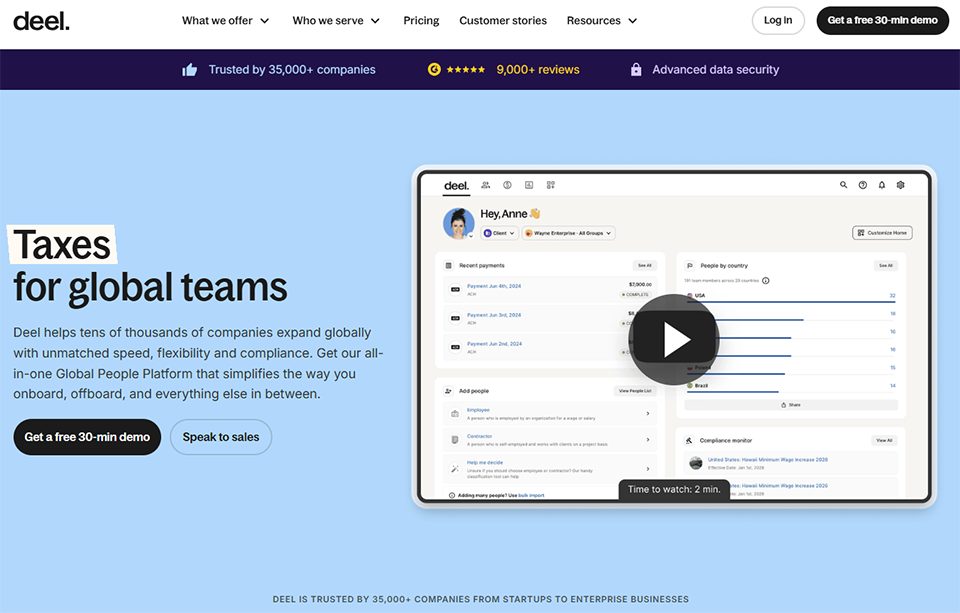

Deel tackles a problem that previous solutions have failed to address: how to properly pay employees or contractors in different countries with distinct labor and tax laws? This is Deel’s core business, and in just a few years, it has established itself as one of the most widely used global HR platforms for international payroll management.
Deel offers several solutions: payroll management for international employees through anEmployer of Record (EOR) system (where Deel acts as the legal employer in the relevant country), contract and payment management for freelancers entrepreneurs in more than 150 countries, and a global payroll solution for companies that have their own local entities.
The platform covers the electronic signing of contracts, the calculation and payment of salaries in local currencies, compliance with each country's legal requirements (vacation time, notice periods, payroll taxes), and access to an employee/freelancer portal where users can view payments and documents.
Deel also includes features for managing distributed teams: onboarding, equipment tracking, and international employee benefits.
For French SMEs that work with developers in Poland, designers in Spain, or consultants in Morocco, Deel offers a viable alternative to manually managing international contracts and payments.
Tech startups or small and medium-sized businesses that hire candidates from outside France:
Deel eliminates the administrative complexity of hiring internationally. You stay focused on management; Deel handles local compliance.
A company that hires freelancers in several countries:
Standardized contracts, automated payments, tax compliance. No more makeshift international transfers or hastily drafted contracts.
Remote-first teams:
Deel is often the central tool for companies that have chosen a distributed organizational structure from the start.
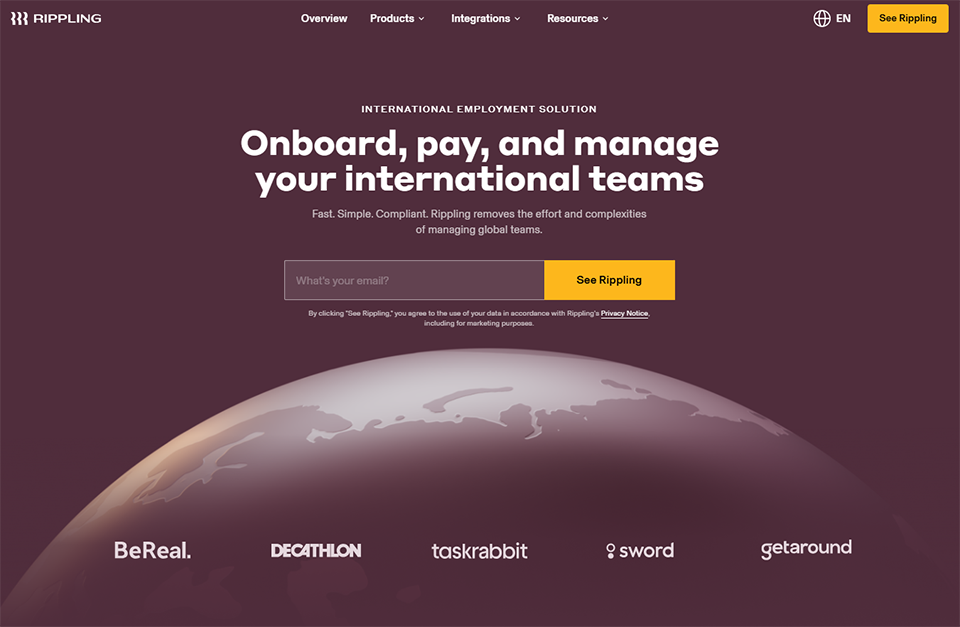
Rippling is a U.S.-based platform that goes far beyond payroll. Its core concept is to connect all employee-related processes: HR, payroll, and benefits, as well as IT (management of access to applications, equipment, and software licenses). All of this is managed through a single interface.
For payroll, Rippling offers a robust global solution, covering more than 50 countries and featuring extensive automation of calculations, reporting, and payments.
On the payroll side, Rippling manages pay stubs, local tax filings, and direct deposits, and syncs with HR data (hires, terminations, status changes) without any manual intervention. Legal updates are applied automatically.
What really sets Rippling apart is its IT integration: when you onboard an employee in Rippling, you can automatically create their Google Workspace account, assign them licenses for Slack, Notion, or other tools, and send them their preconfigured computer. A new employee’s entire operational stack is set up in just a few clicks.
The platform integrates with more than 500 third-party applications.
An SME or scale-up with a strong tech culture and a wide range of tools:
Rippling really shines when there are many applications to manage simultaneously. It saves a significant amount of time on onboarding and offboarding.
Distributed teams with employees in multiple countries:
Unified management of international payroll is a major advantage.
IT and HR leaders who face the same access and security challenges:
Rippling is probably the only solution that truly addresses both of these aspects in an integrated way.

Here is a summary table to help you quickly find your way around. The rates listed are for reference only and are subject to change: visit the relevant pages on Freelance Stack to view the latest offers and negotiated discount.
| Criterion | PayFit | Lucca | RubyPayeur | Deel | Rippling |
|---|---|---|---|---|---|
| Primary target | SMEs with 10–150 employees | SMEs with 50–200 employees | Very Small Business / 1–10 employees | International Teams | Scale-up / tech |
| Payroll France | ✅ Native | ✅ Via Pagga | ✅ Native | ⚠️ Midterm | ⚠️ Midterm |
| International Payroll | ❌ | ❌ | ❌ | ✅ 150+ countries | ✅ 50+ countries |
| Vacation and Absence Management | ✅ | ✅ | ✅ Basic | ✅ | ✅ |
| Comprehensive HR Modules | ⚠️ Limited | ✅ Modular | ❌ | ✅ | ✅ |
| IT Management/Access | ❌ | ❌ | ❌ | ❌ | ✅ |
| Getting Started | ⭐⭐⭐⭐ | ⭐⭐⭐ | ⭐⭐⭐⭐⭐ | ⭐⭐⭐⭐ | ⭐⭐⭐ |
| Admission price | ~€14/month/employee | ~€3–€6 per module per user | Very accessible | $49 per contractor | $8 per user |
| Ideal for avoiding | Calculation errors, DSN | Variable and stream errors | DSN Errors, Bulletin | International Compliance Errors | Onboarding and access errors |
Questions about payroll management come up often, and it isn't always easy to find clear answers. Here are the ones we see most often in French small and medium-sized businesses.
Not at all. In fact, this is one of the main changes brought about by SaaS solutions like PayFit or RubyPayeur: they’ve made payroll management accessible to companies with 5 or 10 employees, without requiring in-depth accounting training. The automation of calculations and filings has significantly reduced the risk of errors, even for non-specialists.
It varies greatly depending on the nature of the error. A failure to include a contractual bonus detected several months later will result in a correction with late-payment interest. An incorrectly set contribution rate over the course of a year can lead to a URSSAF adjustment with penalties. Beyond the financial cost, there is also the human cost: an employee who notices a recurring error on their pay stub will quickly lose trust in their employer.
No. With tools like PayFit, it’s entirely possible to manage your payroll completely on your own. Some small and medium-sized businesses prefer to retain an accounting firm for annual audits or complex cases (terminations, settlements), but hiring an accountant on a monthly basis is no longer a requirement. Solutions like Lucca are also designed to facilitate collaboration with an accounting firm if you wish to continue working with one.
The answer depends primarily on your geographic scope. If 100% of your employees are in France, a French solution like PayFit or Lucca will be better tailored to the specificities of local labor law (collective bargaining agreements, DSN, URSSAF). If you have employees in multiple countries, Deel or Rippling provide international coverage that French tools do not offer.
This is a critical time for payroll. When you hire several people in a short period of time, there’s a high risk of errors in the initial setup (contract, collective bargaining agreement, pay rate). Software that centralizes HR onboarding and payroll setup (such as Rippling or PayFit) significantly reduces this risk by eliminating the need for manual data entry.
They provide a very robust safety net, but no tool can guarantee 100% compliance if the initial settings are configured incorrectly (incorrect collective bargaining agreement entered, incorrect employee classification). Compliance remains a shared responsibility between the tool and the user. For complex cases, human assistance (specialized support or a certified public accountant) is still recommended.
Some platforms support this, notably Deel, which clearly distinguishes between “employment” contracts and “contractor” contracts. Rippling also offers this hybrid management model. For organizations that use both employees and contractors entrepreneurs, this is a selection criterion that should not be overlooked.
No, but it is made easier by all the tools presented here. In France, employers can provide pay stubs in either paper or electronic format. In any case, since 2017, the employee’s consent is no longer required for electronic pay stubs (unless the employee explicitly objects). All SaaS solutions offer a digital employee vault for viewing and archiving pay stubs.
Payroll is an area where mistakes are easy to make and the consequences can be severe. But it’s also an area where the tools available today allow almost any small or medium-sized business to manage its operations effectively, without specialized accounting expertise or a large corporate budget.
PayFit remains the go-to solution for French small and medium-sized businesses that want to manage their payroll in-house with comprehensive coverage of collective bargaining agreements. Lucca is ideal when you need to coordinate multiple HR processes. RubyPayeur is the top choice for very small businesses that prioritize simplicity above all else. Deel and Rippling step in when your organization expands beyond France’s borders.
No matter the size of your business, investing in the right payroll software is also an investment in your teams' trust. And that’s priceless.