

QRVio
30% off on any plan








✅ Deal information:
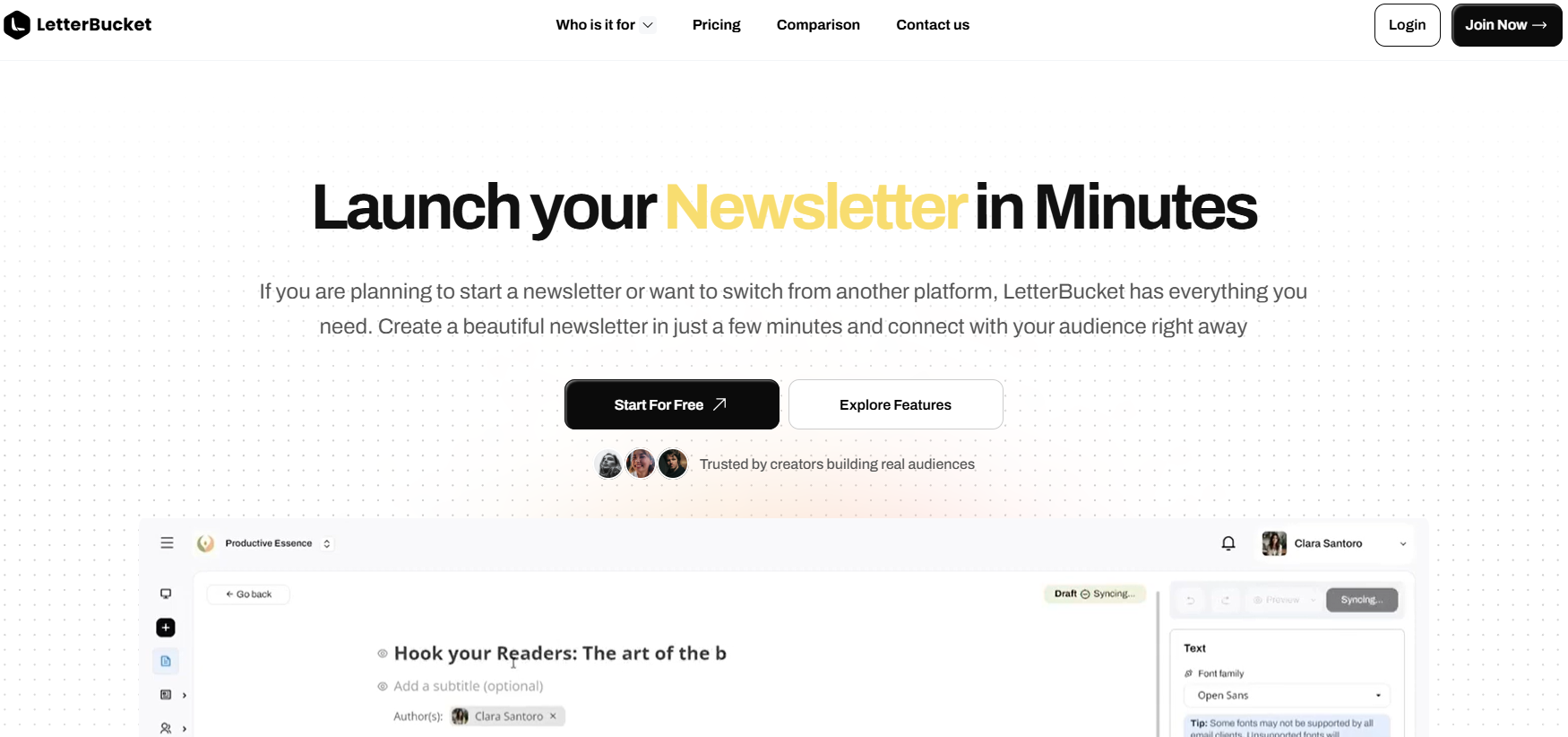
LetterBucket is a modern newsletter platform designed for creators, entrepreneurs, and businesses who want to easily create, send, and monetize their newsletters. With an intuitive editor, customizable templates, and a clear interface, you can design professional email campaigns that capture attention and drive engagement. The platform focuses on optimal deliverability to ensure that your emails reach your subscribers' inboxes, while complying with privacy and data protection standards.
Beyond sending emails, LetterBucket offers powerful tools to manage and segment your audience, automate sequences, analyze performance in real time, and convert your newsletters into SEO-friendly web content, helping you attract organic traffic. The platform also includes monetization options to create paid subscriptions and keep 100% of your revenue, while giving you complete control over your audience and data.
Everything you need to create the best Newsletters:
Most newsletter tools force you to choose between a powerful email marketing platform with a steep learning curve and pricing that discourages list growth, or a creator-focused publishing network where you build an audience within someone else’s ecosystem. LetterBucket takes a different approach. It is described as a newsletter-led owned media platform, meaning the goal is to provide creators and operators with a single system where the newsletter, the website, and the audience all coexist on your own domain, under your own brand.
The tool is designed for people who want to publish seamlessly and grow their audience without relying on a platform's network or algorithm to reach readers.
LetterBucket offers three plans, all based on a per-workspace model. The subscriber limit is 1,000 for all current plans, with email volume being the main factor distinguishing the different tiers. A 30-day free trial is available for paid plans, with no credit card required. Custom plans are available for organizations with higher-volume needs.
| Plan | Price | Emails per month | Key features |
|---|---|---|---|
| Free | $0 | $1,000 per month | Up to 1,000 subscribers, unlimited posts, custom newsletter and website, analytics, 1 subscription form, one-click surveys |
| Starter | $29 /month | $5,000 per month | Everything is free, 3 subscription forms, a welcome series, one-click surveys, and 3 team seats |
| Growth | $59 /month | $5,000 per month | Everything included in the Starter plan, 10 subscription forms, 10 team seats, custom domain, AI writing assistant, priority support, and removal of branding |
| Custom | Upon request | Custom | High-volume sending, dedicated support, exclusive features - contact the team directly |
1️⃣ If you are a freelancer or consultant:
For an independent professional creating a newsletter as a content channel or client acquisition tool, the most direct comparison is Substack, which is free to use and includes a built-in audience network to help with discoverability, though it takes a 10% cut on paid subscriptions and keeps your readers within its ecosystem. For someone who wants full ownership without any revenue share, Ghost is the go-to choice: it is a powerful open-source publishing platform with built-in paid subscription support and no platform fees, though it requires more technical setup or a paid managed hosting plan. Beehiiv is another option worth considering, particularly for freelancers focused on audience growth, as its referral and boost infrastructure is more developed than most alternatives at a comparable price point.
2️⃣ If you are a startup:
For a startup using a newsletter as part of its content marketing or product communication strategy, the tool requirements shift toward automation capabilities, segmentation quality, and integration with the broader marketing stack. Kit (formerly ConvertKit) is built specifically for creators and operators who need more sophisticated email automation without the complexity of a full marketing platform, offering sequences, tags, and subscriber behavior triggers that far exceed what LetterBucket currently provides. MailerLite is a strong alternative for startups that want a generous free tier, solid automation, and the ability to build landing pages and sell digital products from the same tool. For startups already invested in a CRM, HubSpot or ActiveCampaign may make more sense, as they integrate newsletter sending into a broader CRM and automation workflow.
3️⃣ If you are a small or medium-sized business:
At this level, newsletter infrastructure typically needs to integrate seamlessly with existing marketing operations and support team workflows, and scale without steep price increases. Brevo (formerly Sendinblue) charges based on email volume rather than list size, making it significantly more cost-effective for large lists that are contacted infrequently, and offers SMS, WhatsApp marketing, and CRM features all within the same platform. Mailchimp remains one of the most widely integrated tools in the category, with deep integrations with e-commerce platforms and third-party tools, though its pricing becomes substantial at scale. For businesses building a content-led brand and wanting their newsletter and website to function as a single owned property, Ghost at the managed plan level is a mature and credible option that handles paid subscriptions, member management, and SEO-optimized publishing within a single cohesive system.
Otherwise, these other software programs may also be a good alternative to LetterBucket.No resources currently available.