


Synthesia
Additional 25% off during 12 months

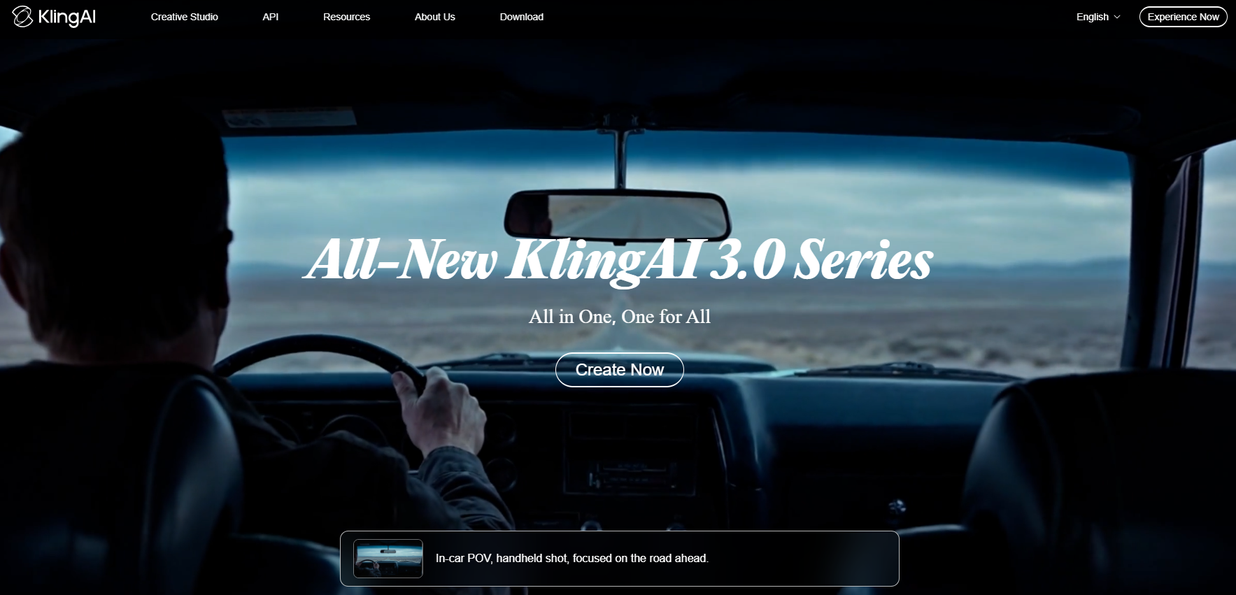







Kling AI is an AI-powered video creation studio developed by Chinese tech giant Kuaishou. The platform is based on two main features: text-to-video and image-to-video generation, allowing any user to transform a written description or photo into a high-quality animated clip without a film crew or complex editing software. Videos are generated in 1080p at 30 frames per second, and paid plans allow users to create clips up to three minutes long, placing Kling AI above most of its direct competitors such as OpenAI's Sora and Runway.
Beyond basic generation, Kling AI incorporates spatial reasoning that allows it to understand 3D environments, ensuring consistent character movement, logical object behavior, and smooth camera movements. AIxploria Version 2.0 introduces a Multi-Elements Editor that allows users to modify the content of an existing video via text or images, replace an object, insert a character, change a background, and use advanced image editing tools such as inpainting, expansion, and restyling, transforming the platform into a true full-featured creative studio.
Kling O1 Video Model :
Input Anything. World's First Unified Multimodal Video Model:
Understand Everything. Multimodal Input, All-in-one Creation & Modification:
All-in-One Reference. Video Consistency Now Resolved:
Kling O1 Image Model :
High Feature Retention:
Precise Detail Modification:
Accurate Control of Style and Tone:
Kling AI represents a major leap forward in video generation technology, positioning itself as one of the most advanced AI-powered platforms for creating high-quality video content from text prompts and images. Developed by Kuaishou Technology, this cutting-edge tool leverages sophisticated diffusion models and 3D spatiotemporal attention mechanisms to produce remarkably realistic videos that rival traditional video production methods. What sets Kling AI apart from its competitors is its ability to generate videos with exceptional motion fidelity, consistent character representation, and complex scene understanding that maintains visual coherence throughout extended sequences.
The platform caters to a diverse range of creative professionals, from content creators and marketers to filmmakers and digital artists, offering them unprecedented control over video generation without requiring extensive technical expertise. Kling AI's approach combines the accessibility of prompt-based creation with the sophistication of professional-grade output, making it possible to produce compelling video content that would traditionally require substantial resources, equipment, and post-production work. The system's advanced understanding of physics, lighting, and motion dynamics enables it to create videos that feel naturally realistic rather than artificially generated.
With its comprehensive feature set, Kling AI stands out as a transformative tool that makes high-quality video production accessible to everyone while maintaining the high standards of output that professional creators expect. Its combination of accessibility and advanced capabilities makes it ideal for both experimental creative projects and commercial video production needs.
High-end AI video synthesis: Kling AI is at the forefront of the text-to-video movement, using deep neural networks to turn a few sentences into remarkably complex footage. It bridges the gap between a written idea and a visual reality, allowing people without cinematography skills to generate clips that would usually require a full production suite.
Impressive cinematic potential: When the model performs as intended, the results are stunning. It can produce lighting, textures, and fluid movements that genuinely rival high-end b-roll or stock footage. For creators who need a specific shot of a sunset over a futuristic city or a hyper-realistic nature scene, the visual fidelity is often high enough to be used in professional marketing and social media campaigns.
A simplified creative workflow: The interface is designed for quick thinking. You don't need to understand frame rates, lighting setups, or keyframes; you just describe what you want. This natural language approach allows for rapid conceptualization, enabling a solo creator to brainstorm and visualize a dozen different scenes in a single afternoon.
Versatility across genres: Whether you're looking for 3D animation, realistic film, or abstract art, the platform is flexible. It adapts well to various industries, from small business ads to educational explainers, making it a powerful tool for anyone who needs a constant stream of fresh video content without a dedicated film crew.
Massive cost savings for small teams: Compared to the thousands of dollars required to hire a camera crew, actors, and editors, Kling AI costs a fraction of the price. It provides a way for startups and independent creators to produce high-impact visuals that were previously only accessible with massive production budgets.
Rapid prototyping for directors: The ability to quickly generate multiple variations of a scene is a game-changer for storyboarding. You can test different visual approaches and movements almost instantly, allowing you to settle on a creative vision before committing to a final version.
The rendering queue: We can’t call the process “rapid” when it takes hours. While the creative process is faster than traditional filming, the technical process is often slow. Due to the massive computing power required, you’ll often find yourself in a queue. High-quality clips can take a long time to render, meaning this isn’t a tool for instant results if you’re working on a tight, minute-by-minute deadline during peak server hours.
The physics and complexity barrier: The output isn't always professional-grade; it struggles with complex human interactions. The AI is impressive but far from perfect. It often struggles with complex physics, such as multiple characters interacting or intricate hand movements. You might see objects morphing into each other or people moving in ways that feel unnatural. For projects requiring absolute technical accuracy or specific character choreography, the AI still has a high failure rate.
Limited director control: The interface is intuitive to use, but the output is often unpredictable. You have very little control over the specifics. You can't tell the AI to move a character exactly three steps to the left or change the camera angle by ten degrees. You are essentially rolling the dice with every prompt. This lack of precision can be frustrating for professional editors who are used to having total control over every pixel in their timeline.
The restart tax on revisions: Unlike traditional video editing, where you can simply tweak a clip, if an AI-generated video isn’t quite right, you usually have to generate it again from scratch. There is no simple undo or edit button for the visual content itself. This means that a small change requested by a client can end up costing you more time and credits than the original generation.
Unpredictable credit usage: While it’s cheaper than hiring a film crew, the pay-per-attempt model can be expensive. Since it often takes five or ten attempts to get one perfect clip, costs can escalate quickly. For agencies producing a high volume of content, the credit-based system can become a significant monthly expense. You’re effectively paying for the AI’s mistakes just as much as its successes, which makes budgeting for a specific project much harder than with flat-fee software.
In 2026, Kling AI offers a flexible pricing structure designed to meet the diverse needs of AI video creation. The platform provides a generous free plan as well as premium options for users with more advanced requirements, including access to its latest VIDEO 3.0 models with native audio support.
Here is a detailed overview of Kling AI's 2026 pricing and what is included in each subscription tier. Please note that annual billing typically offers a discount of approximately 17% to 25% compared to the monthly rates listed below.
| Plan | Pricing | Included |
|---|---|---|
| Free | $0/month | 66 daily credits (non-expiring), 5-second videos, 720p resolution, watermark included |
| Standard | $10/month | 660 monthly credits, watermark removal, 1080p resolution, access to Professional Mode |
| Pro | $35/month | 3,000 monthly credits, 10-second videos (extendable), 2K resolution, priority queueing, camera control |
| First | $92/month | 8,000 monthly credits, 4K resolution, highest priority, early access to new features (Beta) |
Paid subscriptions grant full commercial rightsto the generated content. It is important to note that monthly credits included in paid plans typically expire at the end of the billing cycle, whereas additional credit packs purchased separately remain valid for up to 2 years. High-quality settings (Professional Mode) and longer video durations use up credits faster than standard 5-second videos.
1️⃣ If you are a freelancer or consultant:
As a freelancer, you need affordable and user-friendly tools to create high-quality video content. Runway is an excellent option, featuring accessible generative AI models and an intuitive interface that makes it easy to quickly create short videos. Its credit system gives you precise control over your costs. Luma AI is also a great choice for independent professionals, as it specializes in generating realistic 3D videos-perfect if you work in architecture, product design, or real estate. The tool offers competitive pricing and a gentle learning curve. For those who prefer a more budget-friendly solution, Pika Labs offers robust video generation capabilities with generous free options, ideal for testing the potential of AI video before making a further investment.
2️⃣ If you are a startup:
Startups need tools that scale with their growth while keeping initial costs in check. Synthesia stands out as a robust solution for creating videos with AI avatars, particularly useful for product presentations, training, or demonstrations. Its scalable subscription model adapts perfectly to the evolving needs of a young company. Pictory is a versatile solution for transforming your text content into engaging videos, essential for digital marketing and communication. The tool excels at creating content for social media and promotional campaigns. InVideo AI offers professional templates and collaborative features that facilitate teamwork, a major asset when multiple people contribute to video creation within the company.
3️⃣ If you are a microenterprise or SME:
For established businesses looking to integrate AI video into their workflows, Wondershare Virbo offers a comprehensive solution with advanced customization features and a library rich in professional templates. Its user-friendly interface allows non-technical teams to create high-quality content without extensive training. HeyGen is particularly well-suited for multilingual companies thanks to its automated translation and lip-sync capabilities, which facilitate content creation for different markets. The tool effectively manages team workflows and offers custom branding options. Fliki represents an economical yet powerful alternative for converting articles, presentations, and scripts into narrative videos, particularly useful for internal training, client communication, or content marketing. Its multilingual AI voice-over system allows you to reach an international audience without additional investment.
Otherwise, these other software programs may also be a good alternative to Kling AI.No resources currently available.