
LetsEnhance
Additional 30% off on any plan

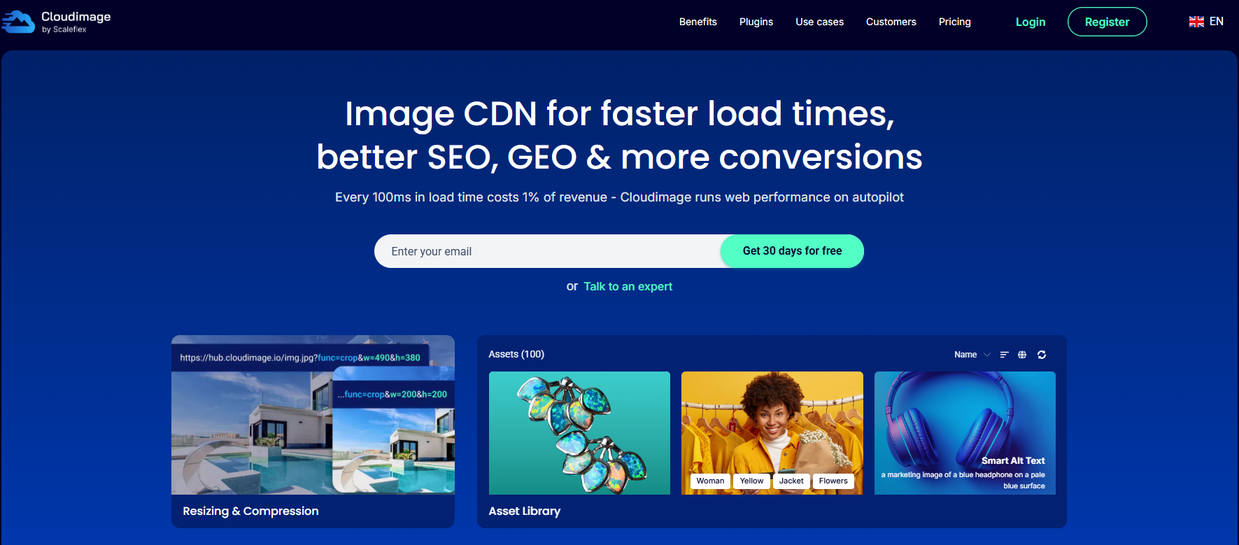







CloudImage is a platform specialized in image optimization and management for websites and applications. It enables users to process, resize, compress and optimize images in real time to improve performance and page loading speed. Thanks to its user-friendly API, CloudImage facilitates integration into existing systems, while offering advanced functionalities such as format conversion and dynamic image adjustment according to users' needs.
The platform also offers tools for large-scale image management, ensuring a fluid user experience and efficient management of visual resources. By reducing loading times and improving image quality, CloudImage contributes to better overall site and application performance.
Tool type:
Categories:
How does Cloudimage work?
CloudImage is revolutionizing image management on the web by offering a comprehensive solution for real-time optimization and delivery. This cloud platform automatically transforms your images to ensure optimal loading times, regardless of your visitors’ screen size or connection quality. The tool serves as a web performance booster that is particularly well-suited for e-commerce sites, portfolios, and applications that require a large volume of images.
CloudImage's strength lies in its ability to process images on the fly, without requiring any prior modifications on your part. You upload your high-resolution files, and the platform automatically delivers the optimal version based on the viewing context. This intelligent approach eliminates the traditional technical challenges associated with managing multiple images and ensures a seamless user experience across all devices.
Integration is as simple as updating your existing image URLs, making CloudImage compatible with virtually all CMS platforms and frameworks on the market. This ease of implementation allows both developers and content creators to immediately reap the benefits of automatic optimization.
CloudImage thus eliminates the technical complexity of image optimization while delivering exceptional performance. This cloud-based solution allows creators to focus on their visual content without worrying about technical constraints, while ensuring an optimal user experience across all distribution channels.
CloudImage offers a flexible pricing model based on the volume of images processed and the bandwidth used. The platform provides a generous free plan to get you started, as well as paid options that scale with your project’s growing needs.
Prices are calculated based on a pay-as-you-go billing model, allowing for gradual scalability without a long-term commitment. This pricing structure is particularly well-suited for websites and apps whose traffic fluctuates depending on the season or marketing campaigns.
| Plan | Rates | Included |
|---|---|---|
| Free | Free | 25 GB of bandwidth, automatic optimization, WebP/AVIF formats |
| Growth | Starting at 9s per month | 100 GB of bandwidth, global CDN, comprehensive API, priority support |
| Scale | Starting at 29s per month | 500 GB of bandwidth, advanced analytics, CMS integrations, 99.9% SLA |
| Enterprise | Upon request | Unlimited bandwidth, dedicated support, private infrastructure, GDPR compliance |
CloudImage's free plan offers 25 GB of monthly bandwidth, which translates to approximately 25,000 image views per month based on average file sizes. This generous allocation allows you to test the solution small- to medium-sized projects at no upfront cost. Automatic image optimization and conversion to modern formats such as WebP and AVIF are included at this tier, ensuring optimal performance even without a financial investment.
The Growth plan, starting at €9 per month, quadruples the available bandwidth to 100 GB per month. This plan includes access to CloudImage’s global content delivery network (CDN), allowing you to serve your images from servers located closest to your visitors. The full API becomes available, paving the way for custom integrations and the automation of optimization workflows. Priority support ensures faster response times for technical questions or configuration issues.
For more ambitious projects, the Scale plan starts at €29 per monthand includes 500 GB of bandwidth. This plan stands out thanks to advanced analytics that allow you to precisely monitor resource usage, loading performance, and the impact of optimizations on the user experience. Native integrations with major CMS platforms such as WordPress, Shopify, and Magento make it easy to deploy on existing websites. The 99.9% uptime SLA provides peace of mind for businesses that rely on the reliable delivery of their visual content.
The Enterprise plan, available by quote only, is designed for large organizations with specific requirements regarding volume, security, or compliance. This plan offers unlimited bandwidth, eliminating any concerns related to traffic spikes or rapid growth. The infrastructure can be deployed on private servers to comply with data sovereignty requirements. Dedicated support with a single point of contact assists with the implementation and ongoing optimization of the solution.
CloudImage’s billing follows a transparent, usage-based model. Unlike some competitors who charge for storage or the number of images, CloudImage only charges for the bandwidth actually consumed by your visitors. This approach avoids unpleasant surprises and allows you to predict costs based on your site’s actual traffic. Quota overages are billed on a pro-rata basis, generally between €0.05 and €0.10 per additional GB, depending on the plan you’ve subscribed to.
A key advantage of CloudImage’s pricing model is thatthere is no minimum contract term. You can adjust your plan at any time to accommodate changing needs, whether to handle a temporary surge in traffic or to optimize costs during slow during . This contractual flexibility is particularly well-suited for fast-growing startups or seasonal websites with significantly fluctuating needs.
The features included even in the free planrival the paid offerings of many competitors. Automatic optimization analyzes each image to apply the best compression settings without any noticeable loss of quality. Automatic conversion to WebP and AVIF-modern formats offering up to 30% additional compression-is enabled based on the visitor’s browser capabilities. On-the-fly resizing allows each image to be adapted to the exact dimensions required, eliminating the download of unnecessary pixels.
To help you determine the best plan for your project, CloudImage provides a cost calculator on its official website. This tool estimates your bandwidth usage based on your monthly visitor count, the average size of your images, and the number of images per page. This estimate helps you anticipate how costs will change as your audience grows, enabling you to accurately budget for infrastructure costs.
You can switch plans instantly from the dashboard, with no service interruption. This flexibility allows you to adjust your subscription in real time as needed-for example, to prepare for a traffic spike during a marketing campaign or product launch. Plan changes take effect immediately, with prorated billing to avoid double charges or uncovered periods.
1️⃣ If you are a freelancer or consultant:
If you want to optimize your images without any technical complexity, TinyPNG is the perfect solution. This platform lets you efficiently compress your images in just a few clicks, with an intuitive interface that requires no advanced configuration. The tool maintains excellent visual quality while significantly reducing the size of your files. Optimizilla is also a smart choice for your business, offering simultaneous compression of multiple images with a real-time preview of the results. This feature saves you valuable time when preparing client deliverables. Both of these alternatives perfectly meet your needs for simplicity and efficiency, without requiring a significant financial investment or in-depth technical training.
2️⃣ If you are a startup:
Your rapid growth requires scalable, high-performance tools. ImageKit stands out as a must-have solution must-have its built-in CDN and real-time image processing capabilities. This solution supports your scaling efforts by automatically adapting your visuals to your users’ devices. The robust API makes it easy to integrate into your existing systems. Kraken.io is also worth considering thanks to its advanced compression features and excellent value for money. The tool offers batch processing options that are particularly well-suited when your image library is growing rapidly. These alternatives provide the technical flexibility needed to support your expansion while keeping infrastructure costs under control.
3️⃣ If you are a small business or an SME:
Your image optimization needs are part of a broader effort to professionalize your digital presence. Squoosh, developed by Google, offers a free, high-performance solution right in your browser. This tool lets you compare different formats and compression levels in real time, helping you make the best decisions for your web visuals. ShortPixel is a worthwhile investment if you manage a WordPress site, with its dedicated plugin that automatically optimizes your images upon upload. This automation frees up time for your teams while ensuring optimal web performance. For more substantial needs, Cloudinary offers a comprehensive solution with digital asset management features that perfectly support your business growth.
Otherwise, these other software programs may also be a good alternative to CloudImage.No resources currently available.