

Google Cloud for AI
Up to $350,000 in credits








✅ Information to access to the deal :
✅ Information to access to the deal :
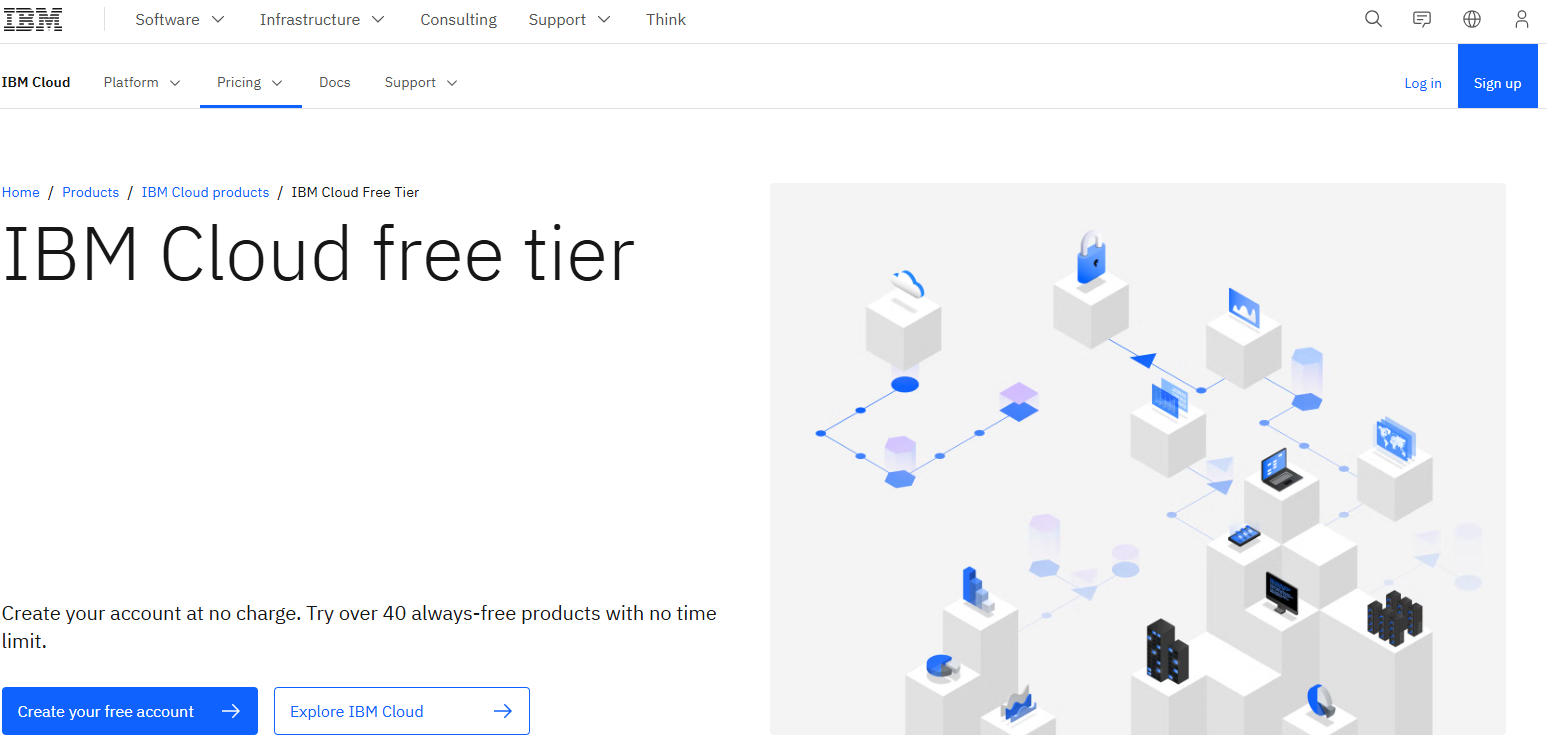
IBM Cloud is a comprehensive cloud computing platform offering a wide range of services for developing, deploying, and managing applications and infrastructure. It provides public, private, and hybrid cloud solutions, allowing businesses to choose the configuration that best suits their needs. IBM Cloud offers virtual machines, storage, databases, and container management services through Kubernetes and Red Hat OpenShift.
The platform also includes AI tools via IBM Watson, enabling users to integrate AI capabilities into their applications. With strong security features and high flexibility, IBM Cloud is ideal for businesses looking to migrate to the cloud, develop scalable applications, or manage complex infrastructure efficiently.
Watson:
Watson can learn from small data sets, protect your insights and help you reimagine workflows to provide AI where and when you need it.
IBM Blockchain:
Cut out the middleman and improve the time it takes to execute business transactions with IBM Blockchain.
Analytics:
IBM Analytics helps you make your data simple and accessible. Organize your data into a trusted, business-ready foundation with the built-in protection and compliance controls.
Security:
IBM Security helps you work with clients to accelerate and assess threats with security innovation that incorporates cognitive, cloud and collaboration.
Free, self-paced learning paths to deepen your expertise:
Take advantage of our global network:
When you graduate from Startup with IBM, you may be eligible to join IBM Partners, our global partner program. Get the market-leading offers, network and support at your fingertips.
IBM Cloud is one of the most comprehensive enterprise-grade cloud computing platforms, designed to support businesses of all sizes on their digital transformation journey. Built on Red Hat OpenShift and drawing on decades of IBM’s enterprise experience, this platform combines infrastructure-as-a-service (IaaS), platform-as-a-service (PaaS), and software-as-a-service (SaaS) offerings into a unified ecosystem. What sets IBM Cloud apart is its hybrid cloud approach, allowing organizations to seamlessly integrate on-premises infrastructure with cloud services while maintaining the security and compliance standards that enterprise clients demand.
The platform's architecture prioritizes flexibility and choice, allowing you to deploy workloads across public, private, and hybrid environments without vendor lock-in. IBM Cloud's strength lies in its ability to handle mission-critical applications that require high availability, robust security, and seamless scalability. Whether you're migrating legacy systems, developing cloud-native applications, or implementing AI-driven solutions, the platform provides the tools and infrastructure necessary to support complex enterprise requirements.
IBM Cloud's open-source foundation and commitment to industry standards make it particularly appealing to organizations looking to avoid proprietary limitations while gaining access to cutting-edge technologies such as artificial intelligence, quantum computing, and advanced analytics.
IBM Cloud's comprehensive feature set reflects its positioning as an enterprise-first platform that prioritizes reliability, security, and integration capabilities. The combination of traditional enterprise strengths with modern cloud-native technologies makes it particularly well-suited for organizations undergoing digital transformation while maintaining their existing IT investments.
IBM Cloud offers flexible, usage-based pricing, with both free and paid options depending on your needs. The platform provides free credits to help you get started and then bills you based on your actual service usage.
Here are the main pricing plans available for IBM Cloud:
| Plan | Price | Included |
|---|---|---|
| Lite | Free | Limited services, no expiration, community support |
| Pay-As-You-Go | Starting at $0 | $200 in free credits, usage-based billing, all services |
| Subscription | Custom pricing | Monthly payment plan, discounted rates, premium support included |
| Enterprise | Custom pricing | Customized solutions, dedicated support, guaranteed SLAs |
The Pay-As-You-Gomodel remains the most popular, as it provides $200 in free credits for 30 days and then charges only for what you actually use. Rates vary significantly depending on the services used: virtual machines start at around $0.087 per hour for a basic instance, while AI services such as Watson can cost between $0.002 and $0.012 per API call, depending on complexity.
For storage services, IBM Cloud Object Storage charges approximately $0.023 per GB per month for standard storage, with more affordable options available for long-term archiving. Managed databases such as Db2 on Cloud start at around $115 per month for a basic instance, while Kubernetes Service solutions are billed only for the worker nodes used.
The Subscriptionplan is ideal for businesses with predictable needs, offering significant discounts in exchange for a monthly spending commitment. This option also includes priority technical support and advanced cost management tools to help optimize your cloud spending.
1️⃣ If you are a freelancer or consultant:
For independent professionals looking for cloud infrastructure without the complexity of enterprise-level solutions, DigitalOcean stands out as an excellent alternative. Its straightforward pricing model and developer-friendly interface make it perfect for hosting client websites, development environments, and small applications. The platform offers predictable costs and extensive documentation to help you get started quickly. Linode presents another compelling option with its performance-focused virtual private servers and competitive pricing structure. Both platforms eliminate the steep learning curve associated with enterprise-grade solutions while providing reliable infrastructure. If you need more comprehensive services, Google Cloud Platform offers generous free tiers and pay-as-you-go pricing that scales naturally with your client projects. The platform’s integration with productivity tools you likely already use makes it particularly attractive for solo practitioners managing multiple client environments.
2️⃣ If you are a startup:
Amazon Web Services (AWS) remains the gold standard for startups planning rapid growth, offering the most comprehensive service catalog and a mature ecosystem. The AWS Activate program provides significant credits and support specifically designed for early-stage companies. Microsoft Azure offers strong value for startups already using Microsoft technologies, with excellent integration capabilities and competitive pricing for hybrid scenarios. For startups prioritizing simplicity and cost control, Vultr offers high-performance computing resources at transparent prices with no hidden fees. Their global infrastructure ensures your application performs well regardless of user location. Heroku is worth considering if your team wants to Focus on development rather than infrastructure management. While more expensive per resource unit, it dramatically reduces operational overhead and accelerates time-to-market-factors that often matter more than raw cost efficiency in the early stages.
3️⃣ If you are a small or medium-sized business:
Established small and medium-sized businesses benefit from Microsoft Azure when they need seamless integration with existing Office 365 and Windows Server environments. Azure’s hybrid capabilities allow for a gradual migration to the cloud while maintaining on-premises systems, thereby minimizing disruption to daily operations. Google Cloud Platform offers compelling value for companies prioritizing data analytics and machine learning capabilities, with user-friendly interfaces that do not require dedicated IT specialists. For businesses seeking maximum control over costs, OVHcloud provides European-based infrastructure with transparent pricing and strong data sovereignty guarantees. Their dedicated server options bridge the gap between shared hosting and full cloud services. Scaleway represents another European alternative with competitive pricing and eco-friendly data centers, particularly suitable for companies with environmental considerations. These platforms typically offer more personalized support than hyperscale providers, which proves valuable when your internal technical resources are limited.
Otherwise, these other software programs may also be a good alternative to IBM Cloud.No resources currently available.